
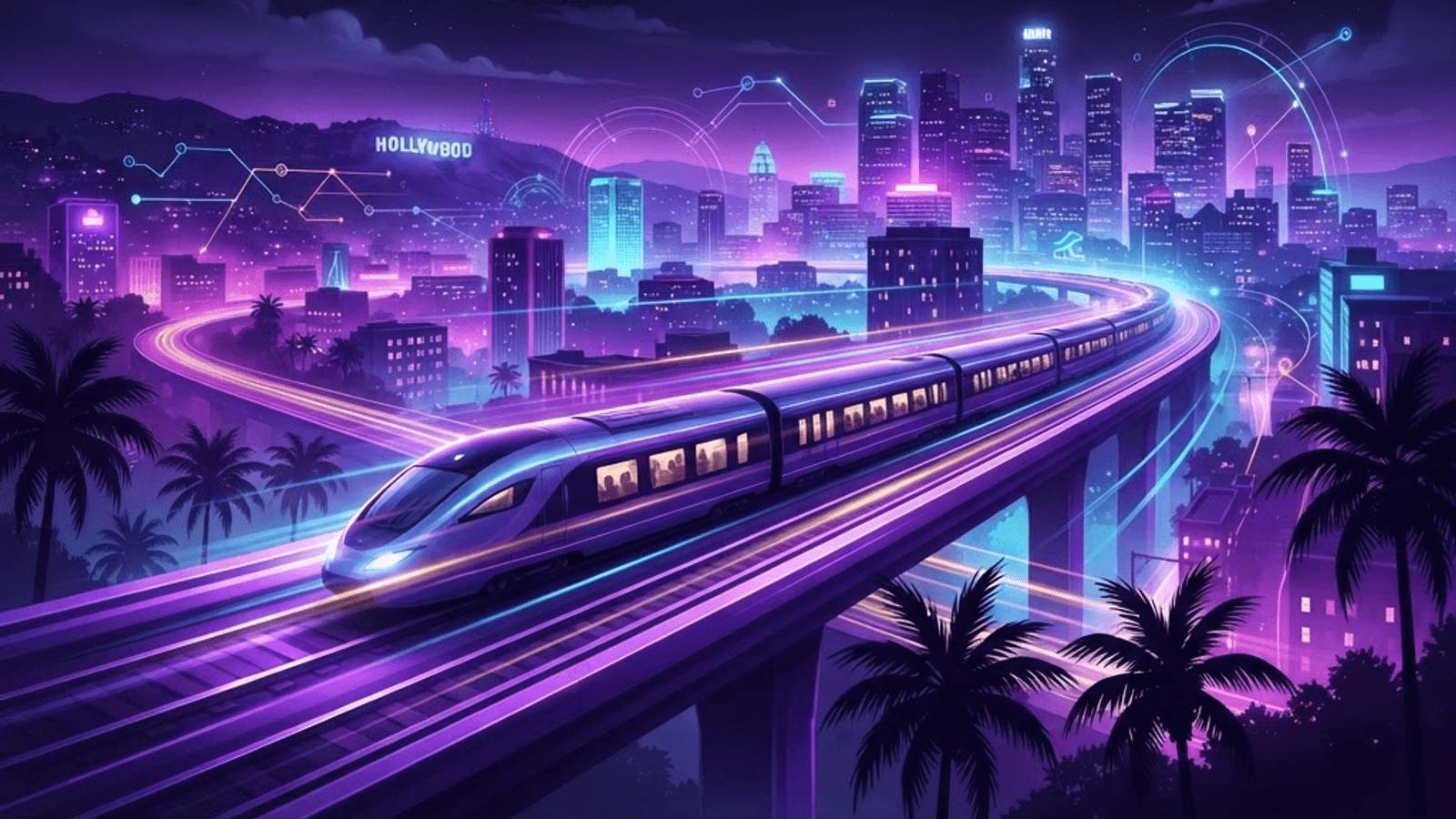
Rail in a City Famous for Driving
Los Angeles carries a reputation as a place defined by the motor car, yet its rail network is now among the most actively expanding in the United States. Hollywood sits directly on this network, with underground stations along the main boulevard connecting the district to downtown, the San Fernando Valley and, through interchanges, the coast and the wider county. For many journeys, particularly during peak hours, rail is simply faster than driving because it bypasses surface congestion entirely.
The neighbourhood's rail options fall into several layers. Urban metro lines handle short and medium journeys within the county. Commuter rail extends into surrounding counties for longer daily trips. Intercity services link Los Angeles to San Diego, Santa Barbara, the Central Valley and destinations across the country. Heritage and tourist railways add a leisure dimension that appeals particularly to families and visitors interested in the region's transport history.
Ten Rail Operators and Services Relevant to Hollywood
1. Los Angeles Metro Rail
The county transit authority operates the core urban network, and the subway line running beneath Hollywood Boulevard is the single most useful rail service for the district. Frequent trains, direct access to downtown and to the Valley, and connections to the wider light rail system make it the backbone of car-free travel here. Stations at Hollywood and Highland, Hollywood and Vine, and Hollywood and Western place most of the neighbourhood within walking distance of rail.
2. Metrolink
The regional commuter rail operator connects Los Angeles Union Station with Ventura, Orange, Riverside, San Bernardino and Antelope Valley counties. For anyone living outside the immediate urban core but working in or near Hollywood, Metrolink combined with a metro connection at Union Station is often the most practical daily option.
3. Amtrak Pacific Surfliner
Running along one of the most scenic coastal corridors in the country, this service links Los Angeles with San Diego to the south and Santa Barbara and San Luis Obispo to the north. Comfortable seating, luggage flexibility and ocean views make it a genuinely pleasant alternative to driving those routes.
4. Amtrak Coast Starlight
The long-distance service connecting Los Angeles with Seattle via the Pacific coast and Cascade ranges is a destination in itself. Sleeping accommodation, an observation car and extended daylight scenery appeal to travellers who treat the journey as part of the holiday.
5. Amtrak Southwest Chief
Linking Los Angeles with Chicago via the American Southwest, this route crosses desert, mesa and plains landscapes over two nights. For visitors arriving in Hollywood from the east without flying, it remains the classic approach.
6. Amtrak Sunset Limited
Running east towards New Orleans, this long-distance service covers the southern transcontinental corridor. Departures are less frequent than on other routes, so planning matters, but the journey covers terrain that is difficult to see any other way.
7. California High-Speed Rail Authority
The state body developing high-speed services between Southern California and the Bay Area represents the most significant long-term change to regional rail. Construction in the Central Valley is well advanced, and the eventual connection into the Los Angeles basin would fundamentally alter travel patterns for Hollywood residents and visitors alike.
8. Los Angeles Union Station Operations
Union Station functions as the hub where nearly every rail service converges. Recently restored and expanded, it is both a transport interchange and an architectural landmark, and understanding how to navigate its connections is essential to using rail effectively from Hollywood.
9. Travel Town Museum Railroad
Located in Griffith Park within easy reach of Hollywood, this transportation museum preserves historic locomotives and rolling stock and operates a miniature railway. It is a popular family destination and an accessible introduction to the region's railway heritage.
10. Fillmore and Western Railway
A heritage operation within driving distance of Los Angeles, this railway runs excursion trains through the Heritage Valley using vintage equipment. It has also served as a filming location for numerous productions, which gives it a particular resonance for a Hollywood audience.
Practical Guidance for Rail Travel
Fare payment on the urban network uses a reloadable contactless card that also works across bus services, and daily and weekly capping protects frequent riders from overpaying. Trains run from early morning until late at night on the main lines, with reduced frequency outside peak hours. Bicycles are permitted on metro trains, which makes combined cycle and rail journeys practical across longer distances.
For intercity travel, booking ahead secures better fares, and reserved seating is available on most services. Luggage allowances are considerably more generous than on aircraft, which is a meaningful advantage for anyone travelling with equipment. Station access from Hollywood to Union Station takes roughly twenty minutes by subway, so connections should be planned with that in mind rather than assuming a taxi is required.
Why Rail Use Is Growing
Several forces are increasing rail ridership in the region. Road congestion continues to worsen on the main corridors, making journey times by car increasingly unpredictable. Parking costs in central districts and around entertainment venues are high. Environmental policy at state level actively supports transit investment. Major forthcoming international sporting events have accelerated infrastructure projects, including extensions and station improvements across the county.
There is also a cultural shift. Younger residents are noticeably more willing to use transit than previous generations, and improved real-time information has removed much of the uncertainty that once made rail feel inconvenient compared with driving.
Final Thoughts
For journeys within Los Angeles County, the metro network serving Hollywood Boulevard is fast, inexpensive and frequently quicker than driving. For regional commuting, Metrolink extends that reach substantially. For travel along the coast or across the country, Amtrak services offer comfort and scenery that no other mode provides. And for a weekend outing, the heritage railways nearby turn the history of the network into an experience in itself. Rail in Hollywood is no longer a fallback option; for many trips it is the better one.