
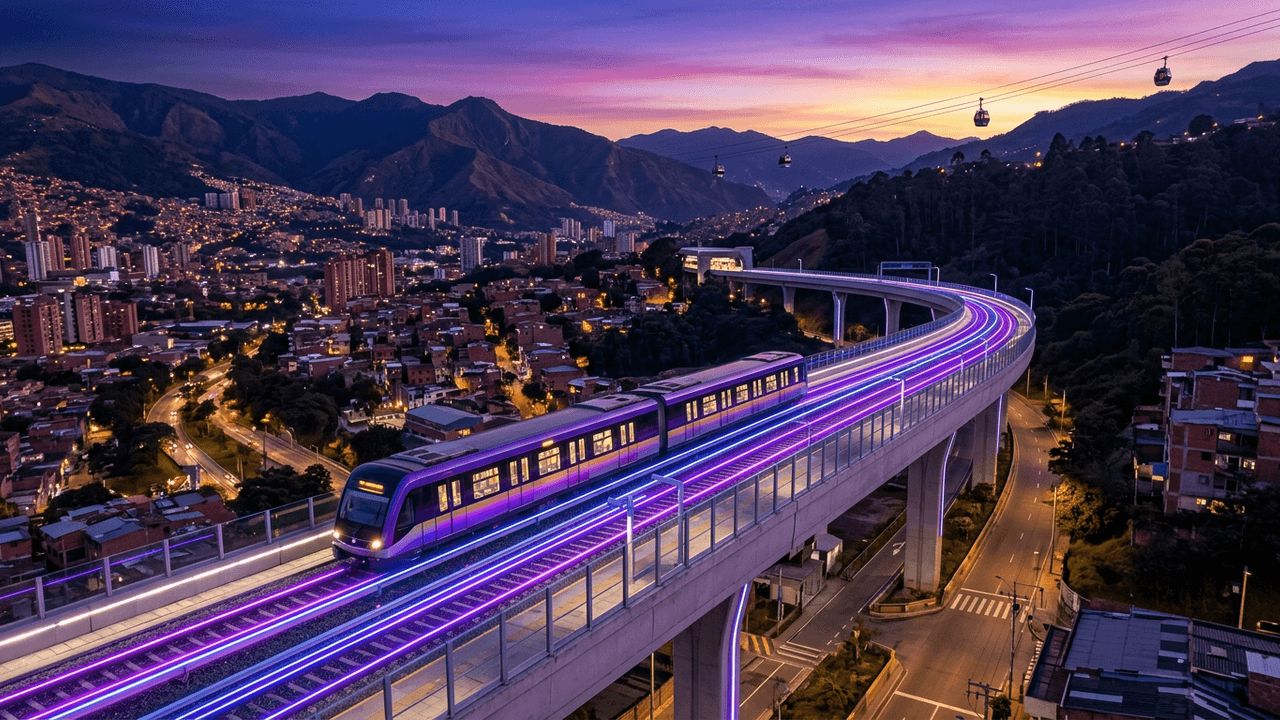
The Revival of Rail in Colombia
Colombia once had an extensive railway network that connected coffee regions with ports, but decades of limited investment left much of it abandoned. Today, rail is experiencing a revival. Urban metro and tram systems are transforming mobility, freight railways move millions of tons of coal and cargo, and new commuter and intercity projects are reshaping transportation plans.
The operators and projects below represent the most important players in Colombia's railway sector, from established systems to promising new developments.
The Top 10 Railway Operators and Projects in Colombia
1. Metro de Medellín
Metro de Medellín is Colombia's first metro system and a source of great civic pride. Its elevated lines cross the Aburrá Valley, integrated with cable cars, buses, and trams. The system is known for cleanliness, efficiency, and a strong "metro culture" that encourages respect and care among riders.
2. Tranvía de Ayacucho
Operated as part of Medellín's integrated transport system, the Ayacucho tram connects the city center with eastern neighborhoods and cable car lines. It has contributed to urban regeneration along its corridor.
3. Metro de Bogotá
The first line of the Bogotá Metro is one of the largest infrastructure projects in Colombia's history. This elevated line will provide a high-capacity backbone for the capital's transit network, integrating with TransMilenio and future rail lines.
4. Regiotram de Occidente
The Regiotram de Occidente is a commuter rail project connecting Bogotá with western municipalities such as Funza, Mosquera, and Facatativá. It will improve mobility for thousands of daily commuters.
5. Regiotram del Norte
This planned commuter line aims to connect Bogotá with northern municipalities such as Chía and Zipaquirá, addressing heavy traffic on northern access roads.
6. Turistren
Turistren operates the popular tourist train on the Sabana de Bogotá, offering weekend trips to destinations such as Zipaquirá, home to the famous Salt Cathedral. Its vintage trains and live music create a nostalgic experience.
7. FENOCO
Ferrocarriles del Norte de Colombia operates the Atlantic railway corridor, primarily transporting coal from mining regions to Caribbean ports. It is one of the most important freight rail operations in the country.
8. Cerrejón Railway
The railway serving the Cerrejón mining operation in La Guajira transports coal from the mine to Puerto Bolívar. It is one of the most efficient heavy-haul railways in Latin America.
9. Ferrocarril del Pacífico
The Pacific railway corridor connects the Valle del Cauca region with the port of Buenaventura. Efforts to rehabilitate and expand the line aim to strengthen cargo transport to the Pacific.
10. Central Railway Corridor Projects
National authorities are working to rehabilitate the central rail corridor connecting the interior with the Caribbean via the Magdalena River valley. These projects aim to reduce freight costs and truck traffic on highways.
Benefits of Rail Transport
Rail offers high capacity, lower emissions, and reduced congestion compared with road transport. For cities, metro and commuter rail systems provide fast, reliable mobility. For freight, rail can significantly lower transport costs for bulk cargo over long distances, making exports more competitive.
Challenges and Opportunities
Colombia's mountainous terrain makes rail construction complex and costly. However, government plans prioritize rail revival, including public-private partnerships and multimodal integration with rivers and ports. Successful urban rail projects in Medellín demonstrate how rail can transform cities.
Trends in Colombian Rail
Electric trains and sustainable mobility are central to new projects. Integration of metro, tram, bus, and cable systems is becoming the model for urban transport. Freight rail modernization is expected to support growing trade volumes.
Multimodal Integration
Colombia's long-term transport strategy aims to combine rail, river, road, and maritime transport. The Magdalena River, the country's main waterway, could work alongside rail corridors to move bulk cargo between the interior and the Caribbean ports, reducing costs and emissions compared with road transport alone.
Tourist Rail Experiences
For travelers, the Tren Turístico de la Sabana offers a charming journey through the countryside north of Bogotá, typically on weekends and holidays. Passengers enjoy traditional music, local food, and stops in towns such as Zipaquirá and Cajicá. In Medellín, riding the metro and connecting to the Metrocable offers panoramic views of the Aburrá Valley and is one of the most memorable urban experiences in the country.
Frequently Asked Questions
Can you travel between cities by train in Colombia? Currently, there are no regular long-distance passenger trains between major cities. Air and bus travel remain the main options, although future projects aim to change this.
When will the Bogotá Metro open? The first line is under construction, with operations expected later this decade.
Is the Medellín metro easy for visitors? Yes. It is clean, efficient, and well signposted, and rechargeable cards make travel simple.
Why is rail important for Colombia's future? Combining rail with rivers, ports, and highways would make Colombian exports more competitive while easing pressure on congested roads, making rail a strategic priority for national development.
Final Thoughts
Rail is regaining its place in Columbia's transportation future. From Medellín's world-class metro to ambitious commuter and freight projects, these operators are building a more connected and sustainable country.