
Rail in Alaska: One Railroad, Many Services
Anchorage sits at the heart of the Alaska Railroad, a roughly five hundred mile system running from Seward on the Gulf of Alaska north through Anchorage, Talkeetna, and Denali to Fairbanks, with a branch to Whittier. Unlike the Lower 48, there is no competing network here, which means the operator landscape is defined less by competing railroads than by distinct services, private car operators, and partner-branded trains running on the same tracks.
That structure makes the railroad unusually important. It moves freight and fuel, supports the tourism economy, and provides genuine transportation to communities along the Hurricane Turn route where no road exists. It is also one of the few railroads in the United States still offering true flag stops, where residents wave down the train from trackside.
What Makes Alaska Rail Travel Distinctive
The scenery is the obvious draw. The Coastal Classic route between Anchorage and Seward runs along Turnagain Arm and through the Kenai Mountains, passing glaciers and hanging valleys. The Denali Star route north crosses Hurricane Gulch on a high bridge and offers clear-day views of Denali itself. Domed cars with panoramic glass, outdoor viewing platforms, and onboard narration turn the journey into the attraction rather than a means to an end.
Practically, rail also solves problems. Whittier is reached by a single-lane tunnel shared with vehicles on a timed schedule, and the train bypasses that constraint entirely for cruise passengers. The railroad also handles baggage in ways that suit travelers with gear, and it operates regardless of the road conditions that complicate winter highway driving.
The Top 10 Rail Services and Operators
1. Alaska Railroad Corporation is the system's owner and operator, a state-owned corporation running all passenger and freight service and maintaining the track, depots, and equipment.
2. Coastal Classic Service operates seasonally between Anchorage and Seward, widely considered one of the most scenic rail journeys in North America and a favorite day trip for visitors.
3. Denali Star Service runs the full Anchorage to Fairbanks route via Talkeetna and Denali National Park, the backbone of summer rail tourism in the state.
4. Glacier Discovery Service serves Whittier, Spencer Glacier, and Grandview, providing access to whistle-stop hiking, rafting, and glacier viewing unreachable by car.
5. Hurricane Turn Train is the flag-stop service north of Talkeetna, serving off-grid residents and adventurous travelers, and one of the last true flag-stop trains in the country.
6. Aurora Winter Train operates weekend service between Anchorage and Fairbanks during the winter months, popular with aurora travelers and residents.
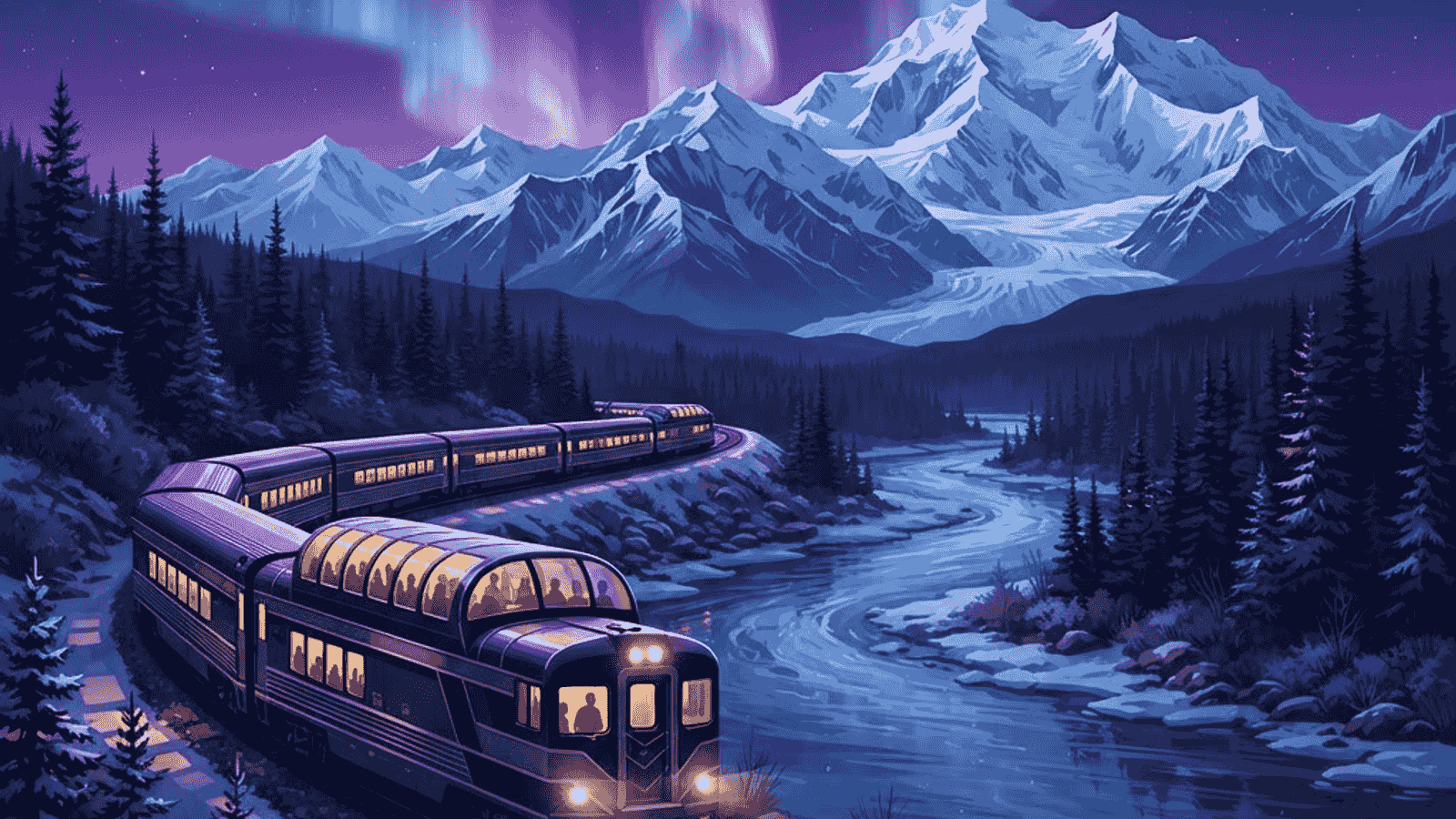
7. GoldStar Dome Service is the railroad's premium class, featuring bi-level glass-domed cars, an upper-level outdoor viewing platform, and included meals and beverage service.
8. Wilderness Express is a privately operated domed railcar service attached to Alaska Railroad trains, offering upscale seating and dining for tour package guests.
9. McKinley Explorer consists of privately owned luxury dome cars operated in partnership with cruise lines, carrying cruisetour passengers between Anchorage, Denali, and Fairbanks.
10. Alaska Railroad Freight Division handles gravel, coal, petroleum, containers, and vehicle shipments, interchanging with barge service at Whittier and Seward and forming a critical link in the state's supply chain.
Trends and Seasonal Considerations
Passenger rail here is strongly seasonal. Peak service runs mid-May through mid-September with daily departures on major routes, while winter shrinks to limited weekend service. That seasonality shapes pricing, with summer premium class selling out months ahead, particularly for cruise-linked travel.
Cruise partnership remains the dominant commercial force. Cruisetour packages move large volumes between Whittier or Seward, Anchorage, Denali, and Fairbanks, and privately owned dome cars exist largely to serve that market. Independent travelers benefit indirectly through frequent schedules but should book early to secure standard seats on popular dates.
Freight and infrastructure investment continues in parallel. Track upgrades, positive train control implementation, bridge rehabilitation, and terminal improvements have been ongoing priorities, and the railroad's dual role as a tourism asset and a freight utility gives it unusual political and economic significance in Alaska.
Booking and Riding Advice
Reserve summer travel two to four months ahead, earlier for GoldStar class. Consider direction and seating: on the Coastal Classic, water-side views change through the trip, and dome cars largely eliminate the issue. Bring layers, since outdoor platforms are cold even in July, and binoculars for wildlife along Turnagain Arm and the Nenana canyon.
For itinerary planning, rail pairs well with coach and shuttle service. A common car-free structure is rail from Anchorage to Denali, a park bus tour, rail onward to Fairbanks, and a flight home. Travelers heading to Seward for a fjords cruise should confirm timing carefully, since the train's arrival needs to align with boat departures.
Finally, do not overlook the Hurricane Turn. It is inexpensive, deeply local, and offers a glimpse of off-grid Alaska that no packaged tour replicates, which is precisely why it remains a favorite among people who have already ridden the marquee routes.