
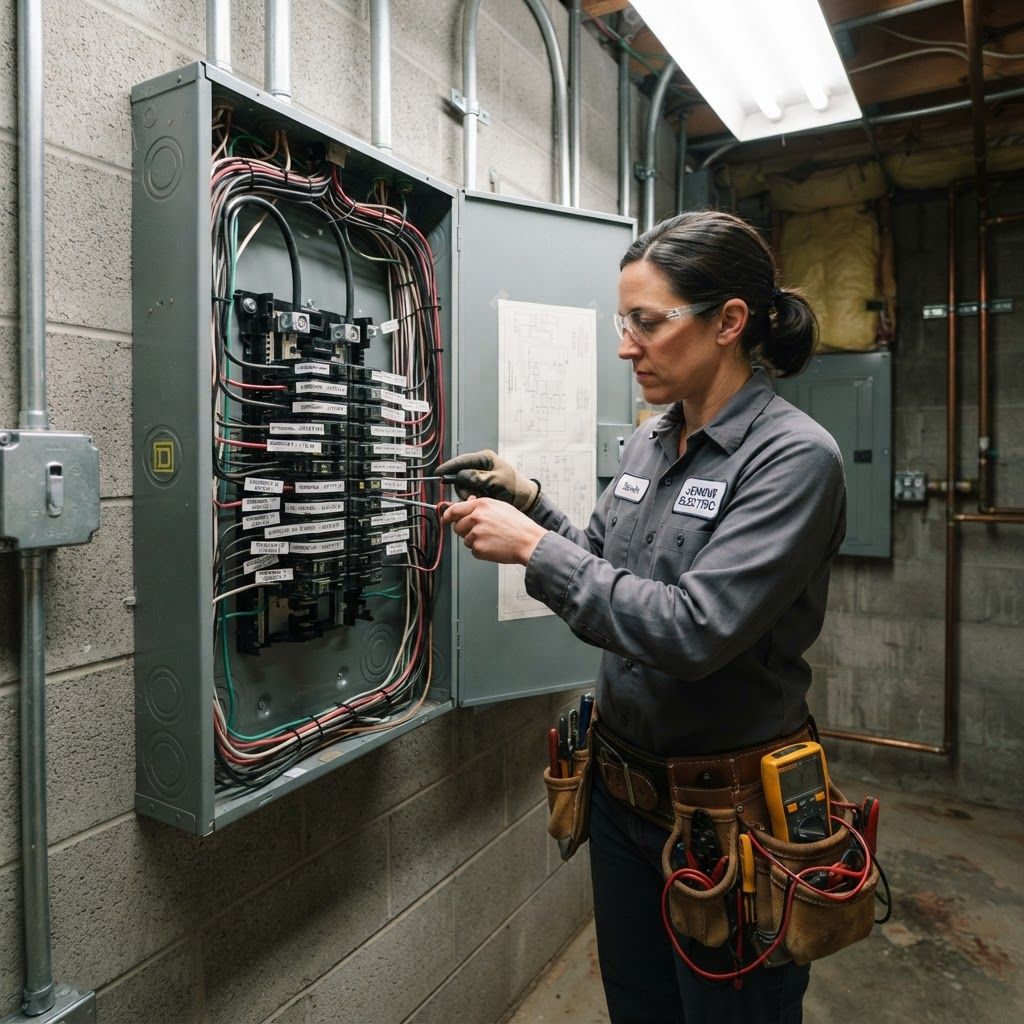
Electrical Work in a City Built Before Modern Loads
Buffalo's architectural charm comes with electrical baggage. Homes constructed in the early twentieth century were wired for a few lights and perhaps a radio, not for central air conditioning, induction ranges, home offices, and electric vehicle chargers. Knob-and-tube wiring, ungrounded two-prong outlets, fuse boxes, and sixty-amp services still exist across the city, and each represents both a safety consideration and a capacity ceiling.
Modernizing that infrastructure requires more than swapping devices. It involves evaluating service capacity, grounding and bonding, circuit layout, and code compliance under current New York State requirements. That is why the strongest electrical contractors in the region combine old-house experience with current code fluency.
Ten Electrical Contractors Buffalo Relies On
1. Frey Electric Construction is one of Western New York's largest electrical contractors, serving industrial, institutional, and commercial clients with in-house engineering, design-build capability, and large-project management experience.
2. Ferguson Electric Construction has a long history on major regional projects including healthcare, education, and infrastructure work, and is known for technically demanding installations and systems integration.
3. Reimer Home Services covers residential electrical alongside plumbing and HVAC, handling panel replacements, rewiring, lighting, generator installation, and safety inspections.
4. Zenner & Ritter pairs electrical service with its energy efficiency work, a useful combination for homeowners upgrading lighting, controls, and mechanical systems together.
5. Mister Sparky of Buffalo focuses on residential service calls with scheduled appointment windows, upfront pricing, and strong availability for troubleshooting intermittent faults.
6. Buffalo Electric Company serves commercial and multifamily properties, with experience in tenant fit-outs, distribution upgrades, and emergency power systems.
7. Nichols Electric is a smaller local outfit well regarded for careful residential work in older homes, including knob-and-tube remediation and grounded circuit additions.
8. Rick's Electric WNY handles service upgrades, generator installations, and outdoor lighting for suburban homeowners, with a reputation for tidy workmanship and clear communication.
9. Amherst Electric supports northern suburbs with panel upgrades, EV charger installation, smart home wiring, and code-correction work identified during real estate transactions.
10. Queen City Electrical Services works across residential and light commercial projects, offering troubleshooting, surge protection, and lighting retrofits with flexible scheduling.
The Projects Driving Demand Right Now
Panel and service upgrades dominate residential electrical work. Moving a home from a hundred amps to two hundred amps unlocks capacity for heat pumps, EV charging, and modern appliances while eliminating the daisy-chained subpanels and overloaded circuits common in retrofitted houses. Contractors will often bundle this with grounding improvements and arc-fault and ground-fault protection to meet current code.
Electric vehicle charging is the fastest-growing request. A Level 2 charger requires a dedicated forty to sixty amp circuit, and installation cost depends heavily on panel capacity, conduit run length, and whether load management is needed. Experienced electricians perform a load calculation rather than assuming an existing panel can absorb the addition.
Standby generators have gained popularity following storm-related outages. Buffalo's exposure to blizzards and severe wind events makes automatic transfer switches and permanently installed generators attractive, particularly for homes with sump pumps protecting finished basements.
Safety Issues Worth Addressing Immediately
Certain conditions warrant prompt professional attention: breakers that trip repeatedly, warm or discolored outlets and switch plates, flickering lights across multiple circuits, a burning smell near the panel, or any evidence of aluminum branch wiring in homes from the mid-1960s to mid-1970s. Federal Pacific and Zinsco panels, both associated with breaker failure, are also present in the region and are frequently recommended for replacement.
Ground-fault protection in kitchens, bathrooms, basements, garages, and exterior locations is a basic and inexpensive safety upgrade. Arc-fault protection on bedroom and living area circuits reduces fire risk in older wiring. Neither requires a full rewire, and both can often be added during a panel upgrade.
Choosing and Vetting an Electrician
Confirm licensing and liability insurance, and ask whether the company pulls permits and schedules municipal inspection for panel work, service upgrades, and new circuits. Permitted and inspected work protects resale value and insurance coverage; unpermitted work frequently surfaces as a problem during a home sale.
Request a written scope that specifies wire gauge, breaker types, device grades, and the number of circuits added. For larger projects, ask how the contractor handles concealed conditions in plaster walls, which is a recurring cost driver in older Buffalo homes. A contractor who explains this risk upfront is more trustworthy than one who quotes a suspiciously clean number.
Planning Electrical Work Strategically
Sequencing saves money. If you are considering a heat pump, EV charger, kitchen renovation, or finished basement within the next few years, plan the service upgrade first so conduit, panel space, and circuit capacity are in place before finishes go in. Running conduit during open-wall phases costs a fraction of retrofitting later.
Efficiency upgrades pair naturally with electrical work. LED retrofits, occupancy sensors, and smart controls reduce load and operating cost, and utility incentive programs in New York periodically offset portions of both efficiency and electrification projects. A knowledgeable local electrician will know which programs currently apply and can help document the paperwork, turning a necessary safety project into a longer-term value improvement.