
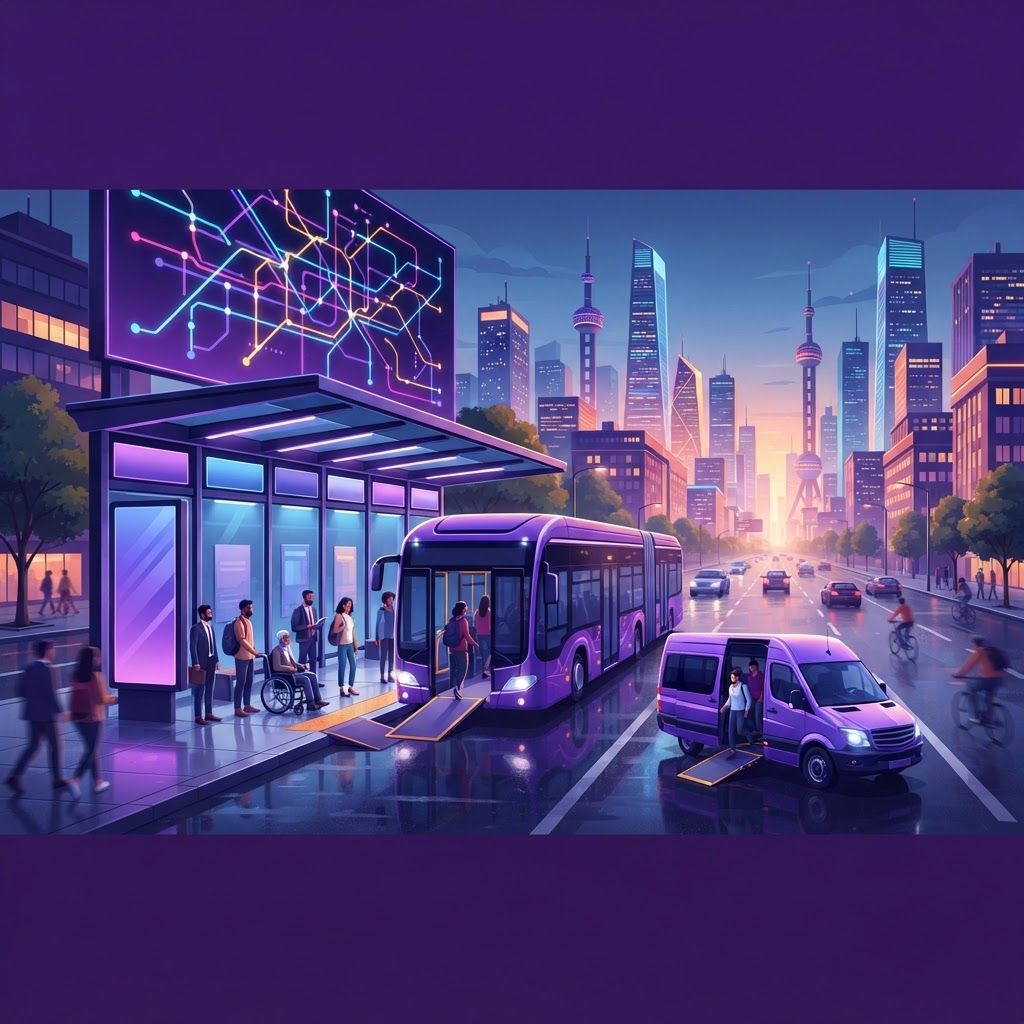
Public Mobility in a Growing Mid-Sized City
Sioux Falls has grown quickly, and its transportation system has been working to keep pace. The city is fundamentally automobile-oriented, with wide arterials and dispersed commercial development, yet a meaningful share of residents rely on public and shared transportation for work, education, medical care, and daily errands. Serving them well in a low-density environment is a genuine planning challenge, and the local response has been to combine traditional fixed-route buses with flexible on-demand options and substantial investment in walking and cycling infrastructure.
For newcomers, the practical picture is this. Fixed-route service covers the core and major corridors on a hub-based network. Complementary paratransit serves riders whose disabilities prevent fixed-route use. On-demand and specialised services fill gaps in outlying areas and off-peak hours. And an extensive trail system makes cycling a legitimate commuting option for much of the year.
1. Sioux Area Metro Fixed-Route Bus Service
The city's primary public transit provider operates the fixed-route bus network, connecting residential neighbourhoods with downtown, major employers, retail centres, medical campuses, and educational institutions. Routes generally radiate from a central transit hub, which simplifies transfers. Buses are accessible, equipped with bicycle racks, and increasingly supported by real-time arrival information through mobile applications.
2. Paratransit and Complementary ADA Service
Complementary paratransit provides origin-to-destination transportation for eligible riders whose disabilities prevent them from using fixed-route buses. Service operates within a defined area around the fixed-route network during comparable hours. Eligibility requires an application and assessment, and trips are typically reserved a day in advance. For many riders, this service is the difference between independence and isolation.
3. On-Demand Microtransit Services
Microtransit uses smaller vehicles and app-based dispatching to serve areas and times where fixed routes are inefficient. Riders request a trip and are matched with a shared vehicle following a dynamic route. Sioux Falls has explored and deployed on-demand models to extend coverage into lower-density areas and off-peak periods, which is a pragmatic response to the geometry of a spread-out city.
4. Medical and Human Services Transportation
Given the scale of healthcare in Sioux Falls, dedicated medical transportation is an important part of the mobility system. Programmes coordinate non-emergency trips to dialysis, therapy, and specialist appointments, often funded through insurance or public assistance programmes. These services fill a need that neither fixed-route transit nor commercial rideshare addresses adequately.
5. Senior Transportation Programmes
Community organisations and volunteer driver programmes provide transportation for older adults to medical appointments, grocery shopping, congregate meals, and social activities. Reduced fares on public transit further support this population. Because mobility loss is one of the primary drivers of social isolation among seniors, these programmes deliver value well beyond the trips themselves.
6. Educational Institution Shuttle Services
Colleges and universities in Sioux Falls operate shuttle services connecting campuses, residential housing, parking areas, and nearby amenities. For students without vehicles, these shuttles combined with public transit make campus life workable, and some institutions negotiate fare arrangements that give students access to the city network at reduced or no cost.
7. Employer Commuter and Vanpool Programmes
Large employers in healthcare, manufacturing, and food processing operate shift shuttles and support vanpool arrangements for employees. Vanpools group commuters travelling similar routes into a shared vehicle, reducing individual cost and parking demand. For facilities with concentrated shift changes, employer-supported transport measurably improves attendance reliability.
8. Bicycle Infrastructure and the Trail Network
Sioux Falls maintains an extensive paved recreational trail system that loops the city along the Big Sioux River, supplemented by on-street bicycle facilities. While built with recreation in mind, the network functions as practical transportation infrastructure, providing low-stress routes between neighbourhoods, downtown, and employment areas. It is one of the city's genuine mobility assets.
9. Pedestrian Networks and Downtown Walkability
The downtown core is compact and walkable, with sidewalks, crossings, and a concentration of restaurants, shops, offices, and cultural venues within a short radius. Continued streetscape investment has strengthened this, and for visitors staying centrally, walking covers most of what they came to see, including Falls Park and the riverside greenway.
10. Rideshare and Shared Mobility as Transit Complements
App-based rideshare, car-sharing, and shared bicycle or scooter programmes function as complements rather than competitors to public transit. They are especially useful for first and last mile connections, late-night trips when bus service has ended, and occasional journeys that would otherwise require owning a second vehicle. Many households now combine transit, active travel, and occasional rideshare instead of adding a car.
Practical Tips for Riders
Check current schedules and route maps directly, since service patterns are periodically revised as the city grows. Use real-time arrival tools where available, particularly in winter when weather affects running times. Understand fare options, as passes and reduced fare programmes for seniors, students, and riders with disabilities offer significant savings over single-ride payment. Allow generous connection time for transfers. And plan for the season, because a route that is a pleasant twenty-minute cycle in September requires different preparation in January.
Challenges and Future Direction
The core challenge is density. Efficient transit depends on concentrated origins and destinations, and Sioux Falls development patterns have historically been dispersed. Progress will likely come from three directions, including land use decisions that concentrate housing and employment along transit corridors, flexible on-demand service in areas that cannot support fixed routes, and continued expansion of the trail and bicycle network as genuine transportation infrastructure rather than recreation amenity.
Final Thoughts
Public transit in Sioux Falls is more capable than many residents assume, particularly for trips into and around the central city, and it is supplemented by paratransit, medical transport, employer programmes, and one of the better trail networks in the region. Riders who understand the available options and plan around them can navigate the city effectively without depending entirely on a private vehicle.