
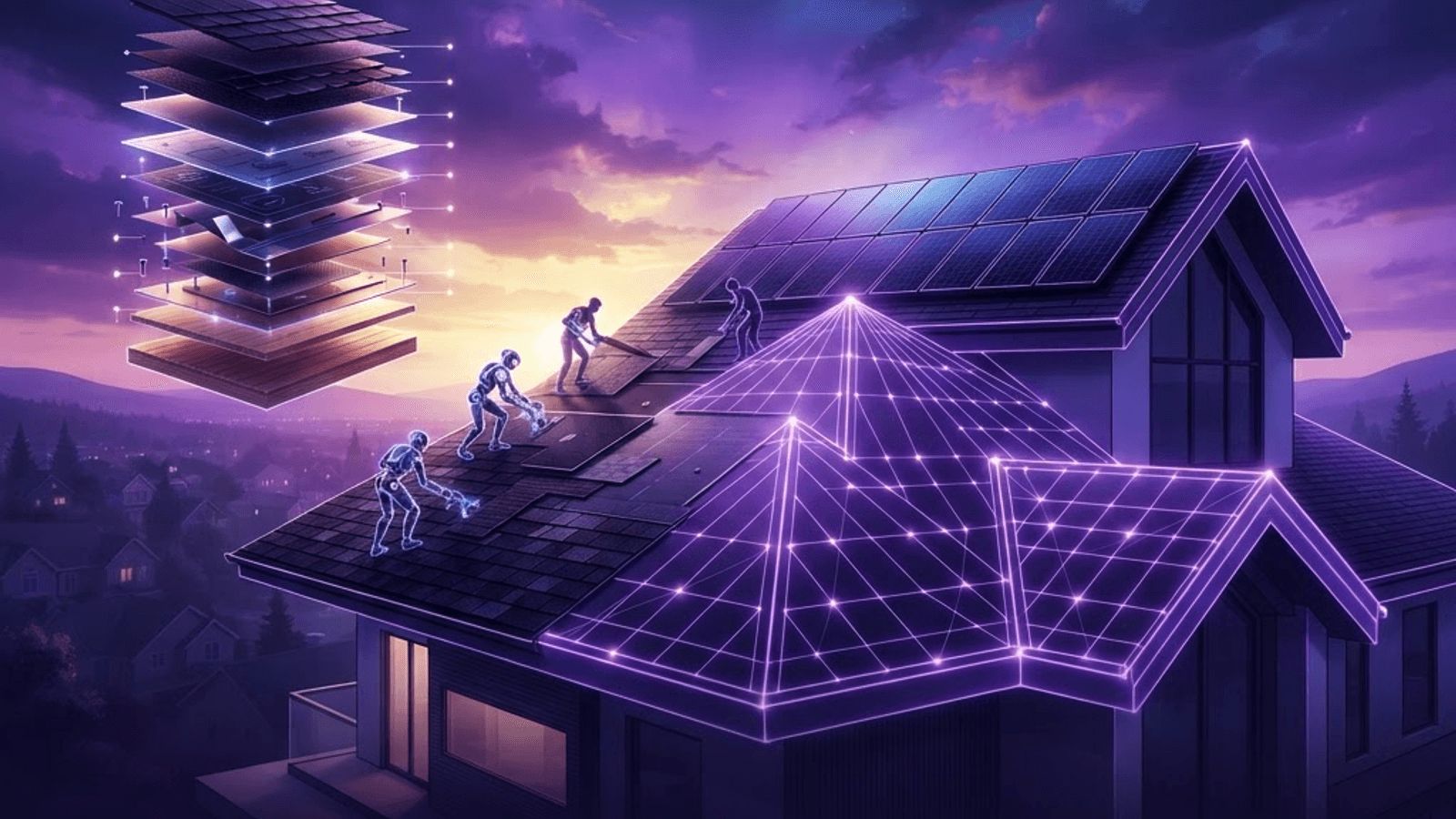
What Modesto Roofs Endure
Roofing in the Central Valley faces a specific combination of stresses. Summer temperatures regularly push roof surface temperatures far above ambient, accelerating the breakdown of asphalt binders and causing thermal cycling that loosens fasteners and cracks sealants. Ultraviolet exposure degrades exposed membranes and underlayment. Winter brings concentrated rainfall that finds any weakness in flashing details. Overnight temperature swings drive expansion and contraction at penetrations and transitions.
The result is that roofs in Modesto often show wear earlier than manufacturer literature suggests, particularly on south and west-facing slopes. Understanding this helps homeowners plan replacement rather than react to a leak during a storm.
Roofing Systems Common in the Area
Asphalt composition shingles dominate residential roofing due to cost and availability, with architectural laminate shingles offering better wind and impact performance than three-tab products. Concrete and clay tile appear widely on Mediterranean and Spanish-influenced homes, offering long service life but requiring adequate structural capacity. Metal roofing, in standing seam or stone-coated steel form, delivers longevity and reflectivity at higher upfront cost. Low-slope and flat roofs, common on commercial buildings and some additions, use single-ply membranes such as TPO, modified bitumen, or coating systems. Each requires different installation expertise, and contractors rarely excel at all of them.
The Ten Best Roofing Contractors in Modesto
1. Stanislaus Roofing Company. A long-established residential and commercial roofer known for thorough tear-off practices, proper deck inspection, and detailed flashing work at chimneys and valleys.
2. Orchard City Tile Roofing Specialists. Focused on concrete and clay tile installation and repair, including underlayment replacement beneath existing tile, which extends roof life without full material replacement.
3. Valley Metal Roof Systems. Specializing in standing seam and stone-coated metal roofing, with in-house panel forming and experience detailing metal at complex roof geometries.
4. McHenry Commercial Roofing. Serving low-slope commercial buildings with TPO, modified bitumen, and restoration coating systems, plus scheduled maintenance programs that catch problems early.
5. Central Valley Shingle Contractors. A high-volume residential roofer offering architectural shingle systems with manufacturer certification, allowing extended warranty coverage.
6. Almond Grove Roof Repair. Concentrating on repair rather than replacement, this contractor performs leak diagnosis, flashing correction, and targeted section repairs where full replacement is not yet warranted.
7. Riverbank Solar Roofing Integration. Coordinating roof replacement with solar installation, which avoids the expense of removing and reinstalling panels on an aging roof.
8. Tuolumne Skylight and Ventilation. Specializing in skylights, solar tubes, ridge and soffit ventilation, and attic airflow correction, which meaningfully affects both comfort and shingle longevity.
9. Premier Gutter and Drainage Modesto. Handling gutters, downspouts, and roof drainage, work often neglected until water damage appears at fascia or foundation.
10. Modesto Emergency Roof Services. Rounding out the list, this contractor provides rapid tarping, temporary weatherproofing, and insurance documentation following storm or fire damage.
Choosing Materials Sensibly
Material selection should balance cost, expected service life, structural capacity, and heat performance. Cool roofing products with higher solar reflectance reduce attic temperatures and cooling loads, which matters in Modesto summers and may satisfy energy code requirements on replacement projects.
Tile carries substantial weight, so structural verification is necessary when converting from shingle. Metal performs well thermally and lasts decades but requires skilled installation to avoid oil-canning and fastener issues. Shingles remain the value choice, and upgrading from three-tab to architectural laminate is usually worthwhile.
What a Proper Installation Includes
Quality roofing is largely invisible after completion, which is why documentation matters. A complete replacement includes full tear-off to the deck rather than layering over existing material, inspection and replacement of damaged sheathing, installation of appropriate underlayment, new metal flashing at all penetrations and transitions rather than reuse of old flashing, proper valley detailing, drip edge installation, correct fastener pattern and placement, and adequate ridge and intake ventilation.
Ask specifically whether flashing will be replaced. Reusing deteriorated flashing is the most common shortcut and the most common source of subsequent leaks.
Warranties and Verification
Two warranties apply. The manufacturer warranty covers materials and may be extended when installed by a certified contractor following specified assemblies. The workmanship warranty covers installation and is only as reliable as the contractor's longevity. A ten-year workmanship warranty from a firm with a long local track record is worth more than a lifetime promise from a new entrant.
Verify state contractor licensing, general liability insurance, and workers' compensation coverage. Roofing carries high injury risk, and uninsured crews expose the property owner.
Avoiding Storm-Chasing Operators
After significant weather events, out-of-area operators canvass neighborhoods offering immediate work and insurance assistance. Warning signs include pressure to sign on the spot, requests for large upfront deposits, offers to waive or absorb your insurance deductible, no verifiable local address, and unwillingness to provide a licence number. California limits contractor down payments, and deductible waiving is improper. Obtain at least three written estimates from established local firms instead.
Trends in Roofing
Cool roof adoption continues to expand under energy code provisions. Solar integration is increasingly planned alongside roof replacement rather than separately. Roof coating and restoration systems extend commercial roof life at lower cost than replacement. Improved synthetic underlayments have largely replaced felt. And impact-resistant shingle products are gaining attention for insurance considerations.
Final Thoughts
A roof protects everything beneath it, so contractor selection deserves more scrutiny than price comparison. Choose a licensed, insured local firm with demonstrated experience in your specific roofing system, insist on full tear-off and new flashing, confirm ventilation is addressed, and understand both warranties in writing. Planning replacement before failure, rather than during a winter storm, produces better pricing and better workmanship.