
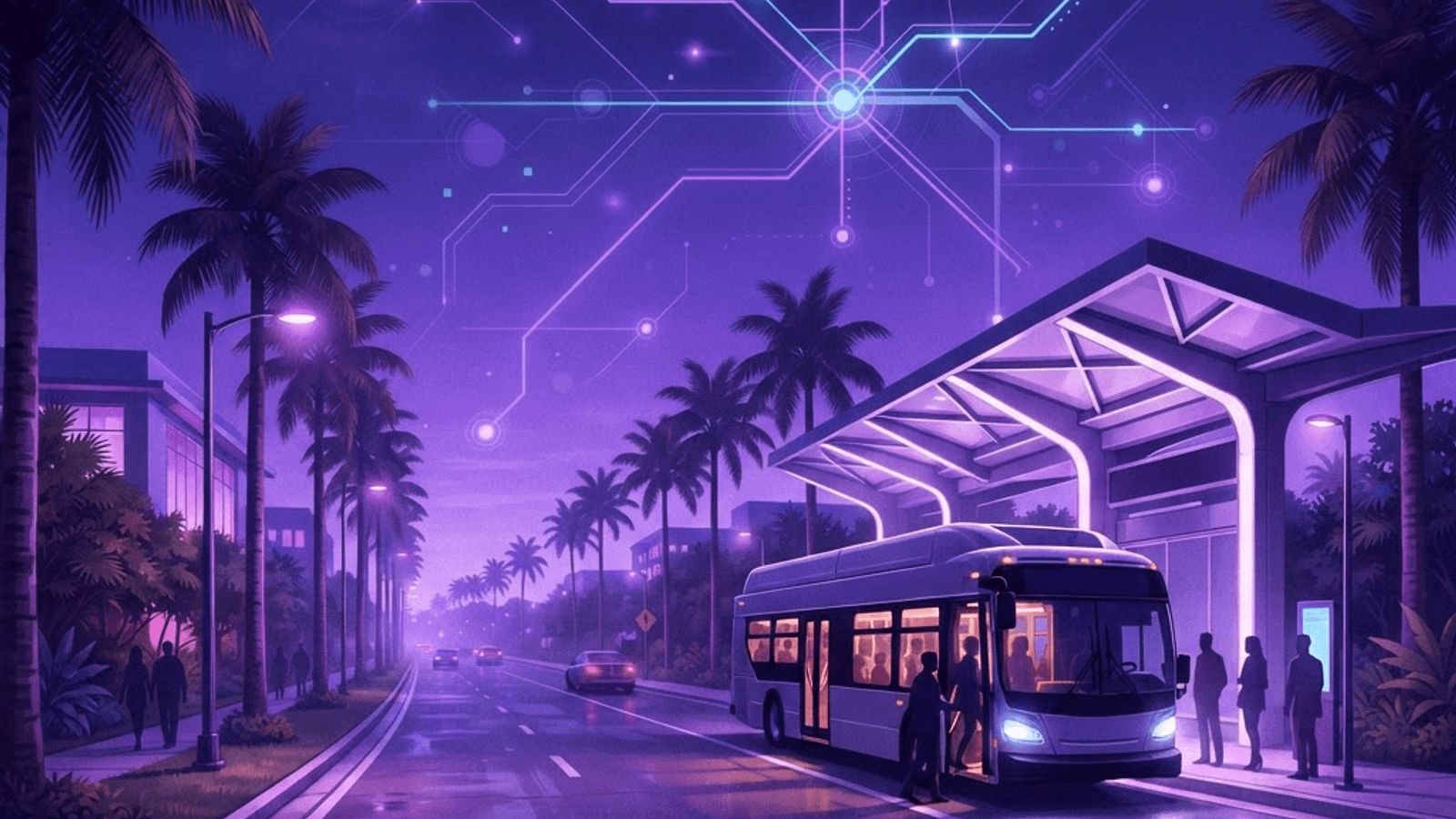
Transit in a Suburban Setting
Pembroke Pines presents a familiar American challenge: a city designed around automobiles attempting to serve residents who need or prefer alternatives. Wide arterial roads, dispersed shopping centers, and residential communities set back from main corridors all work against transit efficiency. Yet the city is embedded in a tri-county transit network that, used strategically, covers a remarkable range of destinations.
The users are diverse. Students travel to schools and colleges. Workers commute to Fort Lauderdale, Miami, and job centers along the coast. Seniors who no longer drive rely on transit for medical appointments and shopping. Households maintaining one vehicle instead of two use transit for the second commute. And travelers use transit to reach airports and seaports without paying for parking.
The Services Available
Broward County Transit is the primary provider serving Pembroke Pines. Its fixed-route bus network covers the city's major corridors including Pines Boulevard, Sheridan Street, University Drive, Flamingo Road, and Hollywood Boulevard, connecting residents to transfer hubs, shopping destinations, medical facilities, and neighboring municipalities. Fares are low, and daily, weekly, and monthly passes reduce per-trip cost substantially for regular riders.
Tri-Rail operates commuter rail along the inland corridor connecting Miami-Dade, Broward, and Palm Beach counties. The Sheridan Street and Hollywood stations are the most accessible boarding points for Pembroke Pines residents, and the line includes a station serving Fort Lauderdale-Hollywood International Airport. For commuters heading toward downtown Miami or northward to West Palm Beach, rail avoids the worst of interstate congestion entirely.
Miami-Dade Transit extends the network southward. Bus routes and the Metrorail system connect at shared points with Broward services, enabling cross-county journeys to Miami's medical district, government center, and business areas.
Metrorail specifically provides elevated rapid transit through Miami-Dade, and Tri-Rail connects to it, making a rail-only journey from Broward into central Miami entirely feasible.
Metromover completes downtown Miami trips with free automated service circulating through the business and cultural districts, an efficient final leg for commuters arriving by rail.
Palm Tran serves Palm Beach County to the north, connecting at Tri-Rail stations and extending the practical reach of a transit-based lifestyle across the entire tri-county region.
Brightline provides higher-speed intercity rail from stations in Fort Lauderdale and Miami, connecting to Orlando and other Florida cities. While positioned as intercity rather than commuter service, some residents use it for regional travel where speed and comfort justify the fare.
Community shuttle services operated in partnership between Broward County Transit and individual municipalities provide neighborhood-level circulation, connecting residential areas to main transit corridors, shopping centers, and civic facilities. These shuttles address the first-mile problem that otherwise prevents many suburban residents from using fixed-route transit.
TOPS paratransit, operated by Broward County Transit, provides door-to-door service for eligible riders with disabilities who cannot use fixed-route buses. Eligibility requires an application and assessment, and service operates within defined areas and hours consistent with federal requirements.
School transportation provided by Broward County Public Schools moves a large share of the student population daily, representing one of the largest organized transit operations in the region even though it serves a specific population.
Building a Practical Commute
The most effective transit use in Pembroke Pines combines modes. A typical pattern involves driving or taking a community shuttle to a rail station, riding Tri-Rail to the destination county, then completing the journey by connecting bus, Metrorail, or Metromover. Park-and-ride facilities at rail stations make this practical, and the parking cost is generally modest compared with downtown alternatives.
Another common pattern uses Broward County Transit for local trips entirely within the city and nearby municipalities, which works well for shopping, medical appointments, and travel to schools along served corridors.
Trip planning applications that integrate multiple agency schedules have made this considerably easier than it once was, showing real-time vehicle positions and suggesting multimodal itineraries automatically.
Fares, Passes, and Savings
Single-ride fares are inexpensive, but regular riders should evaluate passes. Monthly passes typically break even after a moderate number of trips and then produce meaningful savings. Regional passes covering multiple county systems simplify cross-county commuting and often cost less than purchasing separately. Discounted fares are available for seniors, students, and riders with disabilities, and eligibility documentation is straightforward to obtain.
Comparing transit cost against driving should include the full picture: fuel, tolls, parking, insurance, maintenance, and depreciation. For a daily commute into Miami-Dade, the difference is frequently substantial.
Accessibility and Comfort
Fixed-route buses operated by Broward County Transit, Miami-Dade Transit, and Palm Tran are equipped with ramps or lifts, securement areas, and priority seating. Rail stations provide accessible platforms and elevators. Bicycle racks on buses and bicycle accommodation on trains extend the effective catchment of each route considerably, and for many residents a bicycle solves the first-mile problem more cheaply than any alternative.
Comfort considerations in South Florida include shaded and sheltered stops, which have been improved along major corridors, and the reality of afternoon thunderstorms during the wet season. Checking real-time arrival information before leaving reduces exposure.
Challenges and Ongoing Improvements
Service frequency remains the principal limitation. Routes serving lower-density areas operate less frequently, and evening and weekend service is reduced compared with weekday peaks. Journey times for cross-county trips can be long relative to driving in light traffic, though the gap narrows considerably during congested periods.
Investment continues across the region. Fleet modernization including hybrid and electric buses is progressing. Mobile fare payment has expanded, reducing boarding delays. Additional rail stations along the coastal corridor have increased access points. And transit-oriented development around stations is gradually creating the density that makes higher-frequency service viable.
Final Thoughts
Living in Pembroke Pines without constant driving is realistic for many residents. Broward County Transit and community shuttles handle local movement, Tri-Rail provides the tri-county spine, Miami-Dade Transit with Metrorail and Metromover completes southern journeys, Palm Tran extends northward, and TOPS paratransit serves riders with disabilities. Combining these services deliberately, and using passes rather than single fares, turns a car-oriented suburb into a genuinely navigable one.