
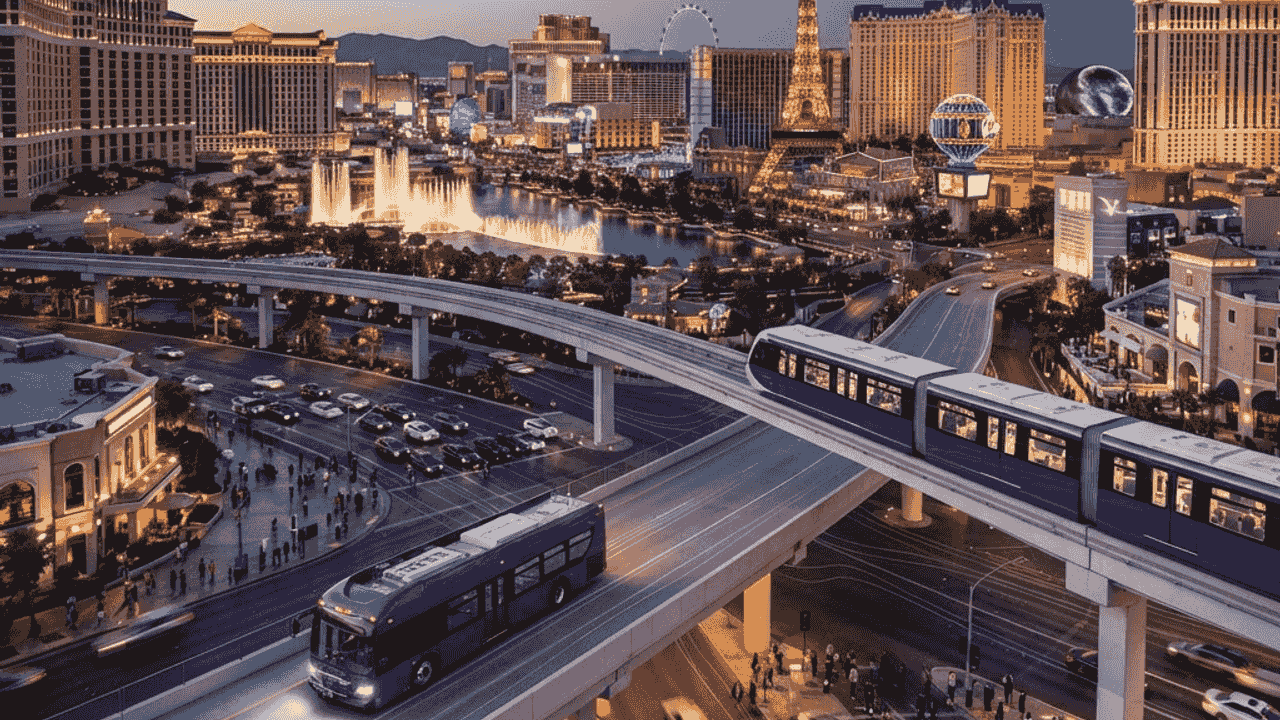
Getting Around Las Vegas Without a Car
Las Vegas is larger and more varied than the resort corridor suggests. Visitors often focus on the Strip, while residents travel among downtown, Henderson, Summerlin, North Las Vegas, employment centers, and educational campuses. Public transportation can reduce parking costs and driving stress, but the best option depends on route, operating hours, mobility needs, and tolerance for walking in desert weather. These ten services provide the most useful building blocks for car-free travel.
1. RTC Transit
The Regional Transportation Commission of Southern Nevada operates the valley’s main public bus network. Routes connect residential areas with downtown, the Strip, shopping districts, schools, medical facilities, and major employment corridors. RTC is the core choice for everyday travel because it covers far more territory than tourist-focused systems. Riders should check transfer timing and frequency, particularly at night or in outer neighborhoods.
2. The Deuce
The Deuce is RTC’s prominent Strip route, using double-decker buses to connect major resorts, downtown attractions, and transit centers. It is convenient for visitors who want frequent access to destinations along Las Vegas Boulevard without paying for parking. Travel can be slow during congestion or events, so riders with fixed reservations should allow a generous buffer.
3. Las Vegas Monorail
The Las Vegas Monorail runs along the east side of the Strip and links several resort and convention areas. It avoids street traffic, making it useful during crowded trade shows and major events. Stations are sometimes a substantial walk from the street or from rooms inside large properties, so journey planning should include indoor walking time rather than looking only at the rail segment.
4. Downtown Loop
The Downtown Loop circulator connects notable destinations in the downtown area. It is designed for shorter trips among cultural venues, civic sites, dining districts, and entertainment areas. The service can help visitors explore beyond Fremont Street while reducing repeated parking. Operating patterns can change around construction and events, making current schedule information important.
5. CX Centennial Express
RTC’s Centennial Express links the northwest valley with downtown and the airport area. For residents near its corridor, limited-stop service can be more efficient than combining multiple local routes. Airport travelers should check luggage practicality, boarding location, and arrival time. Express routes offer good value when origins align with their paths but are less flexible for destinations far from designated stops.
6. WAX Westcliff Airport Express
Westcliff Airport Express service provides an important connection among western Las Vegas, downtown, and Harry Reid International Airport. It is attractive to budget-conscious travelers and airport employees. As with any scheduled airport transit, riders should plan for the possibility of traffic and leave time for walking from the stop to the terminal.
7. Henderson and Boulder Highway Express Services
RTC’s frequent and express corridors serving Henderson and Boulder Highway support commuters traveling between southeastern communities, downtown, and regional destinations. Enhanced stops and more direct routing can improve daily reliability compared with infrequent local service. These corridors are particularly relevant as redevelopment and population growth increase travel demand outside the resort district.
8. Silver STAR
Silver STAR routes are oriented toward older adults and connect residential areas with shopping and community destinations on selected days. The service fills an important mobility gap for riders who may not drive but do not require door-to-door paratransit. Because schedules and service areas are specialized, passengers should confirm whether a route fits their neighborhood and desired day.
9. RTC Paratransit
RTC Paratransit offers shared, reservation-based transportation for eligible people whose disabilities prevent them from using fixed-route buses. Eligibility is determined through an application process, and trips generally operate within a defined area and time framework. This is a civil-rights-based mobility service rather than an on-demand taxi, so advance planning and familiarity with reservation rules are essential.
10. Amtrak Thruway Connections
Although Las Vegas currently lacks direct intercity passenger rail in the city center, Amtrak Thruway motorcoach connections help travelers reach rail stations and continue to destinations beyond southern Nevada. This option is most relevant for longer regional journeys rather than local commuting. Coordinated tickets can reduce the complexity of arranging separate bus and train segments.
Planning a Better Transit Trip
Compare total door-to-door time, not just vehicle travel. Summer heat can make a short walk difficult, while resort interiors add unexpected distance. Carry water, use sun protection, and identify sheltered stops. Contactless fare tools and passes can simplify boarding, but visitors should choose a product that matches their trip count rather than automatically buying the longest pass.
Accessibility varies by station environment even when vehicles are accessible. Riders using mobility devices should consider elevator locations, curb conditions, and construction detours. Late-night travelers should also confirm final departures and safe waiting locations. Las Vegas transit is strongest along major corridors; combining bus, monorail, walking, and occasional rideshare often produces the most practical car-free plan. Future regional rail and bus investments may expand choices, but today’s network already offers meaningful options when trips are planned around real schedules and local distances.