
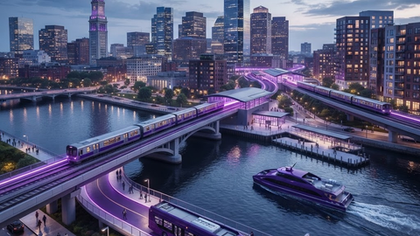
A Pioneering Transit City
Boston boasts one of the most storied public transit systems in the United States. As home to the country's first subway, the city has long been a leader in urban mobility. Today, an integrated network of subway lines, buses, commuter rail, and ferries carries hundreds of thousands of riders each day, forming the circulatory system of the metropolitan region.
Public transit is essential to Boston's identity and economy. The city's compact layout, historic streets, and limited parking make transit not just convenient but often necessary. For students, commuters, and visitors alike, reliable public transportation is a defining feature of daily life in Greater Boston.
The Backbone of Urban Mobility
The subway system, with its color-coded lines, forms the backbone of Boston's transit network. These rapid transit lines connect major neighborhoods, business districts, universities, and cultural landmarks, allowing riders to move quickly across the city. Frequent service and extensive coverage make the subway the preferred choice for many urban journeys.
Complementing the subway, an extensive bus network reaches areas beyond the rail lines, providing crucial coverage for neighborhoods and connecting riders to transit hubs. Together, subway and bus services create a comprehensive system that serves nearly every corner of the city, ensuring that public transit remains accessible to residents throughout the region.
Connecting the Region
Beyond the urban core, commuter rail extends Boston's transit reach far into the surrounding suburbs and communities. These lines enable residents of outlying towns to commute into the city without driving, reducing traffic and supporting regional economic activity. For many workers, commuter rail is the essential link between home and workplace.
Ferry services add another dimension to Boston's transit network, offering scenic and efficient water routes across the harbor. These connections serve both commuters and tourists, taking advantage of the city's maritime geography. The integration of these varied modes into a single system reflects the sophistication of Boston's approach to mobility.
Innovation and Modernization
Boston's transit services are continually evolving to meet modern expectations. Digital fare payment, mobile apps, and real-time arrival information have transformed the rider experience, making trips easier to plan and more predictable. These technological improvements reflect a commitment to convenience and transparency.
Sustainability is also a central focus. Investments in cleaner vehicles, energy-efficient infrastructure, and expanded service aim to reduce the environmental footprint of transit while encouraging more residents to leave their cars behind. As Boston pursues ambitious climate goals, public transit plays a pivotal role in building a greener future.
Ten Transit Services Boston Riders Use
MBTA Red Line links Cambridge, downtown Boston, and branches toward Ashmont and Braintree. MBTA Orange Line connects neighborhoods from Jamaica Plain through downtown toward Malden. MBTA Blue Line offers a useful connection between downtown, East Boston, Logan-area access, and Revere.
MBTA Green Line combines subway and light-rail operations, serving Back Bay, the Fenway area, Brookline, Newton, Somerville, and Medford through multiple branches. MBTA Silver Line provides bus rapid transit-style service, including an important link between South Station and Logan International Airport. MBTA Local Bus routes fill gaps between rail corridors and remain essential for many neighborhoods.
MBTA Commuter Rail, operated by Keolis, connects central Boston with communities across eastern Massachusetts and Rhode Island. MBTA Ferry provides harbor transportation on selected routes, combining practical commuting with memorable views. Logan Express offers scheduled bus links between the airport and suburban terminals, reducing the need to drive into the airport complex. Amtrak completes the picture with intercity rail from South Station, Back Bay, and North Station to destinations throughout the Northeast and beyond.
The best choice depends on origin, destination, accessibility needs, and travel time. Riders should review current service alerts, late-night schedules, transfer rules, and elevator availability before departure. Contactless fare developments and real-time tools are improving convenience, but allowing extra time remains sensible during construction or severe New England weather.
Getting More from the Network
Riders can make transit more predictable by planning the complete trip rather than only the longest segment. Check service alerts shortly before departure, identify an alternate route, and allow extra time for transfers between modes. Accessibility details matter because elevator outages can change an otherwise simple journey. Visitors should distinguish subway and commuter-rail fare systems and confirm the last return departure before evening activities. At busy stations, following platform signs and preparing payment before boarding helps everyone move efficiently. During snow, major events, or construction, updated official information is more reliable than a previously saved itinerary.
The Future of Boston Transit
Looking forward, Boston's public transit services face the dual challenge of maintaining aging infrastructure while expanding to meet growing demand. Ongoing modernization projects, accessibility improvements, and service enhancements are all part of a long-term vision for a more reliable and equitable system.
The best transit services combine broad coverage, dependable operations, and a commitment to continuous improvement. By connecting communities, supporting the economy, and advancing sustainability, Boston's public transit network remains an indispensable asset. For residents and visitors alike, it offers an efficient, affordable, and environmentally responsible way to experience one of America's great cities.