
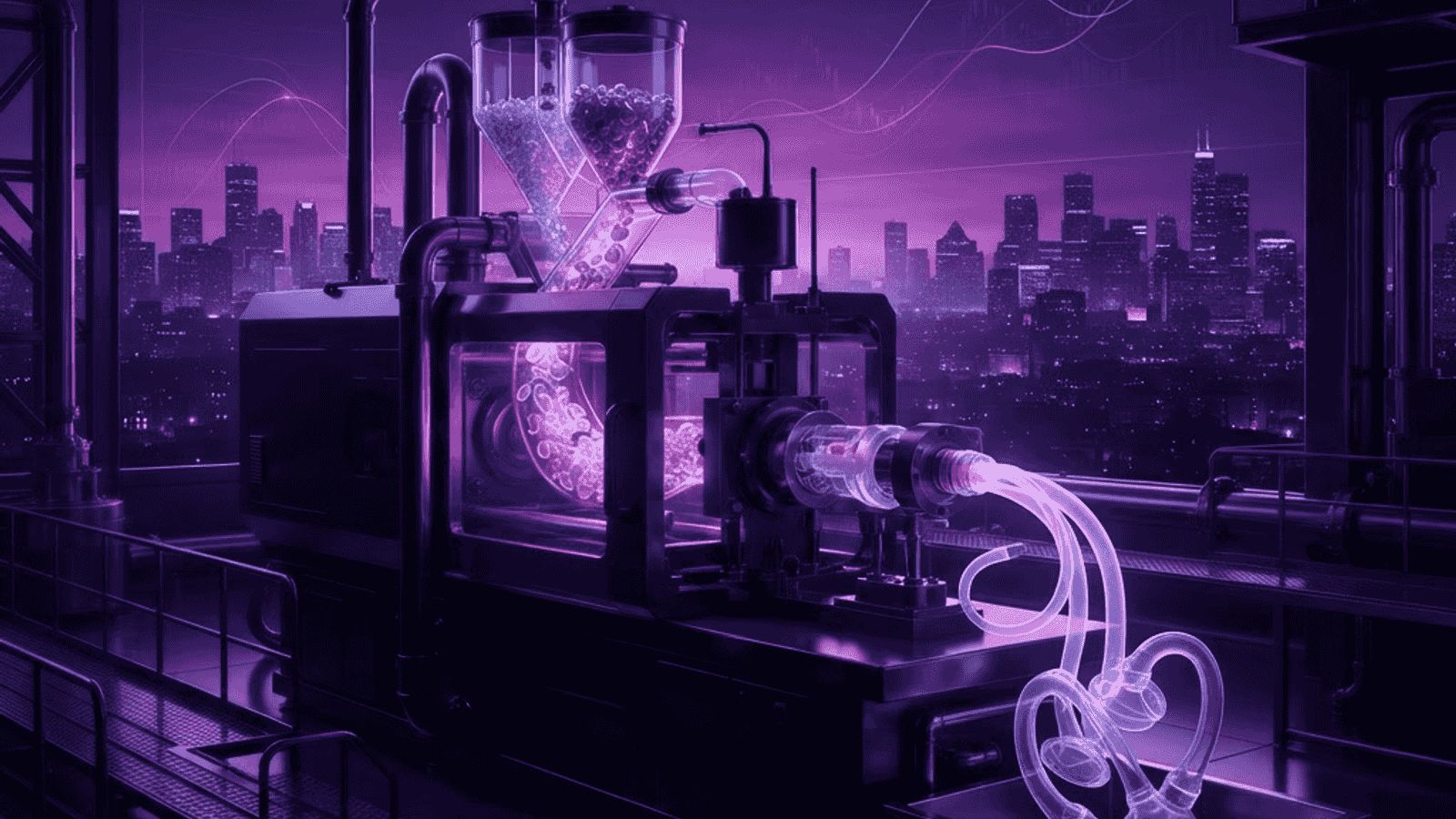
Plastics Quietly Support Every Local Industry
Plastic processing is one of Fort Wayne's most versatile manufacturing capabilities, feeding automotive interiors, medical devices, appliance components, packaging, agricultural equipment and consumer products. The region's plastics companies range from high-volume injection molders running lights-out cells to small shops that machine engineering resins into one-off prototypes.
What makes the local plastics sector strong is the presence of tooling expertise. Molds and dies are the real barrier to entry in plastics, and Fort Wayne's mold making and tool repair capability means customers can develop tooling, run production and modify tools without shipping steel across the country.
Matching the Process to the Part
Choosing a plastics manufacturer starts with choosing a process. Injection molding suits high volumes and complex geometry with excellent repeatability, but carries significant tooling cost. Thermoforming and vacuum forming handle large, relatively simple shapes at much lower tooling investment, ideal for equipment housings and trays. Extrusion produces continuous profiles, tubing and sheet. Blow molding makes hollow containers and tanks. Rotational molding creates large seamless parts like tanks and playground components. CNC machining of plastic stock is best for prototypes, low volumes and very tight tolerances.
Getting this decision right early saves more money than any negotiation later, because the wrong process locks you into avoidable tooling or piece-price penalties.
Top 10 Best Plastic Manufacturers in Fort Wayne
1. Fort Wayne Plastics
Long established custom injection molders in the Fort Wayne area serve automotive, appliance, industrial and consumer customers with a range of press tonnages, engineering resin experience and in-house tooling support. Their strength is process discipline, using scientific molding techniques, cavity pressure monitoring and documented setup sheets to deliver consistent parts across years of production. Many also offer assembly, ultrasonic welding, pad printing and packaging.
2. Reprocessing and Compounding Operations
Resin compounders and reprocessors grind, blend and pelletize material, adding colorants, fillers, flame retardants and impact modifiers. Regional compounders let molders specify custom material properties instead of settling for standard grades. They also give manufacturers a route to incorporate recycled content without sacrificing performance.
3. Summit City Thermoforming
Heavy gauge thermoformers produce equipment enclosures, machine guards, agricultural panels, dunnage trays and medical device housings. Compared to injection molding, tooling costs are dramatically lower, making thermoforming ideal for volumes in the hundreds or low thousands. Trimming precision and material selection determine part quality in this process.
4. Midwest Extrusion Products
Extruders produce profiles, tubing, sheet and edge trim used in furniture, construction, appliances and material handling. Custom profile extrusion requires die design expertise and careful cooling control to hold dimensions. Because tooling is comparatively inexpensive, extrusion is often the fastest route to a custom plastic component.
5. Allen County Blow Molding
Blow molders create bottles, tanks, ducts, reservoirs and containers for chemical, agricultural and automotive customers. Extrusion blow molding and injection stretch blow molding each serve different container requirements. Wall thickness control and leak testing are the critical quality gates in this process.
6. Rotational Molding Specialists
Rotational molding produces large, hollow, seamless parts such as storage tanks, kayaks, agricultural bins and playground equipment. It offers exceptional design freedom, uniform wall thickness and very low tooling cost relative to part size. For low-volume large parts, no other process competes economically.
7. Precision Plastics Machining Shops
Shops machining engineering plastics like Delrin, UHMW, PEEK, nylon and polycarbonate serve manufacturers needing wear parts, guides, bushings, manifolds and prototypes. Machining plastics requires different tooling geometry and heat management than metal, so specialization matters. Turnaround measured in days makes these shops indispensable to maintenance departments.
8. Custom Tooling and Mold Makers
Mold builders design and cut injection molds, trim tools and thermoform tooling, then maintain them through millions of cycles. Their ability to diagnose flash, short shots and dimensional drift is what keeps production lines healthy. A molder with an in-house tool room can typically resolve a problem overnight rather than in weeks.
9. Plastic Fabrication and Bonding Services
Fabricators cut, bend, weld and bond acrylic, polycarbonate and PVC into displays, guards, tanks, signage and cleanroom fixtures. This work is craft intensive, with quality visible in edge polish and joint clarity. Retailers, laboratories and manufacturers all use these services for short-run and custom needs.
10. Packaging and Protective Plastics Suppliers
Suppliers of returnable dunnage, thermoformed trays, corrugated plastic containers and protective films help manufacturers move parts without damage. Designing reusable packaging reduces both cost and waste over the life of a program. Automotive and appliance plants in the region are heavy users of these systems.
How to Select a Plastics Partner
- Match volume to tooling economics. Model total cost including tooling amortization, not just piece price.
- Discuss material selection early. Resin choice drives shrinkage, strength, chemical resistance and cost more than any other variable.
- Ask about process monitoring. Scientific molding practices and documented process windows predict long-term consistency.
- Confirm secondary operations. Assembly, decorating, welding and packaging under one roof reduce handling and lead time.
- Review regrind and sustainability policy. Understand how much regrind is used and whether recycled content is available for your application.
Trends in Plastics Manufacturing
Sustainability is the defining pressure, pushing processors toward recycled content, mono-material designs that are easier to recycle, and lightweighting that reduces resin consumption. Automation is expanding rapidly, with robotic part removal, in-mold labeling and automated inspection becoming common even in mid-sized shops. Medical and electric vehicle applications are the fastest growing demand segments, both requiring tighter documentation and cleaner processing. Meanwhile, resin price volatility has made flexible material qualification a genuine competitive advantage.
Final Thoughts
Fort Wayne offers the full spectrum of plastics processing along with the tooling expertise that makes it work. The most successful sourcing decisions start with an honest volume forecast and an open conversation about process alternatives, because a molder who suggests thermoforming instead of an expensive mold is telling you something valuable about their integrity. Involve your chosen partner during design, and the part you get will be cheaper, stronger and easier to produce.