
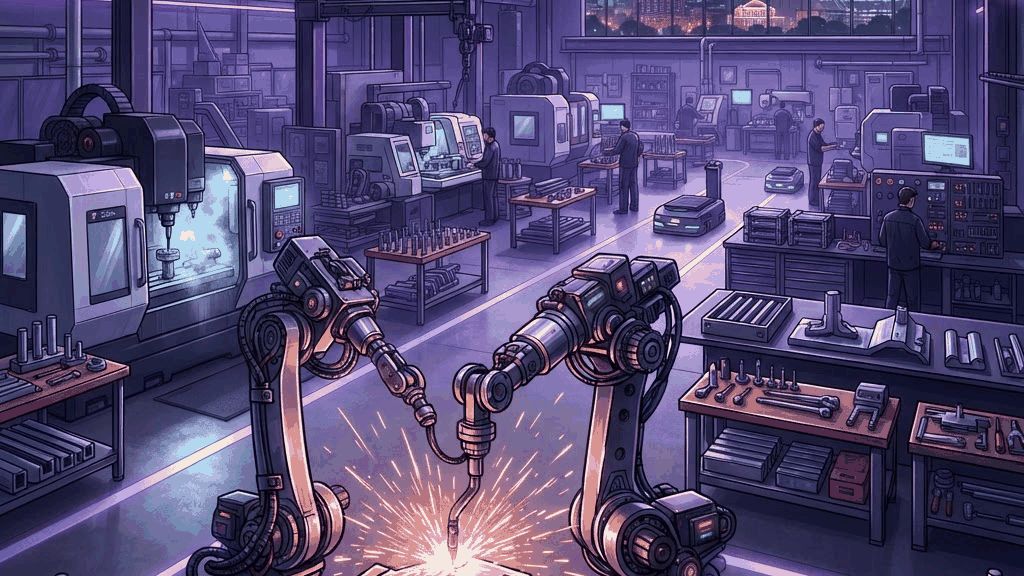
Nashville’s Diverse Metalworking Sector
Metal fabrication supports nearly every part of Nashville’s economy, from construction and transportation to food processing, entertainment, and custom interiors. Projects can involve structural steel, stairs and rails, sheet-metal enclosures, stainless process equipment, machined components, or one-of-a-kind artistic features. Each category requires different equipment, certifications, tolerances, and field skills. The following companies represent notable Nashville and Middle Tennessee capabilities. Customers should verify current capacity, service area, certifications, and suitability for the precise scope.
1. Tate Ornamental
Tate Ornamental is a recognized regional fabricator of architectural and ornamental metal. Its work can include stairs, railings, canopies, and decorative features requiring close coordination with architects and general contractors. Architectural metal succeeds when engineering, field dimensions, finish samples, connection details, and installation access are resolved early. The company is relevant to Nashville’s hospitality, institutional, and high-end commercial projects where metalwork is both structural and highly visible.
2. SteelFab of Tennessee
SteelFab serves structural steel construction with fabrication and project-management resources suited to substantial building programs. Structural suppliers must control detailing, material procurement, shop fabrication, coatings, delivery sequencing, and erection coordination. Nashville contractors should evaluate a fabricator’s experience with projects of similar scale and complexity, along with its ability to manage model-based coordination and changing schedules.
3. Bennett Steel
Bennett Steel provides structural and miscellaneous steel services in the region. Miscellaneous packages—stairs, ladders, rails, embeds, and support framing—can be coordination-intensive despite representing a smaller portion of project value. A responsive fabricator can prevent these details from delaying other trades. Clear scopes and timely approvals are essential because field measurements and finish requirements often govern production.
4. Volunteer Welding Supply
Volunteer Welding Supply supports the metalworking ecosystem with welding equipment, gases, consumables, and technical knowledge. Although it is a supplier rather than a contract fabricator, it earns a place because reliable welding inputs directly affect productivity and quality. Nashville shops rely on correct wire, gas, abrasives, personal protective equipment, and machine support. Training and process advice can also help teams improve consistency and safety.
5. Nashville Fabrication
Nashville Fabrication addresses custom metal needs for local commercial and residential projects. Smaller custom shops can be particularly effective for counters, brackets, frames, railings, furniture components, and prototypes that do not fit standardized construction packages. Buyers should provide dimensioned drawings, alloy and thickness, weld appearance, finish, tolerance, and installation expectations. A sample or prototype is worthwhile when the visual standard is difficult to describe.
6. Sattler Manufacturing
Sattler Manufacturing is known in Middle Tennessee for metal fabrication and manufacturing services. A diversified shop may combine laser cutting, forming, welding, and assembly, reducing handoffs for repeat components. This integrated workflow can improve traceability and lead time. Original-equipment manufacturers should ask about design-file handling, first-article inspection, revision control, fixture strategy, and scalable capacity.
7. Anchor Fabrication Tennessee
Anchor Fabrication offers contract manufacturing services that include cutting, forming, welding, machining, coating coordination, and assembly. Contract manufacturers are useful when a customer wants one accountable partner for a fabricated product rather than managing many specialty vendors. Nashville industrial buyers should evaluate quality systems, production planning, supplier control, and the shop’s willingness to support both prototypes and mature programs.
8. LaserCraft Technologies
LaserCraft Technologies provides precision laser cutting and related fabrication services. Laser processing is well suited to repeatable profiles, nested sheet parts, and detailed geometry in a range of metals. Its benefits are strongest when drawings are production-ready and designed with realistic tolerances, bend allowances, and edge expectations. Buyers can reduce cost by standardizing material gauges and allowing efficient nesting.
9. Cumberland Machine Company
Cumberland Machine Company represents Nashville’s industrial repair and machining capability. Maintenance teams often need shafts, bushings, housings, weld repairs, or emergency modifications when replacement parts are unavailable or too slow. A strong repair shop combines measurement, machining, welding, and practical failure analysis. Communicating operating loads, material history, and the circumstances of failure helps the shop recommend a durable solution rather than simply copying a damaged part.
10. Thompson Machinery
Thompson Machinery supports heavy equipment and power systems with parts, service, and component repair. While broader than a conventional metalworks shop, its machining and rebuild capabilities are important to Nashville contractors and industrial operators. Rebuilding can extend asset life when performed with appropriate inspection and quality control. Customers should compare downtime, warranty, exchange options, and expected service life against purchasing new.
Choosing a Metalworking Partner
Match the supplier to the work. Structural steel requires code-driven processes and erection coordination; architectural metal prioritizes appearance and field fit; precision parts demand controlled tolerances and inspection; food or pharmaceutical equipment may require specific stainless grades and sanitary finishing. Ask what work is performed internally, how drawings and revisions are controlled, and whether material certifications and inspection reports are available. Finishing—paint, powder coat, plating, galvanizing, or passivation—should be specified as a complete system, not an afterthought.
Industry Direction in Middle Tennessee
Automation, fiber lasers, robotic welding, digital inspection, and 3D coordination are improving throughput, but skilled judgment remains essential. Customers increasingly want shorter supply chains and suppliers able to move from prototype to repeat production. Nashville’s construction boom also creates demand for visually refined metal details delivered on compressed schedules. The strongest companies pair modern equipment with disciplined communication, realistic scheduling, and early manufacturability feedback.