
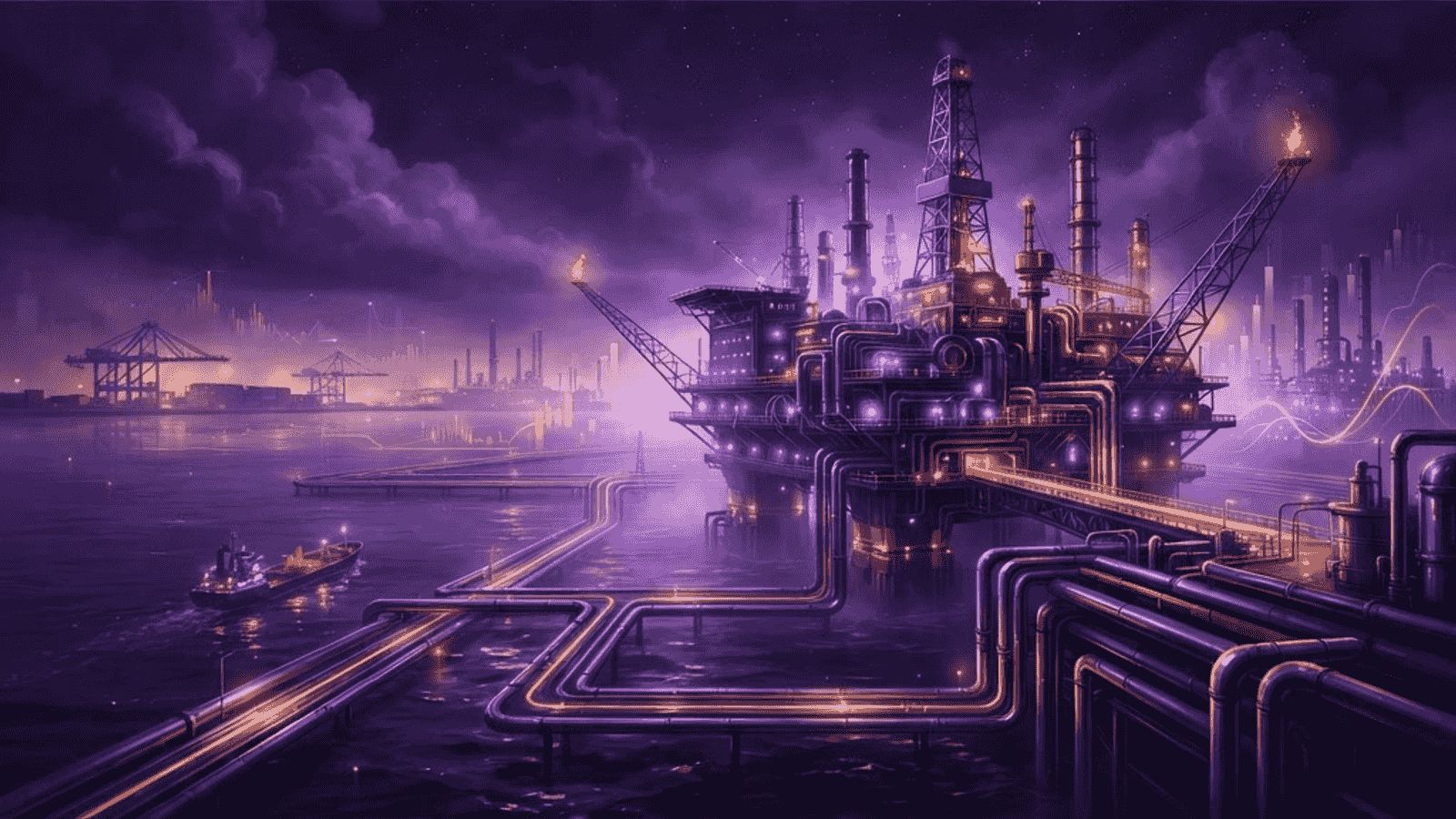
The Gulf of Mexico is one of the most technically advanced offshore basins in the world, and much of the work that keeps it running is coordinated from southeast Louisiana. New Orleans and its surrounding parishes host exploration and production companies, offshore service specialists, marine transportation operators and fabrication yards, forming an ecosystem that supports drilling in water depths measured in thousands of feet.
Why New Orleans Anchors Gulf Energy
Geography explains much of it. The city sits at the intersection of the Mississippi River, the Intracoastal Waterway and the Gulf itself, giving operators direct marine access to offshore fields alongside rail, highway and port infrastructure. Supply bases, heliports, fabrication yards and specialized machine shops cluster within a short radius, which shortens the distance between a technical problem offshore and the people who can solve it.
The other factor is human capital. Generations of petroleum engineers, naval architects, subsea specialists, welders, dynamic positioning operators and geoscientists have built careers here. That accumulated expertise in deepwater completions, floating production systems and hurricane-resilient design is difficult to replicate quickly anywhere else.
How This List Was Compiled
Companies were assessed on operational significance to the Gulf of Mexico, technical capability, safety and reliability reputation, breadth of services, and the depth of their presence in the greater New Orleans area. The list intentionally spans producers, service providers and marine operators, since all three are essential to how the basin actually functions.
The Top 10 Oil and Gas Companies in New Orleans
1. Chevron
Chevron maintains a major Gulf of Mexico organization in the New Orleans region, managing deepwater production assets and advanced subsea developments. The company is recognized for long-cycle project execution, high-pressure reservoir technology and disciplined operating standards, and its regional presence supports a substantial network of local contractors, engineering firms and suppliers.
2. Shell
Shell has been a defining presence in New Orleans for decades and remains one of the most significant deepwater operators in the Gulf. Its portfolio includes some of the basin's landmark floating production facilities, and its regional teams cover subsurface work, projects, wells and operations. The company is also active in lower-carbon business lines from the same base.
3. Freeport-McMoRan
Headquartered historically in New Orleans and still closely tied to the city, Freeport-McMoRan built its reputation across natural resources including oil and gas alongside its mining operations. Its legacy in the region shaped local energy finance, engineering employment and philanthropic institutions, and the name remains synonymous with large-scale resource development.
4. LLOG Exploration
LLOG Exploration is a privately held independent operator based in the New Orleans area that has developed a strong reputation for deepwater exploration and rapid project execution. The company is often cited for its ability to move discoveries to production efficiently by using subsea tiebacks and creative partnership structures, competing effectively against far larger organizations.
5. Talos Energy
Talos Energy focuses on Gulf of Mexico exploration and production with a portfolio spanning shelf and deepwater assets, and it maintains meaningful regional operational presence. The company is known for technical subsurface work, an active approach to acquisitions and asset optimization, and interest in carbon storage opportunities along the Gulf Coast.
6. Hornbeck Offshore Services
Hornbeck Offshore operates a fleet of technologically advanced offshore supply and multi-purpose support vessels serving deepwater energy operations. Based in the region, the company is recognized for high-specification vessels, strong safety systems and reliability in supporting complex offshore campaigns where downtime is extraordinarily expensive.
7. Edison Chouest Offshore
Edison Chouest combines vessel operations with its own shipbuilding capability, giving it unusual control over fleet design and maintenance. Its vessels support deepwater drilling, subsea construction and production logistics throughout the Gulf, and the company's Louisiana roots make it one of the most influential marine service organizations in the basin.
8. Harvey Gulf International Marine
Harvey Gulf, headquartered in New Orleans, provides offshore supply vessels and marine support with a notable emphasis on cleaner-burning liquefied natural gas propulsion and battery hybrid systems. That investment in lower-emission marine technology distinguishes it in a sector where fuel consumption and environmental performance are increasingly scrutinized.
9. Superior Energy Services
Superior Energy Services delivers a broad range of specialized oilfield products and services including well intervention, completion tools, pressure control and decommissioning support. Its diversified service lines make it a frequent partner across the well lifecycle, and its regional footprint supports both Gulf offshore and onshore operations.
10. Gulf Island Fabrication
Gulf Island Fabrication builds offshore structures, modules and marine vessels from Louisiana yards, supporting platform construction, topsides fabrication and increasingly diversified industrial work. Its heavy steel capability and waterfront access make it a critical link between engineering design and installed offshore infrastructure.
Trends Reshaping the Sector
Several forces are changing how Gulf operators work. Capital discipline has shifted emphasis from volume growth toward returns, favouring subsea tiebacks to existing infrastructure over standalone developments. Emissions performance now influences project approval and financing, driving investment in electrification, methane monitoring and lower-emission vessels. Decommissioning has become a substantial business in its own right as older shelf infrastructure reaches end of life. And carbon capture and storage along the Gulf Coast is drawing on precisely the subsurface and pipeline skills the region already has.
Choosing an Energy Partner in the Region
For operators selecting service providers, safety performance data and equipment maintenance records deserve as much weight as commercial terms, because offshore failures are catastrophically expensive. Verify that vessel and fabrication partners have realistic capacity for your schedule rather than nominal availability. For investors and jobseekers, look at how a company is positioning across the transition, including its posture on carbon management and lower-emission operations. Local presence still matters: proximity to supply bases, machine shops and engineering talent measurably shortens response times.
Final Thoughts
Oil and gas remains foundational to the New Orleans economy, and the companies profiled here represent the technical depth that keeps the Gulf of Mexico competitive against global alternatives. What makes the region interesting now is that the same engineering culture built for deepwater production is being redirected toward decommissioning, carbon storage and offshore wind. That adaptability, more than any single field or facility, is the region's durable advantage.