
A Baking Culture Built From Many Traditions
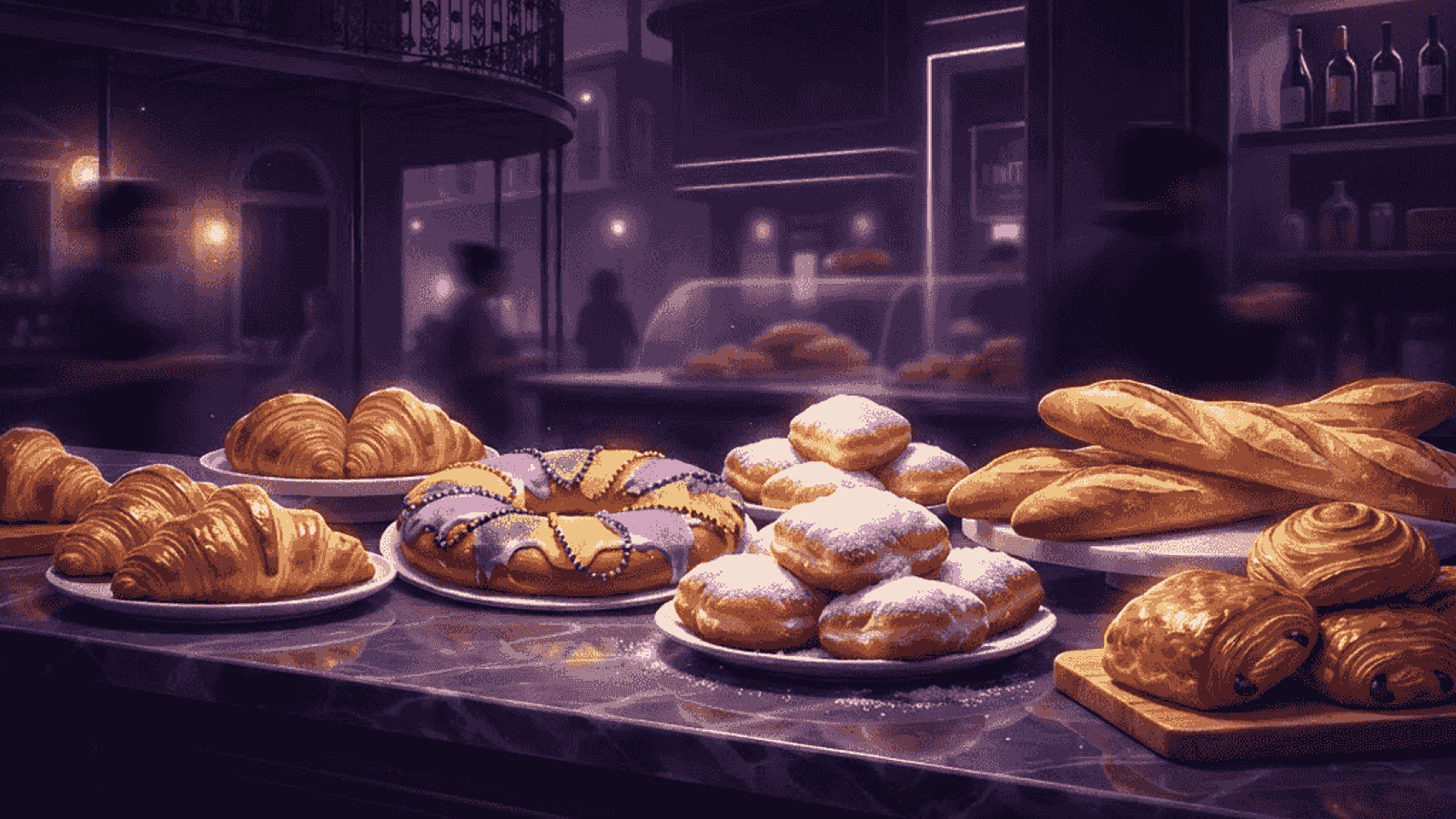
Few American cities have a baking identity as layered as New Orleans. French colonial influence established a bread culture that still shapes the local diet, most visibly in the crackly, feather-light loaf used for po-boys. Sicilian immigration in the late nineteenth century brought cannoli, cassata and almond pastries. Vietnamese families who settled in New Orleans East after 1975 transformed the local bread landscape and, remarkably, reinvented king cake for a new era. Layer Carnival season on top, when bakeries produce staggering quantities of cinnamon-laced ring cakes, and the result is a city where bakeries function as cultural institutions rather than mere retail shops.
What Makes New Orleans Bread Distinctive
The famous local French bread is not a copy of a Parisian baguette. It is lighter, with a thin shattering crust and an airy, almost hollow crumb designed specifically to absorb gravy and dressing without collapsing. Humidity plays a real role, and bakers adjust hydration and proofing constantly through the year. That environmental sensitivity is why local bakers talk about the weather as much as farmers do, and why loaves baked here taste different from the same formula executed elsewhere.
1. Dong Phuong Bakery
Located in New Orleans East, Dong Phuong is a genuine institution. The family-run bakery supplies French bread to many of the city's most respected po-boy shops while also producing Vietnamese pastries, buns and banh mi. Its king cake developed a near-mythic following, with seasonal lines forming before dawn and pre-orders selling out almost instantly. The bakery earned national culinary recognition, and its story is one of the clearest examples of immigrant craftsmanship reshaping a regional food tradition.
2. Bywater Bakery
Bywater Bakery is a neighborhood anchor as much as a bakery, known for a rotating selection of cakes, pastries, breakfast plates and a famously indulgent king cake filled with berry and cream cheese. The shop leans into community programming, live music and second-line culture, making it a social hub. Its strength is generosity of flavor and an unpretentious, welcoming counter culture that reflects the Bywater neighborhood itself.
3. La Boulangerie
La Boulangerie brings classical French technique to Magazine Street, producing laminated pastries, sourdough and baguettes with careful attention to fermentation. Part of a respected local restaurant group, it benefits from professional kitchen discipline and consistent sourcing. Visitors come for croissants and morning buns, while locals rely on it for daily bread and tart selections that would not be out of place in Paris.
4. Levee Baking Co.
Levee Baking Co. built its reputation on seasonal baking with strong sourcing relationships and a lighter, produce-forward sensibility. Expect galettes, hand pies, biscuits and cakes that reflect what is actually growing in Louisiana at the moment. The bakery is a good example of a newer generation of New Orleans bakers who treat farmers market ingredients as the starting point rather than an afterthought.
5. Willa Jean
Willa Jean operates as both a full restaurant and a bakery counter in the Central Business District, and it is best known for cornbread, biscuits, cookies and Southern-leaning pastry. The kitchen's pastry pedigree is serious, and the cookie and milk service has become a signature. It is a strong choice for visitors who want bakery quality within a sit-down brunch setting.
6. Gracious Bakery
With multiple locations around the city, Gracious Bakery scaled without losing craft standards. It produces artisan breads, croissants, cakes and coffee service, and it has built a substantial custom cake business for weddings and events. Consistency across locations is its quiet strength, which matters enormously for a bakery serving both retail customers and wholesale accounts.
7. Haydel's Bakery
Haydel's is a classic New Orleans family bakery with a long history in the Carnival cake trade, shipping king cakes nationwide and producing traditional celebration cakes, doberge cakes and petit fours. It represents the older commercial bakery tradition of the city, where recipes are stable across decades and holiday production defines the calendar. For many local families, a Haydel's box signals a milestone.
8. Breads on Oak
Breads on Oak takes an entirely plant-based approach, producing organic breads, croissants and pastries without dairy or eggs. That constraint has driven real technical creativity, and the bakery has won over customers who came for dietary reasons and stayed for quality. It also serves a growing demand for vegan king cake during Carnival, filling a gap the traditional bakeries largely ignore.
9. Maple Street Patisserie
A small Uptown shop near the universities, Maple Street Patisserie is beloved for European-style pastries, breads and simple, well-executed classics at fair prices. It has the character of a genuine neighborhood patisserie, with regulars who arrive at the same time each morning. The lack of pretension is part of the appeal.
10. Cake Cafe and Bakery
In the Marigny, Cake Cafe built a following on brunch, savory pastries and dependable cakes, along with an early reputation for goat cheese and apple king cake that helped expand what locals expected from the form. It functions as a casual all-day cafe, and its bakery case rewards repeat visits.
King Cake Season Explained
From Twelfth Night on January sixth through Mardi Gras day, king cake dominates local bakeries. Traditional versions are a brioche-like ring with cinnamon and colored sugar in purple, green and gold. Modern versions include cream cheese, praline, berry and savory fillings. A small plastic baby is hidden inside, and whoever finds it is expected to buy the next cake. Bakeries plan production capacity, staffing and even freezer logistics around this six-week window, and many earn a disproportionate share of annual revenue during it.
Tips for Visiting Local Bakeries
Arrive early, especially on weekends, because the best items sell out. During Carnival, place king cake orders days ahead and expect lines at the most popular bakeries. If you want to understand the city's bread culture, buy a loaf of local French bread the same day it is baked and eat it within hours, since its delicate crust does not keep. Finally, explore beyond the French Quarter. Some of the most significant baking in New Orleans happens in residential neighborhoods and in New Orleans East, far from the tourist core.
The Bigger Picture
New Orleans bakeries demonstrate how a food tradition stays alive by absorbing new influences rather than freezing in place. Vietnamese bakers now define the city's bread supply, plant-based shops have earned mainstream respect, and young bakers are building menus around Louisiana produce. The result is a bakery scene that honors history while continuing to change, which is the most New Orleans quality imaginable.