
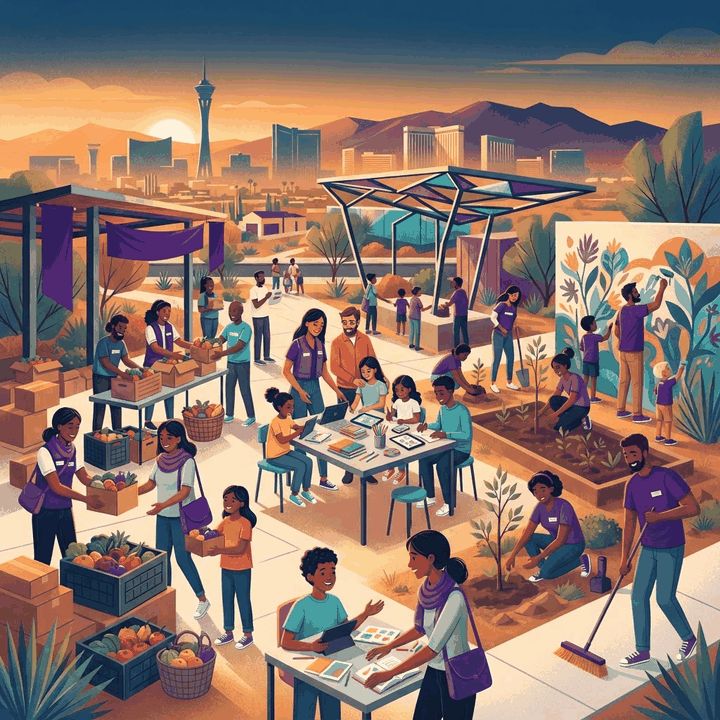
Organizations Strengthening Southern Nevada
Las Vegas is known worldwide for hospitality and entertainment, yet its nonprofit community works every day on needs that rarely appear in visitor brochures. Rapid population growth, housing pressure, extreme heat, food insecurity, and uneven access to services create complex local challenges. The organizations below are notable for established programs, recognizable community impact, or specialized missions. Inclusion is not a financial ranking; prospective donors should review current reports, governance, and volunteer requirements before participating.
1. Three Square Food Bank
Three Square Food Bank is Southern Nevada’s largest hunger-relief organization and a central link between food sources and community partners. It supports pantries, meal programs, schools, and mobile distributions across a broad service area. Its scale helps redirect donated food efficiently while purchasing staples that are consistently needed. Programs serving children and older adults address groups especially vulnerable to food insecurity.
2. The Shade Tree
The Shade Tree provides shelter and supportive services for women and children experiencing homelessness or escaping dangerous situations. Its work recognizes that stable housing often requires more than a bed; clients may need case management, workforce support, basic necessities, and connections to health or legal resources. The organization also considers the bond between families and pets, an important issue for people deciding whether they can safely enter shelter.
3. Opportunity Village
Opportunity Village has served people with intellectual and related disabilities in Southern Nevada for decades. Its programs include workforce development, day services, arts, recreation, and community engagement. The organization is also familiar to many residents through seasonal events that generate support and visibility. Its enduring local presence reflects a focus on inclusion, personal growth, and meaningful participation rather than a one-size-fits-all service model.
4. Catholic Charities of Southern Nevada
Catholic Charities of Southern Nevada operates wide-ranging human-service programs that can include food assistance, meals, immigration support, shelter, and services for vulnerable adults. The organization serves people of different backgrounds and beliefs. Its breadth is valuable because clients facing one urgent problem often experience several at once. Long operational history and partnerships help it respond at meaningful scale.
5. HELP of Southern Nevada
HELP of Southern Nevada focuses on helping individuals and families move toward self-sufficiency. Programs span homeless services, youth support, behavioral health, employment assistance, and basic-needs relief. This continuum matters because prevention, crisis intervention, and long-term stabilization require different tools. Its work with young people experiencing homelessness is particularly significant in a region where hidden youth housing instability can be difficult to identify.
6. Nevada Partnership for Homeless Youth
Nevada Partnership for Homeless Youth specializes in services for young people experiencing homelessness. It offers a youth-centered environment and support that may include emergency assistance, housing, education, employment, and case management. Specialized expertise helps address the distinct risks faced by youth, including interrupted schooling and exploitation. Community volunteers and donors can support both immediate necessities and longer pathways to independence.
7. Communities In Schools of Nevada
Communities In Schools of Nevada works within schools to connect students and families with resources that reduce barriers to learning. Site coordinators can help address attendance, food access, clothing, mentoring, and referrals. The model is valuable in Clark County because educators frequently see the effects of hardship but cannot solve every external challenge alone. Integrated support allows students to stay engaged with education.
8. Ronald McDonald House Charities of Greater Las Vegas
Ronald McDonald House Charities of Greater Las Vegas supports families whose children require medical care away from home or during demanding treatment periods. Lodging, meals, and family-centered resources can reduce financial and emotional pressure. The organization’s mission is focused, but its impact reaches parents, siblings, health professionals, and communities throughout the region. Volunteers often contribute through meal and hospitality activities.
9. Make-A-Wish Southern Nevada
Make-A-Wish Southern Nevada creates meaningful wish experiences for children with critical illnesses. The process involves families, medical professionals, volunteers, and donors. Wishes are designed to provide hope and a positive focus during difficult periods, not simply a momentary gift. Las Vegas businesses and hospitality partners can play a distinctive role by contributing experiences and specialized resources.
10. The Animal Foundation
The Animal Foundation operates a major open-admission animal shelter serving the Las Vegas Valley. It manages adoption, lost-and-found services, animal care, foster programs, and community resources. Open-admission work is complex because intake volume can fluctuate sharply. Foster homes, responsible adoption, identification, spay-and-neuter efforts, and support that helps families keep pets all contribute to better outcomes.
How to Evaluate and Support a Nonprofit
Start with mission fit, then review current annual reports, financial disclosures, leadership, measurable outcomes, and transparency. Low overhead alone is not proof of effectiveness; qualified staff, technology, facilities, and evaluation all cost money. Volunteers should choose roles matching their reliability and skills, while donors can ask whether unrestricted gifts would help an organization respond flexibly. In-kind donations are useful only when they match current needs.
Local Giving with Lasting Value
Las Vegas nonprofits operate in a city of dramatic contrasts and strong community networks. Residents can contribute money, professional expertise, advocacy, event support, foster care, or recurring volunteer time. The most effective support is informed and consistent. Selecting an organization whose mission genuinely resonates makes it easier to build a lasting relationship and understand how local change occurs.