
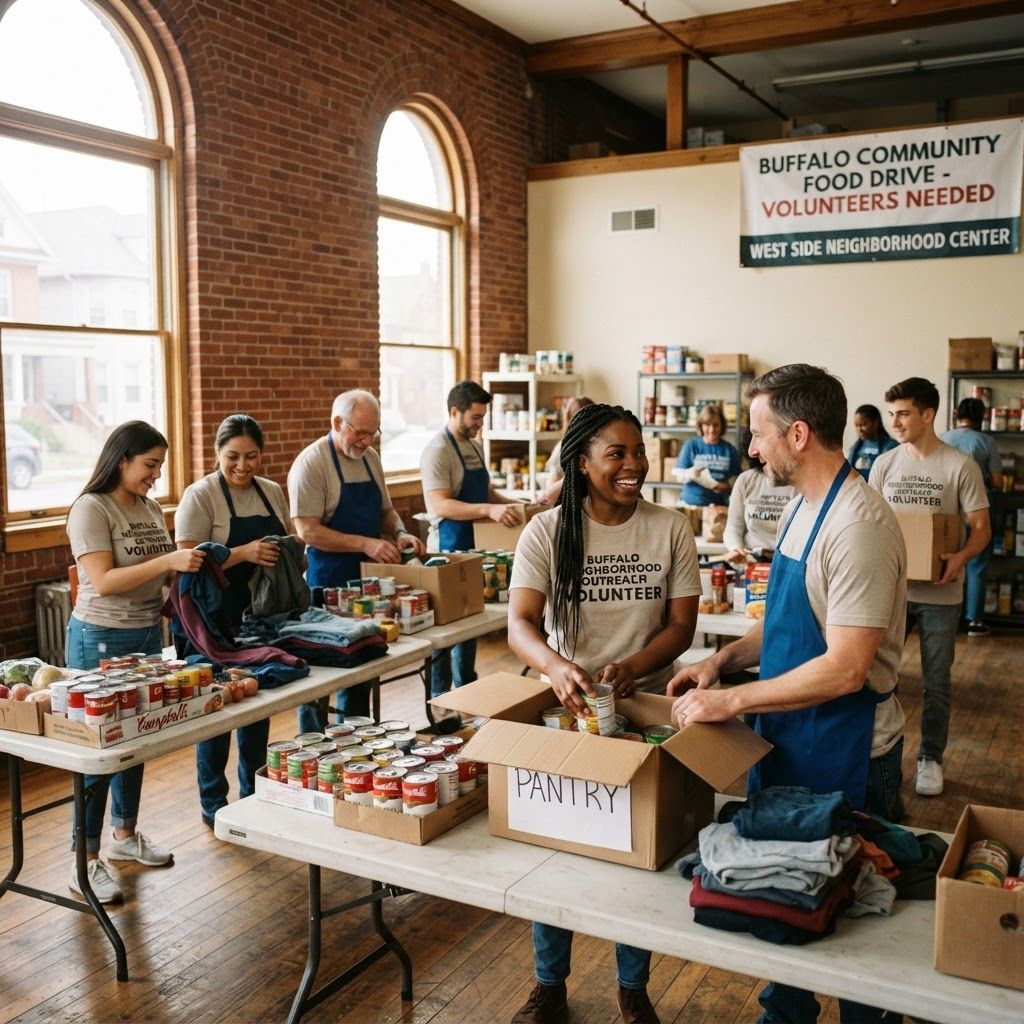
Buffalo has an unusually strong civic culture. Decades of economic transition left real challenges — concentrated poverty, aging housing stock, uneven access to healthcare and education — but they also produced a nonprofit sector characterized by persistence, neighborhood-level knowledge and a willingness to collaborate rather than compete. The city's nonprofits are frequently cited as a reason the population decline of previous decades did not fracture community life more severely.
Understanding Buffalo's Nonprofit Landscape
Several features define the sector locally. Refugee and immigrant resettlement has been transformative, with Buffalo welcoming substantial populations from Burma, Somalia, Sudan, Iraq, Ukraine and elsewhere, and a network of organizations built to support that integration. Housing and neighborhood revitalization work is extensive given the age of the building stock. Arts and cultural organizations punch far above the city's population size. And a robust community foundation and philanthropic infrastructure helps coordinate funding across all of it.
The sector also faces real pressure. Demand consistently exceeds capacity, government contract reimbursement often lags actual cost, and competition for skilled staff against better-paying sectors creates persistent turnover. Understanding that context helps donors and volunteers contribute more usefully.
Ten Outstanding Buffalo Nonprofits
1. Queen City Community Food Network
Operates food distribution, pantry support and nutrition education across underserved neighborhoods. Beyond emergency food, the organization invests in urban growing and cooking programs that address the underlying causes of food insecurity rather than only its symptoms.
2. Buffalo Refugee Resettlement Alliance
Provides housing placement, English instruction, employment navigation, legal support and cultural orientation for newly arrived families. Their case management model, pairing families with long-term navigators, has produced notably strong integration outcomes.
3. West Side Neighborhood Housing Trust
Focuses on affordable housing development, home repair assistance and foreclosure prevention. Rehabilitating vacant properties rather than demolishing them preserves both housing supply and the architectural character that defines Buffalo neighborhoods.
4. Niagara Youth Education Partnership
Runs after-school tutoring, mentorship, college readiness and summer learning programs for city students. Long-term relationships with participating schools allow the organization to track student progress over years rather than semesters.
5. Lakeshore Health Access Coalition
Delivers community health outreach, free clinic services, chronic disease management and health insurance enrollment assistance. Multilingual staffing addresses a genuine barrier for immigrant and refugee residents navigating the healthcare system.
6. Erie County Homeless Services Collaborative
Coordinates shelter, transitional housing, street outreach and permanent supportive housing placement. Their housing-first approach and coordinated entry system reduce the duplication that fragmented services historically produced.
7. Allentown Arts and Culture Foundation
Supports local artists, community arts education, public art installations and neighborhood cultural events. Investment in accessible creative programming, particularly for young people, sustains Buffalo's disproportionately strong arts identity.
8. Great Lakes Environmental Stewardship Council
Works on waterfront restoration, watershed protection, urban tree planting and environmental education. Their advocacy contributed to significant progress in remediating industrial legacy contamination along the Buffalo River.
9. Southtowns Senior Support Services
Provides home-delivered meals, transportation, caregiver respite and social programming for older adults. As the regional population ages, services enabling seniors to remain in their homes have become increasingly critical infrastructure.
10. Buffalo Workforce Opportunity Institute
Offers job training, credentialing, apprenticeship placement and financial coaching for adults facing employment barriers. Direct partnerships with regional employers mean training aligns with jobs that actually exist locally.
How to Evaluate a Nonprofit Before Giving
Look at outcomes rather than activity. Meals served and clients contacted describe effort, not effect. Strong organizations report on what changed — housing retained after twelve months, students promoted, participants employed at a living wage — and are honest when results fall short.
Treat overhead ratios cautiously. A very low administrative percentage can indicate underinvestment in staff, evaluation and technology, which undermines long-term effectiveness. What matters is whether spending is proportionate and purposeful, not whether it is minimal.
Review financial health for reserves and revenue diversity. Organizations dependent on a single government contract are fragile. Read the audited financial statements and annual report, both of which reputable nonprofits make available. Consider governance too: an engaged board with relevant expertise and community representation is a meaningful quality signal. Finally, favor unrestricted, multi-year giving where possible, because flexible funding lets organizations respond to need rather than to grant categories.
How to Get Involved Effectively
Skilled volunteering usually creates more value than general labor. Accounting, legal, technology, translation, grant writing and human resources expertise are chronically scarce in small nonprofits. Consistency matters more than intensity — a volunteer who shows up weekly for a year is worth many one-time participants. And in-kind donations are genuinely helpful only when they match a stated need, so ask before delivering goods.
Final Thoughts
Buffalo's nonprofit sector reflects the city itself: practical, deeply rooted and stubbornly committed. Choosing where to direct your support is easier when you focus on organizations with clear outcomes, sound governance and honest reporting. Pick one or two causes you genuinely care about, give flexibly and consistently, and volunteer where your specific skills fill a real gap. Sustained, focused support does considerably more good than scattered generosity.