
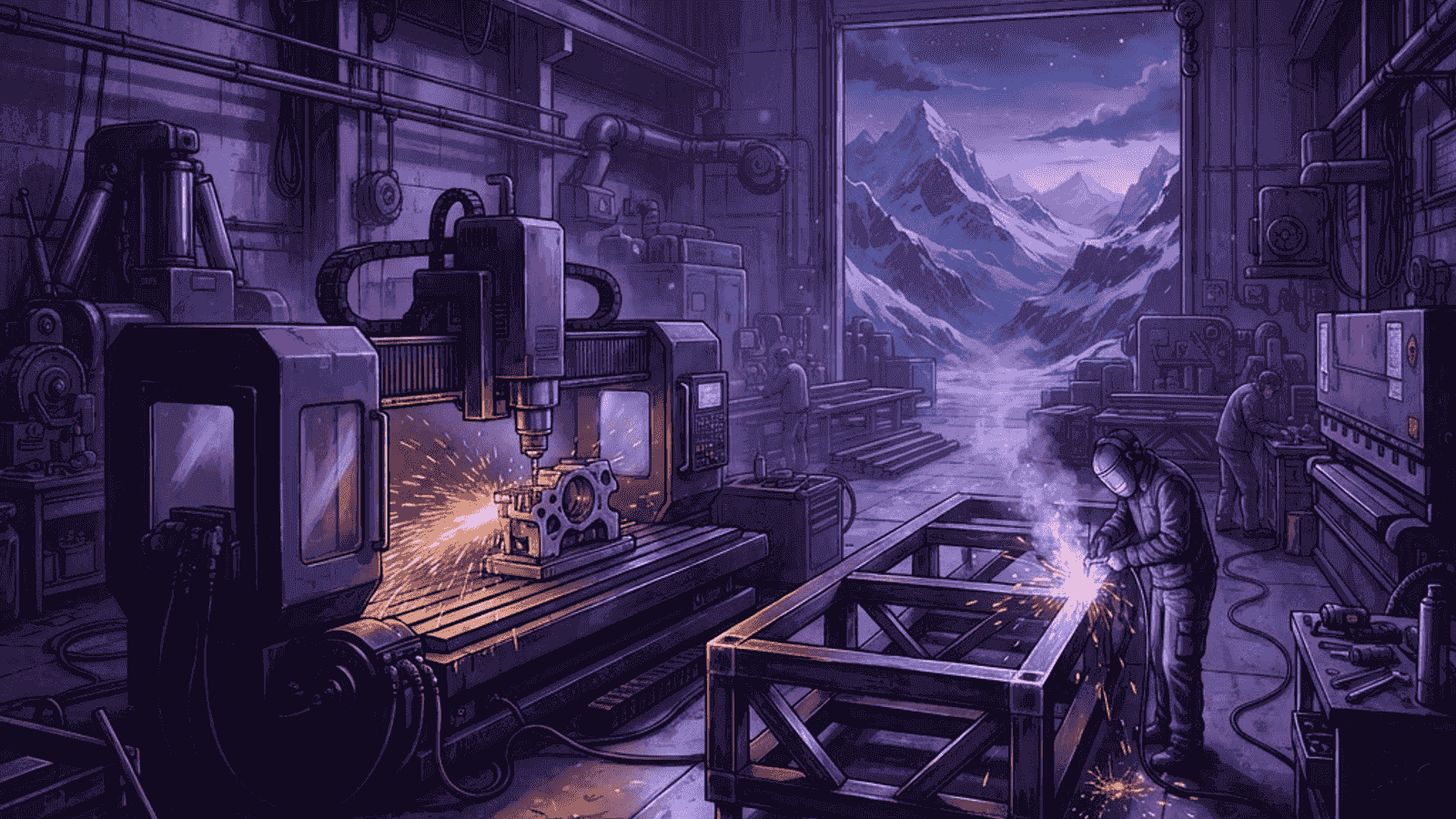
Local Fabrication as Economic Infrastructure
Machinery manufacturing in Anchorage exists because distance makes downtime expensive. A failed shaft at a seafood processing plant during peak season, or a broken component on North Slope equipment, cannot wait weeks for a replacement to be manufactured and shipped. Local machine shops, fabricators, and hydraulic specialists therefore function as critical infrastructure, capable of reverse-engineering a part from a broken sample and producing it within days.
That capability shapes the sector's character. Rather than producing standardized product lines, most Anchorage machinery businesses do custom fabrication, repair, and short-run manufacturing across mining, fisheries, oil and gas, construction, and municipal utilities. Versatility and turnaround speed are the competitive advantages, not unit cost.
How to Evaluate a Machine Shop
Begin with capability inventory: what machines are on the floor, what materials can be worked, what tolerances are routinely held, and what maximum part size can be handled. CNC milling and turning, manual capability for one-offs, welding certifications for the relevant material and process, and heat treatment or finishing access all determine what a shop can actually deliver.
Quality documentation is the second screen. For structural or pressure-related work, ask about welder certifications, material traceability, inspection methods, and whether nondestructive testing is available in-house or through a partner. Then assess responsiveness — emergency capacity, willingness to work outside normal hours during a breakdown, and honesty about scheduling. A shop that promises everything immediately usually delivers late.
The Top 10 Machinery Manufacturers in Anchorage
1. Denali Precision Machine Works
A CNC machining shop producing precision components, replacement parts, and short-run production from steel and alloys.
2. Cook Inlet Fabrication & Welding
Handles structural steel fabrication, pressure work, and certified welding for industrial and marine applications.
3. Chugach Hydraulic Systems
Manufactures and rebuilds cylinders, pumps, and hydraulic power units, including cold-weather fluid specification.
4. Aurora Materials Handling Equipment
Builds conveyors, hoppers, and processing equipment for seafood, mining, and aggregate operations.
5. Midnight Sun Heavy Equipment Repair
Focuses on rebuilding undercarriages, booms, and drivetrain assemblies for construction and mining machinery.
6. Glacier Marine Machinery
Serves the fishing fleet with shaft work, propulsion components, deck machinery, and winch fabrication.
7. Tundra Custom Automation
Designs and builds automated equipment, control panels, and machine guarding for processing facilities.
8. Inlet Pump & Valve Services
Manufactures replacement pump components and performs valve repair and testing for industrial and utility clients.
9. Northern Frontier Steel Works
Provides plate rolling, forming, cutting, and large-format fabrication for tanks, frames, and structures.
10. Sourdough Machine & Tool
A small job shop specializing in reverse engineering, obsolete part reproduction, and rapid emergency repair.
Trends in Industrial Fabrication
Digital manufacturing has meaningfully changed capability. Scanning a worn or broken component to produce a CAD model, then machining a replacement, allows shops to reproduce parts for equipment whose manufacturer no longer supports it. That has become a significant business line as industrial equipment across Alaska ages.
Additive manufacturing complements rather than replaces machining, mainly for patterns, fixtures, and low-stress components. Predictive maintenance is the other notable shift: sensor data and vibration monitoring allow rebuilds to be scheduled during shoulder seasons rather than performed as emergencies, which reduces cost substantially. Welding automation and improved cold-service alloys have also raised quality consistency on larger fabrication projects.
Costs and Procurement Strategy
Machine work is quoted on setup, material, and machine time, so quantity and design simplicity drive cost heavily. Providing accurate drawings, or a sample part plus tolerances that reflect actual functional requirements rather than defaults, reduces price and rework. Over-specifying tolerance is a common and expensive error.
The best procurement strategy for Alaskan operators is preventive: identify critical spares, have them manufactured during slow periods, and stock them locally. Emergency fabrication at peak season costs multiples of planned work, and the schedule risk is far greater.
Final Thoughts
Anchorage machine shops keep Alaskan industry operating by producing what cannot be shipped in time. Choose shops whose equipment and certifications match your work, provide clear specifications, and shift as much fabrication as possible from emergency response to planned maintenance.