
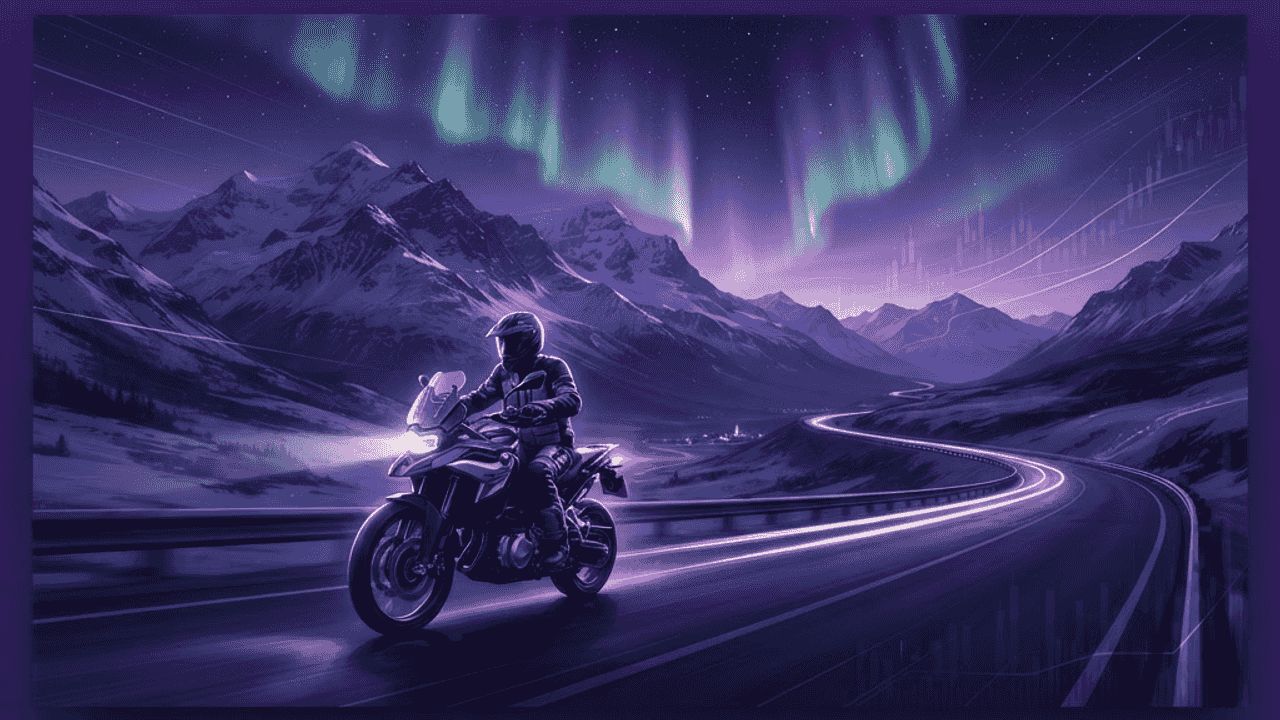
Riding Season in Anchorage
Motorcycling in Anchorage is intense precisely because it is brief. The practical riding window generally runs from late spring through early fall, and within those months riders get extraordinary daylight, dramatic mountain highways, and access to gravel roads that lead into genuine wilderness. Those same conditions demand a particular kind of machine. Cold mornings, frequent rain, frost heaves, loose gravel from winter road treatment, and long distances between fuel stops all favor motorcycles with weather protection, robust suspension, useful luggage capacity, and reliability that does not depend on a dealership being nearby.
What Matters in an Alaskan Motorcycle
Adventure and touring capability dominate rider preferences here. Long-travel suspension absorbs broken pavement, spoked or reinforced wheels tolerate gravel, and heated grips extend comfortable riding into cool evenings. Fuel range is a genuine safety consideration on highways where services are sparse. Local parts and service support deserve heavy weight in the decision, since waiting on a shipped component can consume a large fraction of the season. Finally, weight and seat height matter, because a machine that feels manageable on pavement can become a burden on a loose gravel pullout far from help.
Top 10 Best Motorcycle Brands in Anchorage
1. BMW Motorrad
The benchmark for adventure touring, with large-displacement machines built for long distances and mixed surfaces. Strong wind protection, integrated luggage, and electronic rider aids suit Alaskan highways.
2. Harley-Davidson
Dominant in cruising and touring, with comfortable long-haul models and a strong local riding community. Extensive accessory support lets owners tailor bikes for cold-weather comfort.
3. Honda
Widely respected for reliability across adventure, dual-sport, and commuter categories. Its mid-size adventure and trail models are popular for riders splitting time between pavement and gravel.
4. Kawasaki
Known for versatile, value-oriented machines including capable dual-sports and comfortable sport tourers. Durability and affordable maintenance make it a practical choice.
5. Yamaha
Offers a broad lineup from lightweight trail bikes to full touring models, plus a strong reputation for engine longevity. Its adventure models handle Alaskan gravel confidently.
6. KTM
Favored by off-road oriented riders for aggressive suspension and low weight. Its adventure models appeal to those prioritizing trails and remote gravel over highway comfort.
7. Suzuki
Valued for simple, dependable engineering and a long-running adventure platform that riders modify extensively. Straightforward maintenance suits owners who do their own work.
8. Triumph
Combines classic styling with modern adventure and touring capability. Riders cite comfortable ergonomics and engaging engine character on long mountain routes.
9. Royal Enfield
Appeals to riders wanting an approachable, affordable machine with genuine touring ability at moderate speeds. Simplicity and easy serviceability are its main advantages.
10. Ural
Distinctive sidecar motorcycles with two-wheel drive options that handle gravel and shoulder-season conditions unusually well. Practical cargo capacity makes them memorable Alaskan machines.
Trends Among Alaskan Riders
Middleweight adventure bikes have become the default choice, offering enough highway capability without the weight penalty of the largest touring machines. Electronic aids such as traction control, cornering antilock braking, and selectable ride modes are increasingly valued on wet and gravel-strewn roads. Heated gear has improved dramatically, effectively lengthening the usable season by several weeks on each end. Riders are also investing more in protective apparel and communication systems, reflecting a culture that takes long-distance safety seriously given the distances between towns.
How to Choose Your Motorcycle
Be honest about the riding you will actually do. A rider who mostly commutes and takes occasional weekend trips needs a different machine than one planning gravel routes toward remote highways. Sit on candidates and confirm you can flat-foot the bike while loaded, because gravel parking areas punish marginal control. Verify local service availability and typical parts lead times for the brand. Budget for gear, luggage, and heated accessories as part of the purchase rather than afterthoughts. Finally, plan storage and winterization, since proper fuel stabilization and battery maintenance determine how the bike starts next spring.
Final Thoughts
Anchorage rewards riders who choose equipment suited to real conditions rather than showroom appeal. The brands above earn their standing through durability, weather protection, and the kind of engineering that tolerates gravel and cold. Match the machine to your route plans, invest in gear that keeps you warm and visible, and a short Alaskan season can deliver more memorable riding than a full year elsewhere.
Riding Season Realities and Ownership Planning
The Anchorage riding season is short, typically running from late spring through early autumn, and that compression shapes ownership decisions in ways riders in warmer states never consider. Storage becomes a real cost, whether that means heated indoor space or careful winterization with fuel stabilizer, battery tending, and moisture control. Riders who plan storage before purchase avoid the spring frustration of a machine that will not start.
Tire and suspension choices deserve thought as well. Alaska roads mix smooth pavement with frost heaves, gravel sections, and construction zones, which favors machines with compliant suspension travel and tires rated for mixed surfaces. Pure sport tires that excel on warm asphalt perform poorly on cold, damp, gravel-strewn roads.
Gear investment matters more here than almost anywhere. Temperatures can swing dramatically within a single ride, and layered, weatherproof, armored gear with heated options extends both comfort and the usable season considerably.
Wildlife awareness is the final and most serious consideration. Moose on the highway present a genuine hazard to riders, and experienced Alaska motorcyclists moderate speed at dawn and dusk, scan treelines actively, and avoid riding at night in known crossing corridors.