
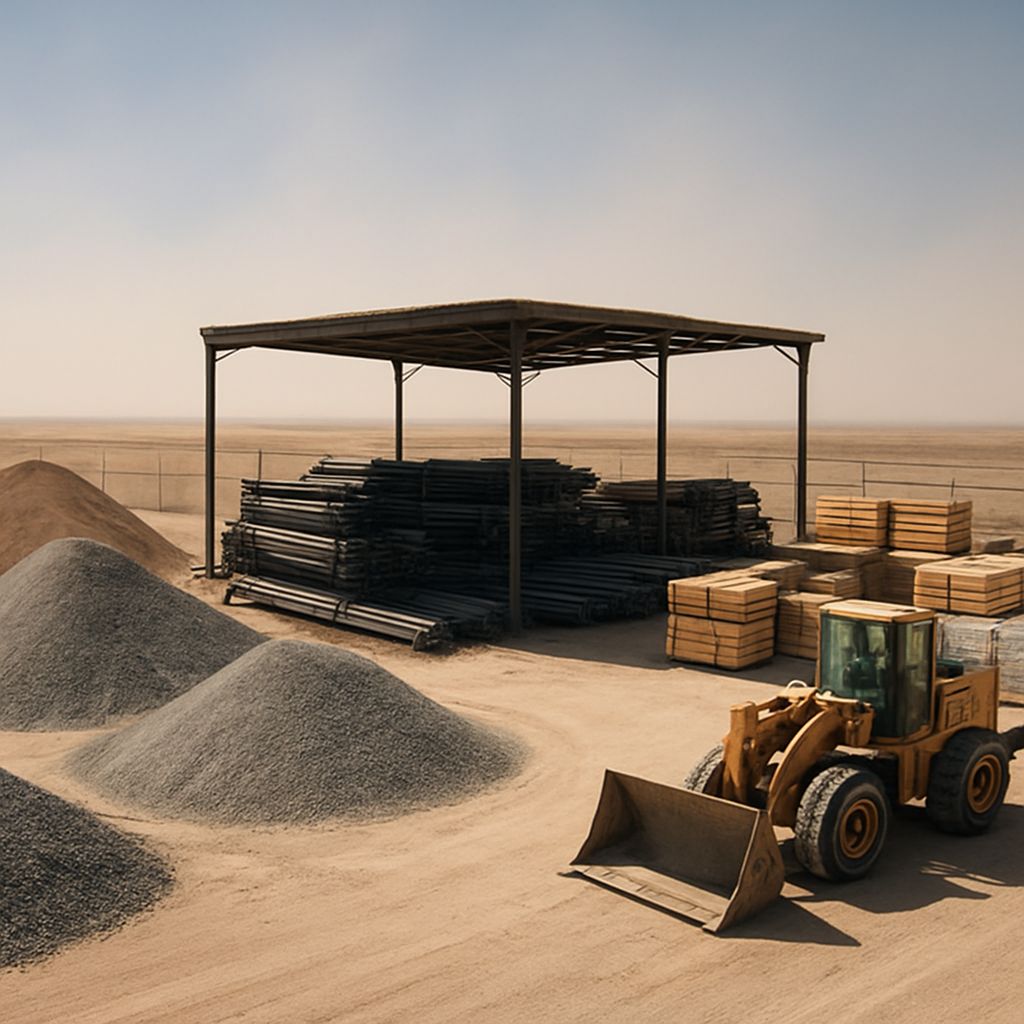
Lubbock's Position in the Raw Materials Supply Chain
Lubbock is not a heavy manufacturing city in the traditional sense, yet it functions as a genuine materials hub. Its position on the Llano Estacado, its rail and highway connections, and the surrounding agricultural economy have created a supply base built around three pillars: agricultural raw materials, construction inputs, and industrial metals and plastics for regional fabrication and food processing.
That mix gives local buyers an unusual advantage. A packaging converter, a cotton gin, a residential builder and a metal fabricator can all source substantial portions of their input needs within the same metropolitan area, reducing freight exposure at a time when transport cost volatility has become one of the largest line items in landed material cost.
What Buyers Actually Evaluate
Procurement teams in the region weigh four criteria heavily: consistency of specification, verified traceability and documentation, buffer inventory held locally, and transparency when a shipment slips. Price matters, but a supplier that quotes aggressively and then delivers off-spec material creates downstream costs that dwarf the saving. The suppliers below have earned their standing largely on reliability rather than on being the cheapest quote in the folder.
The Top 10 Raw Material Suppliers in Lubbock
1. Caprock Industrial Materials
A broad-line industrial supplier serving fabricators, food processors and equipment manufacturers, Caprock Industrial Materials carries steel sheet and plate, structural sections, aluminium and a range of engineering plastics. Its differentiator is in-house processing: shearing, sawing and light forming mean customers can order to near-net size and cut their own scrap rate. Buyers consistently mention accurate mill certification paperwork, which matters for anyone supplying regulated end markets.
2. South Plains Cotton Trading Company
Cotton is the defining raw material of this region, and South Plains Cotton Trading Company operates at the merchant layer between growers and mills. It handles classing data, grade matching and contracted volumes for textile buyers who need consistency across a full production run. Its deep familiarity with West Texas fibre characteristics makes it a valuable adviser as well as a supplier, particularly for buyers new to the region.
3. Llano Aggregate & Concrete Supply
Construction inputs are the region's second great materials story, and Llano Aggregate & Concrete Supply is a mainstay for sand, gravel, crushed stone, ready-mix and cement products. Contractors value its dispatch discipline during large pours and its ability to hold mix designs consistently across multi-phase projects. Its plant locations around the city keep haul distances short, which directly protects concrete quality.
4. Hub City Polymers & Packaging
Serving food processors, agricultural packers and consumer goods producers, Hub City Polymers & Packaging supplies resins, films, corrugated stock and closures. Its strength is technical support on material selection, especially matching barrier properties to shelf-life requirements. As sustainability requirements tighten, it has moved quickly into recycled-content films and mono-material structures that are easier to recycle downstream.
5. West Texas Steel & Pipe
Oil and gas activity in the wider Permian region gives West Texas Steel & Pipe a substantial customer base in tubulars, structural steel and fittings, but it also serves agricultural equipment builders and general contractors. Large yard inventory is its core value proposition: when a project needs material this week rather than next month, availability outranks price. Its cut-to-length and threading services reduce lead times further.
6. Panhandle Grain & Feed Ingredients
Supplying feed mills, dairy operations and food manufacturers, Panhandle Grain & Feed Ingredients handles grains, oilseed meals, byproduct feeds and functional ingredients. Its quality laboratory and sampling discipline are the reason nutritionists trust its consignments, and its storage capacity lets buyers contract forward through volatile harvest windows without carrying the inventory themselves.
7. Lubbock Chemical & Process Supply
This distributor serves water treatment plants, food processors, agricultural chemical formulators and industrial maintenance departments with bulk and packaged chemicals. Regulatory competence is its principal asset: correct labelling, safety data management, compliant transport and proper container handling are non-negotiable in this category, and buyers report few problems on audit. Technical staff also assist with dosing optimisation, which frequently reduces total consumption.
8. Redland Lumber & Building Materials
Framing lumber, engineered wood, sheet goods and millwork make Redland Lumber & Building Materials central to residential and light commercial construction across Lubbock. Builders highlight its accuracy on takeoff-based deliveries, which reduces site waste and theft. It has also expanded its engineered wood offering as long-span requirements and labour costs push builders toward prefabricated components.
9. Texas Plains Metal Recycling & Supply
Operating on both sides of the materials cycle, this company buys scrap and supplies processed secondary metals to foundries and fabricators. Its role has grown as buyers pursue recycled content targets and as secondary aluminium and steel become cost-competitive with primary material. For local manufacturers it offers a genuinely circular option with short haul distances.
10. Cotton Belt Textile Inputs
Focused on the downstream side of the fibre economy, Cotton Belt Textile Inputs supplies yarns, greige fabric, dyes and auxiliaries to apparel and home textile producers. It has become a useful partner for smaller brands trying to build regional supply chains, offering smaller minimum quantities than large international traders and clearer visibility into fibre origin, which is increasingly demanded by retail customers.
Trends Affecting Raw Material Sourcing
Three forces dominate current sourcing conversations in Lubbock. Freight volatility has pushed buyers toward regional suppliers even at slightly higher unit cost. Traceability requirements have hardened, particularly in cotton and food ingredients, where end customers now expect documentation rather than assurances. And recycled or lower-carbon material options have moved from optional to specified in a growing share of tenders, especially for packaging and metals.
Water availability also shapes decisions in this part of Texas, influencing everything from concrete production scheduling to agricultural input planning. Suppliers that manage this openly tend to be more accurate in their forecasting.
Building a Resilient Supplier Base
The most robust procurement strategies in the region use a primary supplier for volume and a qualified secondary for continuity, with specification documents that both have formally accepted. Audit your top three material lines annually, request quality data rather than certificates alone, and treat lead-time honesty as a scored criterion in supplier reviews.
Final Thoughts
Lubbock offers a materials supply base that is broader and more capable than many buyers expect, spanning fibre, aggregates, metals, polymers and food ingredients. The ten suppliers profiled here have built durable reputations by combining local inventory with genuine technical competence. For manufacturers and contractors in the South Plains, that combination is what turns a purchase order into a dependable production schedule.