
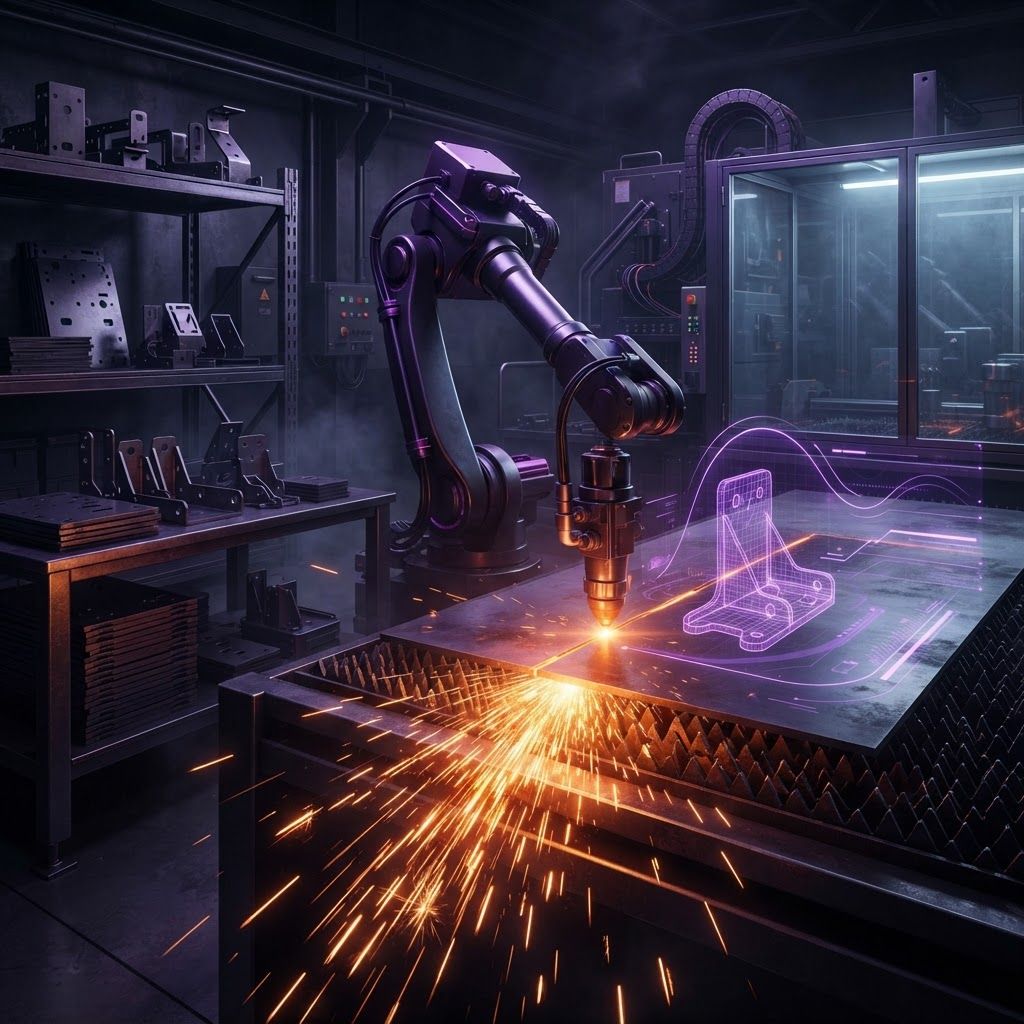
Metalworking is the quiet backbone of Huntsville's industrial economy. Rockets, missile components, automotive assemblies, test fixtures, and process equipment all begin as raw bar, plate, tube, and sheet, and someone has to cut, form, weld, machine, and finish that material to tolerance. Because the region hosts NASA Marshall Space Flight Center, Redstone Arsenal, a dense defense contracting community, and a growing automotive manufacturing base, the local metalworking sector has been pulled toward tighter tolerances, better documentation, and more rigorous quality systems than a metro of comparable size would normally support.
Understanding the Metalworking Landscape
Buyers should recognize that metalworks is not one trade but several. Precision machine shops run CNC mills, lathes, and multi axis centers to produce close tolerance parts from aluminum, stainless, titanium, and exotic alloys. Sheet metal fabricators laser cut, punch, form, and assemble enclosures, brackets, panels, and ductwork. Structural and heavy fabricators work in plate and structural shapes for frames, skids, platforms, and tanks. Welding specialists cover TIG, MIG, and pipe welding, often with coded procedures and certified welders. Finishing houses handle anodizing, plating, powder coat, painting, passivation, and heat treat. Toolrooms and mold shops build dies, jigs, fixtures, and gauges. Finally, service centers and processors supply cut to size material.
Most real projects touch three or four of these categories, which is why the strongest local shops either integrate several capabilities under one roof or maintain a reliable network of partners.
Top 10 Best Metalworks Companies in Huntsville
1. Aerospace Grade Precision Machine Shops
The top tier of Huntsville machining serves flight hardware and defense programs. These shops typically hold AS9100 registration, run multi axis machining centers, work in aluminum, stainless, Inconel, and titanium, and maintain full traceability from material certification through final inspection. Expect CMM inspection, documented first article reports, and engineering support on manufacturability. They are the right choice when tolerance, documentation, and material pedigree matter more than unit price.
2. Full Service Sheet Metal Fabricators
Sheet metal shops combining laser cutting, CNC press brake forming, hardware insertion, welding, and finishing produce enclosures, chassis, control panels, and machine guarding. Their advantage is turning a flat pattern into a finished, painted, assembled product without shipping work across three vendors. Look for shops with in house or tightly integrated powder coating, because finish scheduling is where lead times usually slip.
3. Structural and Heavy Plate Fabricators
Heavy fabricators serving industrial construction and equipment builders work in thick plate and structural steel to produce frames, mezzanines, skids, hoppers, conveyor structures, and pressure retaining assemblies. Certified welding procedures, qualified welders, and the ability to handle large weldments with overhead crane capacity distinguish serious shops from general welding services.
4. Mobile and Field Welding Services
When equipment fails in place, mobile welding crews bring the shop to the site. These providers repair structural steel, handrail, trailers, agricultural and construction equipment, and process piping without requiring disassembly and transport. Verify insurance, hot work procedures, and welder certifications, especially for anything load bearing or pressure containing.
5. Pipe and Process Welding Specialists
Chemical plants, food processors, and utility scale facilities need pipe welders who can produce clean, code compliant welds in carbon steel, stainless, and alloy piping. Sanitary orbital welding for food and pharmaceutical lines is a distinct specialty with its own documentation and surface finish requirements.
6. Tool, Die, and Fixture Shops
Toolrooms build the hardware that makes production possible: stamping dies, assembly fixtures, weld jigs, checking gauges, and prototype tooling. Their value is engineering judgment as much as machining, since a well designed fixture removes labor and scrap from every downstream cycle. Automotive suppliers in the region rely heavily on this capability.
7. Metal Finishing and Coating Houses
Anodizing, chemical conversion coating, plating, passivation, powder coating, and industrial painting are regulated, capital intensive processes best left to specialists. For defense and aerospace work, confirm the finisher holds the specific process approvals your specification calls out, and ask how they handle rework when a lot fails inspection.
8. Custom Ornamental and Architectural Metal Shops
Not all metalwork is industrial. Architectural fabricators produce stair railings, gates, canopies, storefront elements, signage frames, and decorative interior features for Huntsville's commercial and residential construction market. Design collaboration, finish quality, and field measurement discipline matter more here than tight machining tolerance.
9. Metal Service Centers and Processors
Service centers stock plate, sheet, bar, tube, and structural shapes, and increasingly offer first stage processing such as saw cutting, shearing, and laser cutting to size. For shops without their own cutting capacity, buying processed material shortens lead time and reduces scrap.
10. Prototype and Short Run Job Shops
Small flexible shops that welcome one off and low volume work fill a genuine gap. Engineering teams at Redstone Arsenal, in the local space startup community, and in university research programs constantly need a single bracket, a machined test article, or a modified fixture by Friday. The shops that answer the phone and quote quickly earn long term relationships.
How to Choose the Right Metalworks Partner
Start with the requirement, not the vendor. Define material, tolerance, finish, quantity, certification needs, and delivery date before you request quotes, because a shop cannot price ambiguity. Ask about quality systems: ISO 9001 is a reasonable baseline, AS9100 is expected for flight hardware, and specific welding or finishing approvals may be mandatory. Request references from customers with similar requirements rather than similar size.
Visit the shop when the work matters. Floor organization, machine condition, calibration tags on inspection equipment, and how material is staged and identified tell you more in twenty minutes than any brochure. Ask what the shop is genuinely good at and listen for a straight answer, since a good shop will decline work outside its strengths.
Finally, treat capacity and communication as part of the specification. A shop that quotes accurately, flags problems early, and updates you before you have to ask is worth more than a marginally lower price. In a market as busy as Huntsville, responsiveness is a real differentiator.
Conclusion
Huntsville's metalworking sector spans everything from AS9100 precision machining for flight hardware to architectural railing fabrication, and the depth is unusual for a metro of this size. Match your requirements to the right category first, qualify on quality systems and demonstrated similar work second, and build the relationship before you need an emergency turnaround. That approach is what keeps North Alabama programs running on schedule.