
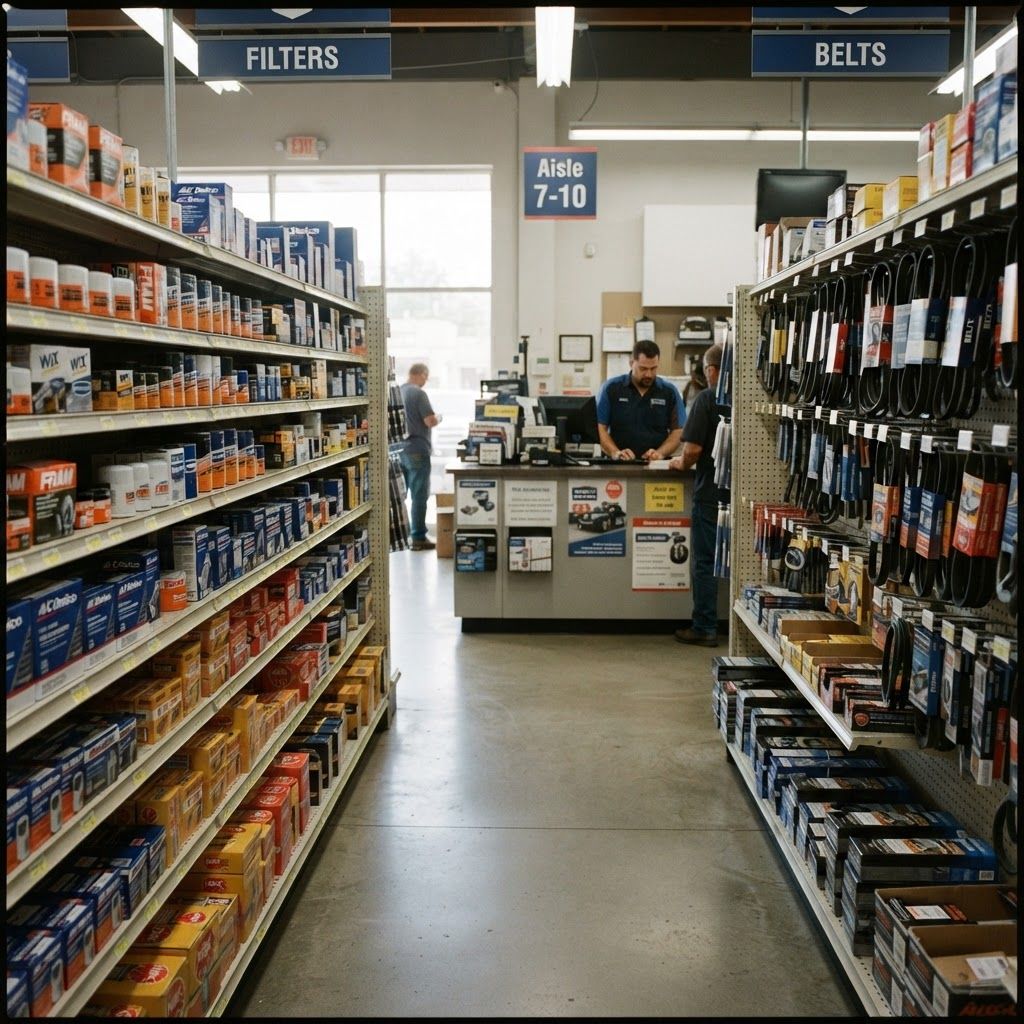
The Parts Market Behind Every Repair
Most vehicle owners never think about parts sourcing, but it quietly determines repair cost, repair duration, and how long the repair lasts. In North Hempstead, the parts market is unusually well developed. Retail chains maintain multiple locations within a short drive, dealership parts departments stock deep inventories for the luxury brands common in the area, and specialist distributors serve independent repair shops with same-day or next-day delivery.
That density has practical consequences. A shop in this town can usually source a common component within hours rather than days, which means shorter vehicle downtime. It also means price competition is real, and owners who understand the landscape can make informed choices rather than accepting whatever the first supplier quotes.
Understanding Part Categories
Original equipment parts, often abbreviated OE or OEM, carry the vehicle manufacturer's branding and are sold through dealership parts counters. They guarantee fitment and typically carry a manufacturer warranty, but they command the highest price.
Original equipment supplier parts come from the same factories that produce the manufacturer's components but are sold under the supplier's own brand. Functionally these are frequently identical to the dealership part at a lower cost, which makes them the value sweet spot for many repairs on European and Japanese vehicles.
Aftermarket parts are produced by independent manufacturers. Quality ranges from excellent to poor, and the variance is the key issue. For non-critical components, a reputable aftermarket brand is often entirely appropriate. For safety systems, sensors, and anything integrated with vehicle electronics, the risk of fitment or calibration problems rises substantially.
Remanufactured parts are used components rebuilt to specification, common for alternators, starters, calipers, and transmissions. Quality depends heavily on the remanufacturer's process and warranty. A remanufactured part with a strong warranty from an established brand is usually a sound economic choice.
Finally, used and salvage parts serve a legitimate role for body panels, interior trim, and discontinued components on older vehicles where new parts are unavailable or economically irrational.
The Ten Best Auto Parts Suppliers Serving North Hempstead
1. AutoZone maintains broad coverage across the region with strong inventory on maintenance items, batteries, brakes, filters, and fluids. Its free battery and charging system testing, loaner tool program, and lifetime warranties on select components make it particularly useful for owners who perform their own work.
2. Advance Auto Parts competes directly with comparable retail inventory and a professional delivery program that serves local repair shops. Its online ordering with in-store pickup is efficient, and its commercial pricing tiers benefit small independent garages.
3. NAPA Auto Parts has a long-standing reputation among professional technicians for parts quality that skews higher than typical retail aftermarket. Its own-brand components are widely trusted, and its catalog depth on older and less common vehicles is often better than competitors.
4. O'Reilly Auto Parts combines strong retail inventory with a well-regarded commercial delivery operation. Its diagnostic support at the counter and consistent stock levels on wear items make it a dependable option for both consumers and shops.
5. Dealership parts departments across the Northern Boulevard corridor are essential for the luxury vehicles concentrated in this market. Manufacturer parts counters provide correct-first-time fitment, access to updated part revisions, and software or coding support that aftermarket channels cannot replicate. For anything involving electronic modules, this is frequently the only sensible route.
6. European parts specialist distributors serving Long Island repair shops fill a critical gap. These distributors carry original equipment supplier brands for German, British, and Swedish vehicles at substantially lower prices than dealership counters, with same-day delivery to professional accounts. Consumers generally access them through their repair shop rather than directly.
7. Pep Boys pairs parts retail with service capability, which is useful when a diagnosis is uncertain. Buying a part and having it installed under one roof avoids the common problem of purchasing the wrong component based on a guess.
8. Mavis Discount Tire functions as a specialized supplier for tires, wheels, and related hardware. Tire selection is genuinely important in this climate, where wet traction and winter capability matter, and dedicated tire retailers carry far deeper size and compound selection than general parts stores.
9. Regional salvage and recycled parts operations serving Nassau County provide body panels, glass, interior components, and mechanical assemblies for older vehicles. Reputable operations grade parts by condition, photograph inventory, and offer limited warranties, which distinguishes them from unregulated yards.
10. Specialty performance and restoration suppliers round out the market, serving enthusiasts working on modified vehicles, classics, and motorcycles. These suppliers carry components that mainstream distribution does not stock and typically provide technical guidance alongside the sale.
Practical Guidance for Buyers
Always supply the vehicle identification number rather than just year, make, and model. Mid-year production changes are common, and the identification number resolves ambiguity that model-year lookups cannot. This single habit eliminates most wrong-part returns.
Understand core charges. Many rebuildable components carry a deposit refunded when the old part is returned. Keep the old component and the receipt, and confirm the return window.
Compare warranty terms rather than just price. A brake component with a limited ninety-day warranty and one with a lifetime warranty are not comparable products even at similar prices. For parts you would rather not replace twice, warranty length is a reasonable proxy for manufacturer confidence.
Be cautious with electronic components and sensors from unfamiliar brands. Modern vehicles are intolerant of out-of-specification sensor output, and a marginally cheap sensor that triggers intermittent fault codes costs far more in diagnostic labor than it saved at purchase.
How This Fits Into Repair Decisions
When a repair shop provides an estimate, ask what parts category it assumes and whether alternatives exist. A good shop will explain where original equipment is genuinely necessary and where a quality alternative is appropriate. That conversation typically produces a better outcome than either blanket cost cutting or blanket dealership sourcing.
In a market as well supplied as North Hempstead, the goal is not to find the cheapest part but the right part with a credible warranty from a supplier who can deliver it quickly. Owners who approach parts that way spend less over the life of a vehicle and spend less time without it.