
Why Greensboro Became a Metalworking Hub
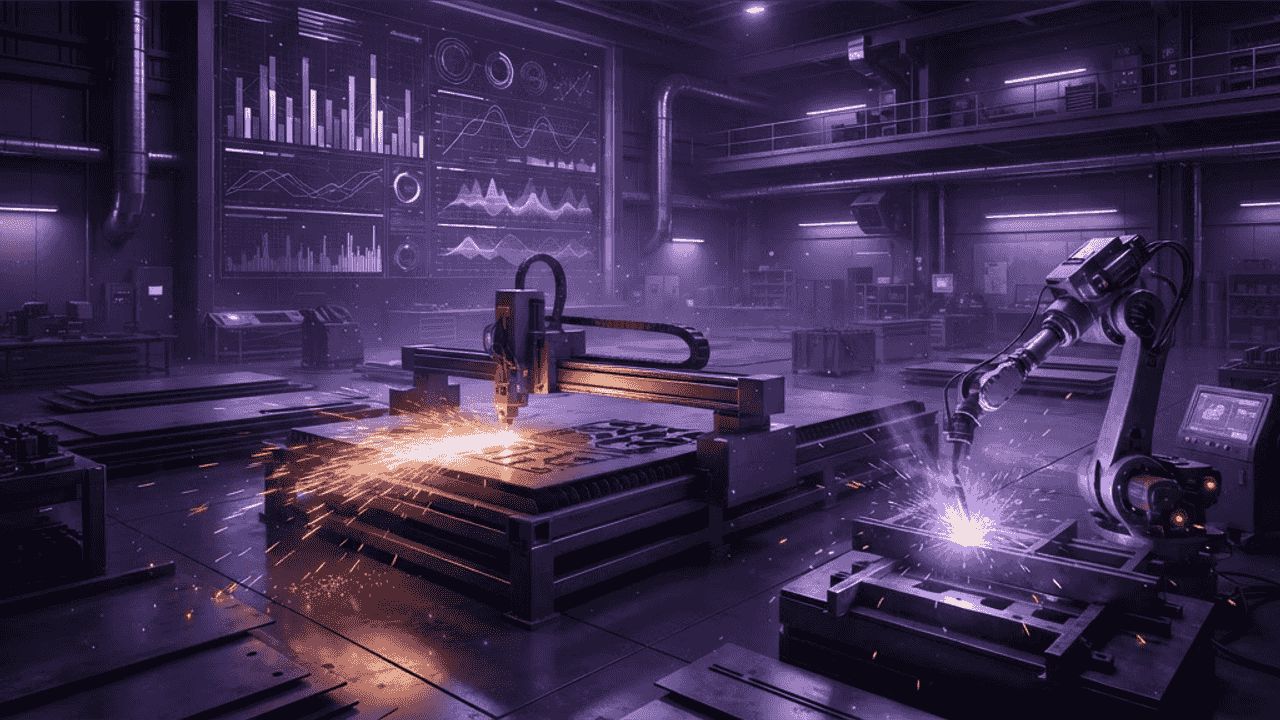
Greensboro sits at the center of North Carolina's Piedmont Triad, a region shaped by more than a century of manufacturing. As textiles and tobacco gave way to advanced industry, the skilled trades that supported those factories did not disappear. They evolved. Machinists, welders, tool and die makers, and press operators found new demand in aerospace components, transportation equipment, furniture hardware, and custom industrial fabrication. Today the city's metalworking base is one of the quietest but most important parts of the local economy.
Geography helps. Greensboro sits at the junction of two major interstate corridors and is served by a growing cargo airport and rail infrastructure that connects shops to suppliers and customers across the Southeast. A fabricator in Greensboro can source steel from a regional service center in the morning and deliver finished assemblies to a plant in Charlotte, Raleigh, or Virginia the same week. That logistical advantage lets local shops compete on lead time, not just price.
What Separates a Strong Metalworks Company
Buyers evaluating fabrication partners in Greensboro tend to look at the same handful of factors. The first is process breadth. A shop that can cut, form, weld, machine, finish, and assemble under one roof reduces handling, shortens schedules, and eliminates the finger pointing that happens when work moves between vendors. The second is metrology and documentation. Serious shops invest in coordinate measuring machines, calibrated gauges, and traceable material certifications so that a customer in a regulated industry can prove compliance.
The third factor is engineering support. The best metalworks firms do not simply build to print. They review designs for manufacturability, suggest alternate joint geometries, recommend material substitutions when alloys are on allocation, and flag tolerances that add cost without adding function. That collaboration often saves more money than a lower hourly rate ever could.
The Top 10 Metalworks Companies in Greensboro
1. Piedmont Precision Metalworks. A tight tolerance job shop known for multi axis CNC machining and small batch precision components. Piedmont Precision has built a reputation among engineers for holding difficult tolerances on stainless and aluminum parts, and for its willingness to take on prototype quantities that larger shops decline.
2. Gate City Steel Fabricators. Named for Greensboro's historic nickname, Gate City Steel focuses on structural and miscellaneous metals: stair systems, mezzanines, platforms, handrails, and equipment frames. Its detailing team works directly from architectural and structural models, which reduces field rework on commercial construction projects.
3. Triad Sheet Metal Works. A sheet metal specialist handling laser cutting, CNC punching, press brake forming, and welded enclosures. Triad Sheet Metal serves electrical, HVAC, and equipment OEMs, and is frequently cited for consistency across long production runs of formed panels and cabinets.
4. Carolina Weld Industries. A certified welding operation covering carbon steel, stainless, and aluminum, with procedures qualified for pressure and structural work. Carolina Weld also maintains a mobile crew for on site repair and retrofit, which matters to plants that cannot move a damaged frame or tank off the floor.
5. Guilford Machine and Tool. A tool, die, and fixture builder supporting stamping and molding operations across the Triad. Guilford's value is in maintenance and rebuild work: keeping aging dies productive rather than forcing customers into new tooling budgets.
6. Battleground Metal Products. A contract manufacturer combining tube bending, roll forming, and robotic welding for higher volume assemblies. Battleground serves furniture, fitness equipment, and material handling customers where repeatable weld quality at volume is the deciding factor.
7. Summit Alloy Fabrication. A specialist in stainless and exotic alloy work for food processing, pharmaceutical, and laboratory environments. Summit's sanitary welding, passivation, and polishing capabilities make it a natural fit for hygienic process equipment.
8. Revolution Ironworks. An ornamental and architectural metal studio producing gates, railings, canopies, signage frames, and custom feature pieces. Revolution bridges craft and fabrication, working closely with architects and designers on visible finish critical work.
9. Bessemer Industrial Cutting. A processing house offering high definition plasma, waterjet, and laser cutting services in plate and sheet. Many smaller Greensboro shops rely on Bessemer for burned blanks, then complete forming and welding in house.
10. Cornwallis Metal Finishing. A finishing partner providing powder coating, wet paint, blasting, and light plating coordination. Because finishing is often the last step and the most visible one, Cornwallis has become a critical link in many local supply chains.
Industry Trends Shaping Local Fabrication
Three trends dominate conversations in Greensboro machine shops. Automation is the most visible. Fiber lasers, automated tube benders, and collaborative welding cells are appearing in shops with twenty employees, not just two hundred. These investments are less about replacing labor and more about compensating for a skilled trades shortage that shows no sign of easing.
Reshoring is the second trend. As companies rethink long overseas supply chains, work that left the region years ago has begun returning in smaller, more responsive volumes. Local shops that can quote quickly and deliver in weeks rather than months are capturing that demand.
The third trend is digital integration. Customers increasingly send solid models rather than paper drawings, expect online quoting, and want production status visibility. Shops that have modernized their estimating and scheduling systems win repeat business because they are simply easier to work with.
How to Choose the Right Partner
Start by matching scale to need. A prototype of five parts belongs at a nimble job shop, while an annual requirement of fifty thousand formed brackets belongs at a production fabricator with automation. Visit the floor if you can. Organization, tooling condition, and how work in process is staged reveal more about a shop than any brochure.
Ask about certifications relevant to your industry, request material traceability practices in writing, and clarify how engineering changes are handled mid program. Finally, weigh communication. In fabrication, the partner who calls you about a problem early is worth far more than the one who discovers it at final inspection.
Final Thoughts
Greensboro's metalworks companies represent a deep and unusually versatile industrial base. Whether a project calls for architectural stainless, structural steel, tight tolerance machining, or high volume welded assemblies, the capability exists within a short drive. The companies above illustrate the range of that capability, and the standard buyers should expect from a metalworking partner in the Gate City.