
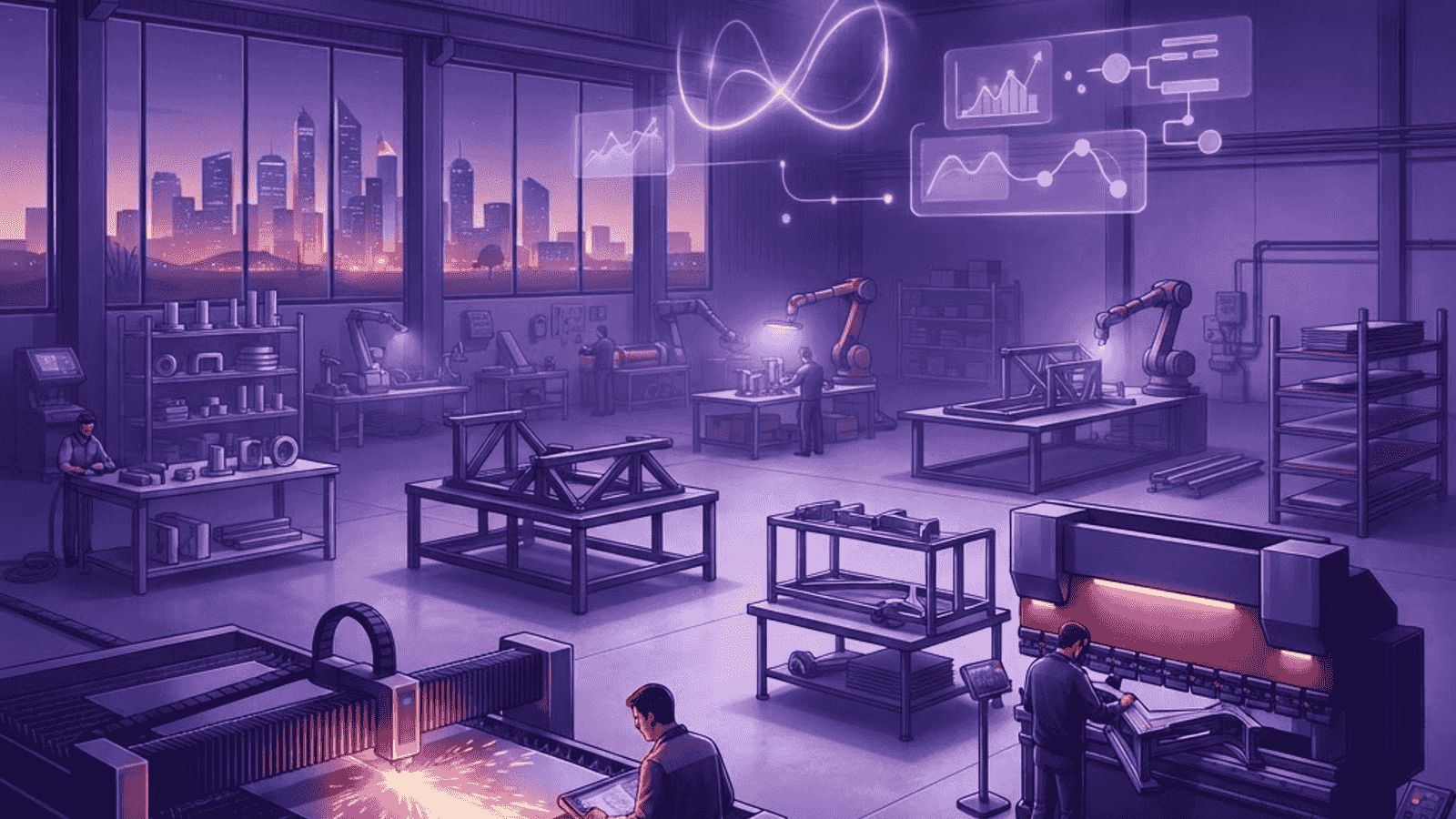
Why Chandler Became a Metalworking Center
Metalworking rarely receives the attention that semiconductors and software attract, yet nothing gets built in Chandler without it. Every fabrication tool needs a frame, every data center needs cable tray and equipment racking, every aerospace assembly needs machined brackets, and every commercial building needs structural steel and sheet metal. Chandler's manufacturing base created concentrated, sustained demand for precision metal work, and a deep bench of fabricators and machine shops grew up to serve it.
The character of the local metalworks industry reflects the customers it serves. Because so much demand comes from semiconductor, aerospace and medical device buyers, Chandler shops routinely work to tighter tolerances and heavier documentation requirements than a typical regional fabricator. Certifications, material traceability and inspection reporting are standard conversation topics rather than premium add-ons, and that technical orientation is the defining feature of the market.
The Capability Categories You Are Choosing Between
Metalworks is not a single trade. Precision machining covers computer-controlled milling and turning of parts to tight dimensional tolerances. Sheet metal fabrication covers laser and turret punch cutting, forming and welded assemblies such as enclosures, brackets and panels. Structural and miscellaneous metals covers heavier work including frames, platforms, stairs and railings. Architectural metal covers visible finished work such as facades, canopies and decorative screens. Finishing operations cover anodizing, plating, powder coating, passivation and painting.
Most projects require more than one of these, which is why the decisive question when selecting a supplier is which operations happen under one roof and which get subcontracted. Every handoff between shops adds transit time, scheduling risk and one more party who can point elsewhere when a part comes back wrong. Vertically integrated shops cost more per hour and usually deliver more reliably.
The Ten Strongest Metalworks Operations in Chandler
1. Chandler Precision Metalworks
Chandler Precision Metalworks anchors the top of the local market with machining, sheet metal fabrication and welded assembly under one roof. The shop is oriented toward semiconductor and aerospace customers, with material certification, first article inspection reporting and formal quality documentation built into standard workflow rather than offered as extras. Engineers value the shop for reviewing drawings before quoting and flagging features that are expensive to hold or difficult to inspect.
2. Price Road Fabrication
Price Road Fabrication specializes in large-format sheet metal and welded structures for industrial customers. Laser cutting, press brake forming and certified welding support enclosures, machine guards, equipment frames and platform structures. The shop handles heavier gauge work than most enclosure specialists, making it a natural fit for equipment builders who need both cabinet-quality panels and structural support in the same assembly.
3. Arizona Aerospace Machining
Arizona Aerospace Machining focuses narrowly on flight-critical and near-flight-critical machined components. Multi-axis machining centers, tight-tolerance turning and an inspection department equipped for dimensional verification support aluminum and titanium parts for regional aerospace and defense programs. The shop's traceability discipline reflects the certification environment its customers operate under.
4. Desert Sheet Metal Company
Desert Sheet Metal Company serves commercial construction and mechanical contracting with ductwork, custom flashing, roof curbs and architectural sheet metal. In-house shop drawing capability speeds coordination with mechanical contractors, and field crews handle installation as well as fabrication. That single-source responsibility eliminates the common dispute over whether a fit problem originated in the shop or in the field.
5. Gilbert Road Structural Steel
Gilbert Road Structural Steel handles structural and miscellaneous metals for commercial and industrial projects across the East Valley. Beams, columns, mezzanines, stairs, ladders and equipment supports come out of a shop equipped for heavy plate work and certified structural welding. Detailing capability in-house shortens the approval cycle that often becomes the critical path on steel packages.
6. Chandler CNC Solutions
Chandler CNC Solutions occupies the prototype and low-volume machining niche that larger production shops handle poorly. Fast quoting, short setup times and willingness to run single parts make it the default choice for engineering teams iterating on hardware. The shop's practical design feedback often saves customers more money than the machining quote itself.
7. Copper State Metal Finishing
Copper State Metal Finishing provides the anodizing, chemical conversion coating, passivation and powder coating that fabricators and machine shops depend on. Consistent process control and documented bath chemistry matter enormously to customers with cosmetic requirements or corrosion specifications. Because finishing is often the final operation before shipment, turnaround reliability directly affects its customers' delivery performance.
8. Valley Weld and Repair
Valley Weld and Repair serves facility maintenance and industrial repair rather than production manufacturing. Mobile welding, on-site structural repair, custom guarding and rapid fabrication of replacement parts keep plants running when equipment fails unexpectedly. For maintenance managers facing unplanned downtime, responsiveness is the actual product being purchased.
9. Southwest Architectural Metals
Southwest Architectural Metals produces the visible metal that shapes how buildings look. Perforated screens, sunshades, canopies, railings and decorative panels demand a different discipline than industrial fabrication because finish quality is the deliverable. The shop works directly with architects on samples and mockups, reducing the risk of a facade element being rejected after fabrication.
10. Chandler Tube and Pipe Works
Chandler Tube and Pipe Works concentrates on tube bending, pipe fabrication and welded tubular assemblies for process piping, handrails and equipment skids. Mandrel bending capability produces clean radii without the wrinkling or flattening that plagues lower-end tube work, which matters for cosmetic railings and fluid systems alike.
Trends Reshaping Local Metal Fabrication
Automation has moved into shops of every size. Fiber laser cutters, automated press brakes with angle measurement and robotic welding cells have lowered the cost of medium-volume work and improved repeatability. Fabricators who invested in this equipment can quote jobs that would have been uneconomical a decade ago, and the quality gap between top-tier and mid-tier shops has widened as a result.
Skilled labor remains the binding constraint. Certified welders, experienced machinists and press brake operators who can hold tolerance on complex forms are genuinely scarce. Shops that run structured apprenticeships and retain senior tradespeople hold a durable advantage, and buyers should treat workforce stability as a real quality indicator rather than a soft factor.
Material cost volatility has also changed commercial practice. Steel and aluminum price swings made short quote validity windows and escalation language standard. Buyers who plan for this reality and lock in material early on long-lead projects avoid the budget surprises that catch less prepared teams.
How to Evaluate a Metalworks Partner
Visit the shop floor before awarding significant work. Organization, tooling condition, work-in-process handling and the state of the inspection area reveal more about real capability than any capability statement. Ask how parts are protected between operations, because handling damage is a common and avoidable cause of rejection on cosmetic parts.
Confirm which certifications actually apply to your work. A shop may hold structural welding certifications that have nothing to do with machined aluminum parts. Ask specifically about inspection equipment, calibration practice and whether inspection reporting is included or billed separately.
Finally, evaluate engineering engagement. The best Chandler shops read drawings critically and raise questions about tolerances, datum schemes and finish callouts before cutting metal. That conversation is where cost gets removed from a part and scrap gets prevented. A supplier who quotes without asking anything is not cheaper, only deferring problems to a more expensive stage.
Conclusion
Chandler's metalworks sector is unusually capable for a city of its size, shaped by decades of demand from customers who cannot tolerate sloppy work. The ten operations above cover precision machining, sheet metal, structural steel, architectural metal, finishing and repair. Matching the right specialization to your project, and evaluating suppliers on floor discipline and engineering engagement rather than quoted hourly rate, separates a smooth build from a chain of rework.