
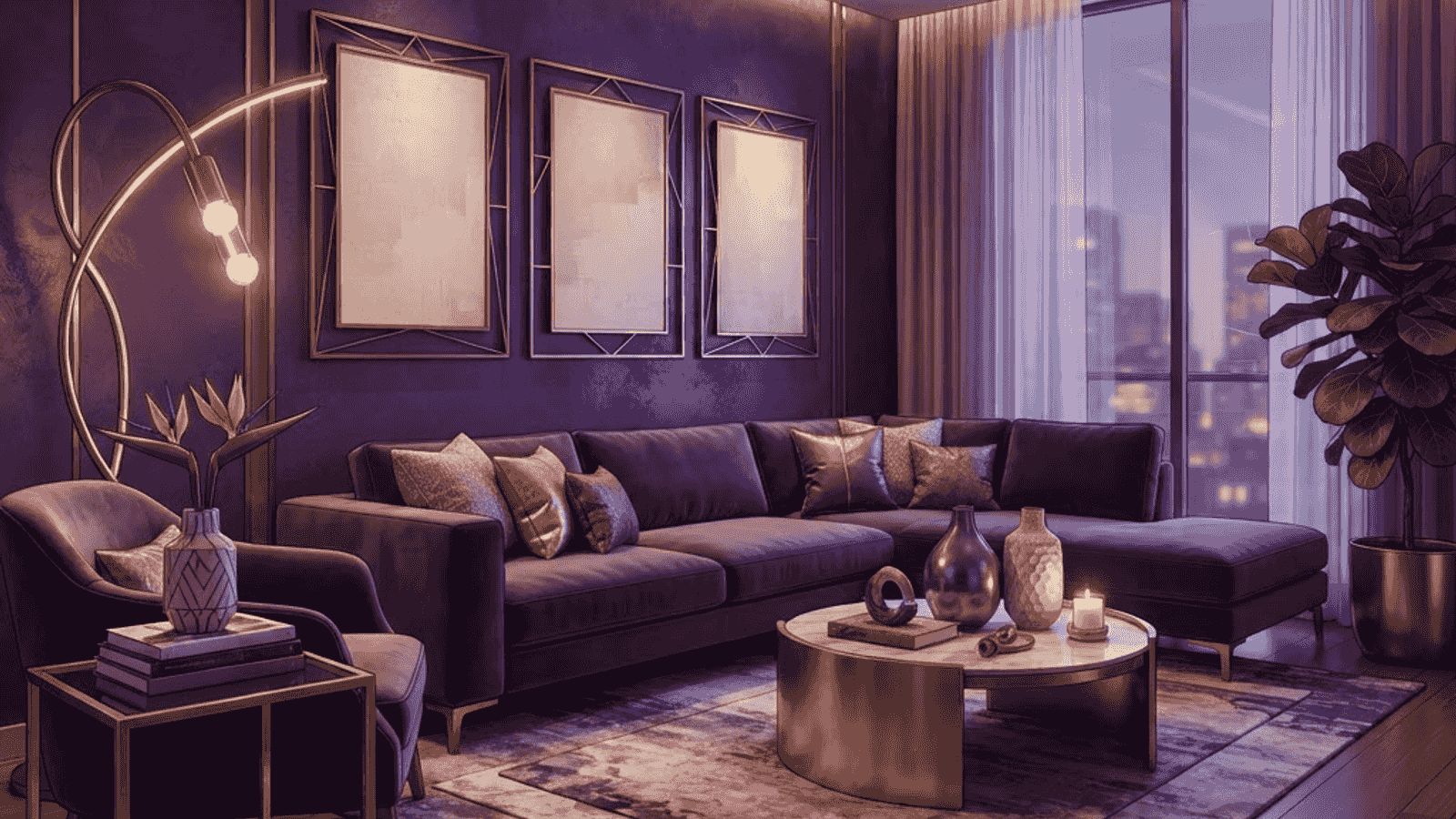
How Plano Shops for Home Decor
Plano occupies an unusual retail position. Residents have access to a dense concentration of design showrooms, national furniture retailers, independent boutiques, and the Dallas Design District a short drive south. That abundance is a genuine advantage, but it also produces decision fatigue and rooms that end up as collections of individually appealing purchases with no relationship to each other.
Local housing shapes what works. Many Plano homes feature open-plan great rooms with two-story ceilings, generous window walls facing intense western sun, and transitional architecture that resists both strict traditional and hard-edged modern furnishing. Successful interiors here tend to favor scaled-up upholstery that holds its own in large volumes, layered lighting to counter cavernous ceilings, textiles that tolerate strong daylight without fading, and durable performance fabrics suited to families and pets.
Judging Quality Before You Buy
For upholstery, ask about the frame first. Kiln-dried hardwood with corner blocking and joinery outlasts stapled softwood or engineered panels by decades. Eight-way hand-tied springs remain the benchmark, though quality sinuous spring systems perform well at lower price points. Cushion cores matter: high-resiliency foam with a down or fiber wrap holds shape far better than low-density foam that flattens within a year. Fabric durability is measured in double rubs, and performance textiles now offer stain resistance without the plastic hand feel of earlier generations.
For case goods, look for solid wood or high-grade veneer over stable substrate, dovetailed drawer construction, full-extension glides, and finishes with real depth rather than printed grain. For rugs, hand-knotted wool ages beautifully, while quality machine-woven options serve high-traffic areas well. Lighting quality shows up in metal weight, socket quality, and dimming behavior.
Ten Strong Home Decor Brands and Showrooms for Plano Shoppers
1. Legacy Interiors Collective
A design-forward showroom known for well-constructed transitional upholstery and in-house design consultation, Legacy Interiors specializes in scaling furniture correctly for large open-plan rooms.
2. Bluebonnet Home Studio
This boutique focuses on Texas-made and regionally sourced furniture, ceramics, and textiles, offering pieces with genuine provenance rather than mass-market repetition.
3. Northstar Furniture Gallery
Northstar carries a broad selection across price tiers with strong emphasis on frame construction disclosure, making it a practical stop for buyers who want to compare quality directly.
4. Silverline Modern
Silverline specializes in clean-lined contemporary furnishings, walnut case goods, and sculptural lighting for homeowners pursuing a restrained modern aesthetic.
5. Heritage Home Collection
Heritage focuses on classic and traditional pieces, including handcrafted wood furniture, antique-inspired case goods, and custom upholstery in a wide fabric library.
6. Trinity Textile House
A specialist in soft goods, Trinity offers drapery, custom window treatments, wool rugs, and layered bedding, with strong expertise in light control for west-facing rooms.
7. Preston Ridge Lighting & Decor
This showroom concentrates on lighting, from statement chandeliers for two-story entries to well-made table and floor lamps, with knowledgeable guidance on color temperature and dimming.
8. Summit Outdoor Living Collection
Summit focuses on genuinely weather-durable outdoor furniture built for North Texas sun, using powder-coated aluminum, solution-dyed acrylic fabrics, and UV-stable resins.
9. Cardinal Art & Accents
Cardinal curates original artwork, framed prints, mirrors, and decorative objects, and its framing services help homeowners build cohesive gallery arrangements at scale.
10. Crosstown Home Goods
Crosstown rounds out the list as an accessible source for well-designed everyday pieces, offering strong value on accent furniture, storage, and seasonal decor refreshes.
Trends Shaping Interiors Now
Several directions have real staying power. Warm neutrals and earthy palettes have displaced cool gray as the default backdrop, with saturated accent colors used deliberately rather than everywhere. Natural materials, including unlacquered wood, stone, rattan, linen, and wool, continue to gain ground over high-gloss synthetics. Performance fabrics have become mainstream rather than a compromise. Layered and vintage-mixed rooms are strongly favored over fully matched sets, and quiet craftsmanship is valued over obvious branding.
Building a Room That Works
Start with a floor plan and actual measurements rather than a shopping list. Establish the largest pieces first, sofa, rug, and primary case goods, and confirm circulation space of roughly three feet through main pathways. Choose a rug large enough that the front legs of all seating sit on it, since undersized rugs shrink a room visually. Then layer lighting at three levels: ambient, task, and accent, which is where most rooms fall short.
Mix price tiers strategically. Invest in the pieces used daily and structurally visible, such as seating and dining tables, and economize on accent chairs, side tables, and decorative objects that are easier to change. Repeat two or three materials and a limited palette across the room to create cohesion, and leave deliberate negative space. A room with fewer, better pieces almost always reads as more considered than one filled to capacity.
Building a Cohesive Look That Lasts
The most successful Plano interiors tend to start with a restrained foundation and layer personality on top. Neutral upholstery and durable rugs anchor a room for years, while pillows, art, lighting, and accessories carry seasonal or trend-driven change at far lower cost. That approach avoids the expensive cycle of replacing large pieces every time tastes shift.
Scale deserves particular attention in local housing stock. Many Plano homes built in the 1990s feature two-story entries and generous great rooms where standard-size art and light fixtures simply disappear. Measuring wall dimensions and ceiling heights before purchasing, and sizing rugs so front furniture legs rest fully on them, resolves the most common proportion mistakes that make otherwise well-chosen furnishings look accidental.