
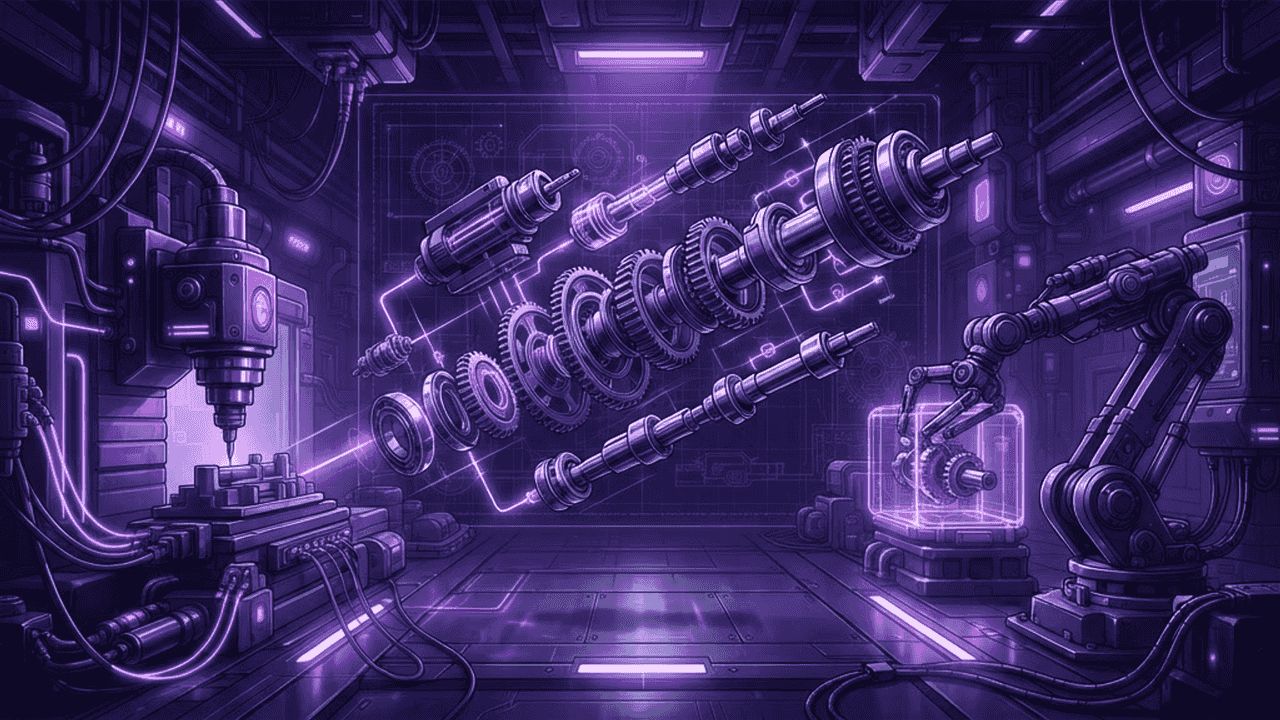
Industrial Machinery in the Plano Region
Machinery manufacturing rarely gets the attention that software or energy receives, but it underpins both. Every warehouse conveyor, packaging line, oilfield pump, and semiconductor handling system begins as designed and fabricated machinery. North Texas supports a substantial machinery sector because it combines a large industrial customer base, excellent freight access through interstate highways and rail, a skilled trades workforce, and a business climate that favors capital investment.
Plano's specific role tends toward engineering, systems integration, sales, and service, with fabrication and machining concentrated in surrounding industrial districts. That geography works well: engineering teams stay close to customers while heavy work happens where space and power are cheaper.
How We Evaluated Machinery Manufacturers
Companies were assessed on engineering capability, machining and fabrication tolerances, quality management systems, lead time reliability, aftermarket parts and service support, and safety compliance. For automation integrators, controls expertise and documentation quality were weighted heavily, since maintainability determines lifetime cost far more than initial price.
The Top 10 Machinery Manufacturing Partners Serving Plano
1. Precision CNC Machining Shops
The backbone of the sector. DFW-area machine shops run multi-axis mills, turning centers, and grinders producing components to tight tolerances for energy, aerospace, medical, and semiconductor customers. The best hold certified quality systems and provide inspection reports as standard practice.
2. Custom Machine Builders and Special Machine Designers
These firms design one-off or low-volume machines for specific production problems, handling mechanical design, controls, fabrication, and commissioning. They are the right partner when no catalog machine fits the process.
3. Industrial Automation and Robotics Integrators
Integrators specify and program robots, vision systems, PLCs, and safety architecture, then tie everything into plant networks. Demand from warehouse and distribution operators across the metroplex has grown steadily.
4. Material Handling Equipment Manufacturers
Producers of conveyors, palletizers, sortation systems, and lifting equipment serve the enormous logistics footprint around Dallas-Fort Worth, including the distribution centers ringing Plano.
5. Packaging Machinery Manufacturers
Fillers, cappers, labelers, case packers, and shrink wrappers support the region's substantial food, beverage, and consumer goods production, including major North Texas facilities.
6. Oilfield and Energy Equipment Manufacturers
Manufacturers of pumps, valves, wellhead equipment, and pressure-containing assemblies serve Texas energy operators, working under demanding pressure rating and material traceability requirements.
7. HVAC and Process Equipment Manufacturers
Builders of air handling units, chillers, heat exchangers, and process skids serve commercial construction and industrial process markets throughout the region, where cooling capacity is never optional.
8. Industrial Distribution and Aftermarket Service Providers
Distributors of bearings, drives, hydraulics, and pneumatics, along with repair shops that rebuild gearboxes and motors, keep existing machinery productive. Their responsiveness often matters more than equipment brand choice.
9. Sheet Metal Fabrication and Weldment Shops
Laser cutting, press brake forming, and certified welding operations supply frames, enclosures, guarding, and structural assemblies that machine builders depend on for cost-effective production.
10. Additive Manufacturing and Rapid Prototyping Providers
Metal and polymer additive shops in the metroplex produce jigs, fixtures, low-volume parts, and functional prototypes, compressing development cycles for machinery designers.
Trends in Machinery Manufacturing
Automation demand keeps rising as labor availability tightens, pushing integrators toward standardized, redeployable cells rather than fully bespoke lines. Predictive maintenance built on vibration and current signature monitoring is moving from pilot to expectation. Digital twins and simulation reduce commissioning surprises. Reshoring has increased domestic machinery orders, while long lead times on electrical components have made engineers design around available parts rather than ideal ones. Energy efficiency requirements are also reshaping motor and drive selection.
How to Choose a Machinery Manufacturing Partner
Start with a clear specification covering throughput, cycle time, product variability, footprint, utilities, and safety standards. Ask for reference installations you can visit and operators you can question. Evaluate documentation quality directly, requesting a sample electrical schematic and operations manual, because poor documentation guarantees expensive downtime later. Clarify spare parts availability and whether controls use open, widely supported platforms. Define acceptance testing criteria before the purchase order, including run-rate and yield thresholds measured over a defined period. Finally, budget for training, since machinery underperforms mainly because nobody taught the operators.
Total Cost of Ownership in Capital Equipment
Machinery purchases are frequently decided on quoted price, then regretted for a decade. Total cost of ownership includes installation and utilities, operator training, spare parts pricing, expected consumable replacement, energy consumption, and the cost of downtime when something fails. A machine that costs fifteen percent more but runs reliably with locally stocked parts is almost always the cheaper choice.
Downtime cost deserves explicit calculation. If a production line generates a known hourly contribution margin, then response time on service calls has a measurable dollar value, and that value should influence supplier selection directly. Buyers should ask for documented mean time to repair, confirm whether service technicians are regional or fly in, and negotiate spare parts kits as part of the original purchase. Establishing these terms before the purchase order is signed is far easier than renegotiating them during an unplanned outage.
Final Thoughts
The Plano area gives industrial buyers access to engineering talent, precision machining, fabrication, and automation expertise without leaving the metroplex. Specify carefully, insist on documentation and acceptance testing, and treat the aftermarket relationship as part of the purchase, not an afterthought.