
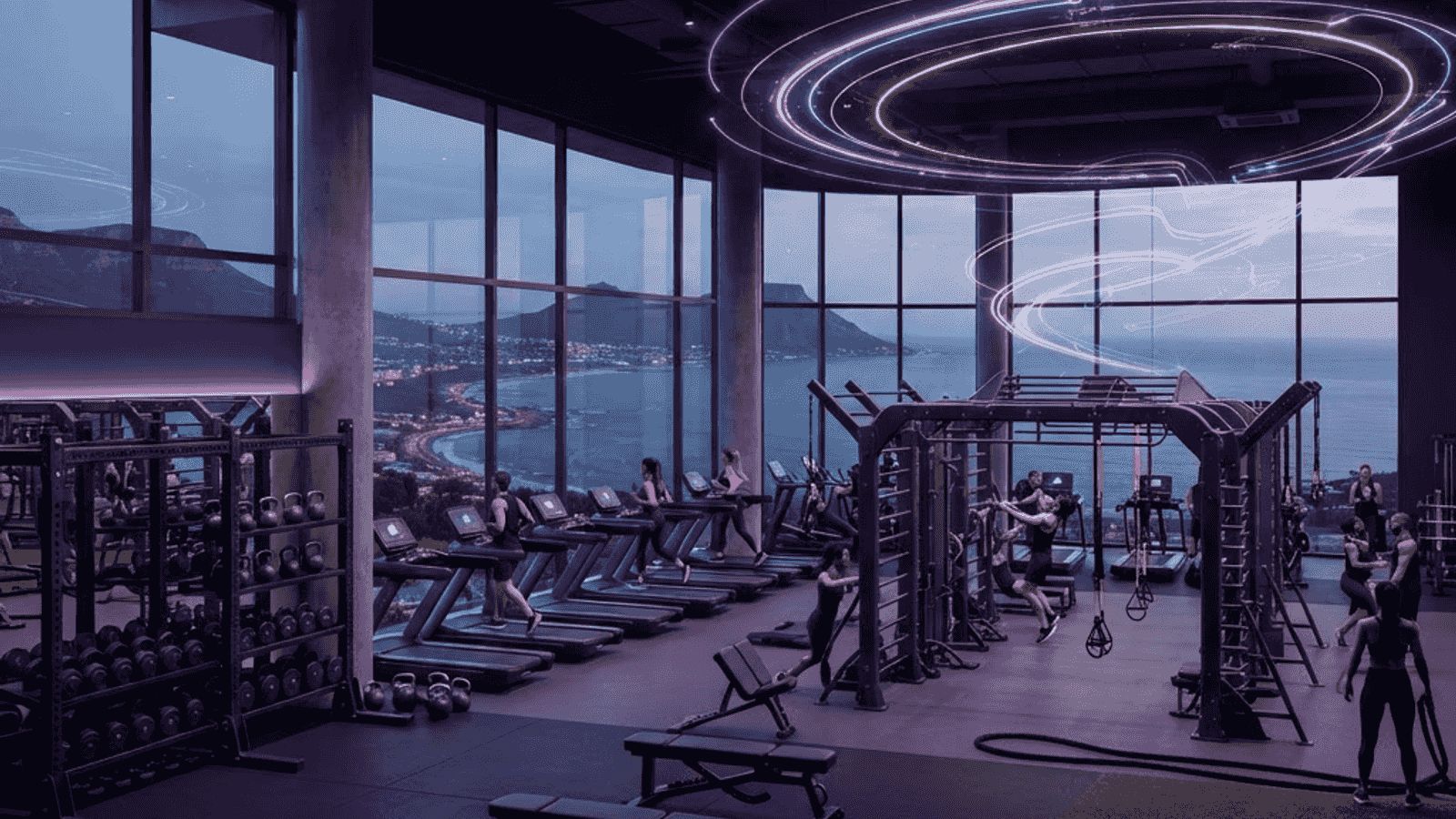
Choosing a Gym Is Really Choosing an Environment
Equipment matters less than most people assume. Almost every facility in the Oyster Bay area has adequate barbells, dumbbells and cardiovascular machines. What differs, and what determines whether a membership becomes a habit or a monthly charge for nothing, is environment: whether the atmosphere suits your temperament, whether the schedule matches your actual life, whether the coaching is competent, and whether the place is close enough that you go on a difficult day.
Oyster Bay's geography shapes this considerably. The hamlet's waterfront supports rowing, sailing and open-water swimming that inland communities cannot offer. Its commuter population needs early-morning and late-evening access. Its substantial older population needs low-impact, supervised programming. And its youth sports culture drives demand for athletic development. The facilities below have positioned themselves along these lines rather than competing as interchangeable gyms.
Evaluation Criteria
Facilities were assessed on coaching credentials, equipment quality and maintenance, class programming depth, cleanliness and locker room standards, peak-hour crowding, contract terms and cancellation policy, and how well each serves its stated audience rather than a general one.
1. Oyster Bay Athletic Club
The hamlet's comprehensive health club and the most flexible option for households with varied needs. Full free-weight and machine areas, extensive cardiovascular equipment, group fitness studios, and a pool supporting both lap swimming and aquatic classes. Personal training staff hold recognized certifications, and the class schedule covers strength, cycling, yoga and aquatic formats at hours that work for commuters. Its breadth is the point: one membership serves a family with different goals and fitness levels.
2. North Shore Strength and Conditioning
A serious barbell and conditioning facility for people who want to get measurably stronger. Multiple power racks, competition platforms, quality bars and plates, sleds, and a coaching staff that teaches squat, press, deadlift and Olympic lift technique properly. Programming is periodized rather than randomized, and progress is tracked. It suits committed lifters and athletes; it is not the place for someone seeking anonymous treadmill time.
3. Oyster Bay Rowing and Waterfront Fitness
The facility that only a harbor community can support. On-water rowing in season for scullers and crews, indoor rowing and ergometer-based conditioning year round, and dryland strength work built around the rowing stroke. Rowing delivers exceptional cardiovascular conditioning with minimal joint impact, which makes it viable across a wide age range. Youth and masters programs both run, and the coaching pedigree is strong.
4. Locust Valley Pilates and Reformer Studio
Classical and contemporary Pilates on reformers, towers and chairs, taught in small groups and private sessions by comprehensively certified instructors. The value is precision: control, alignment and deep core recruitment that large-group formats cannot supervise. Post-rehabilitation clients, residents with back pain, and pregnant and postpartum clients are handled with appropriate modification, and the studio coordinates with local physical therapists.
5. Bayville Community Fitness Center
Unpretentious, affordable and close to home for peninsula residents. Solid equipment, a manageable class schedule, and a membership base that knows one another. Its contribution is removing friction: a fifteen-minute round trip instead of forty-five is frequently the difference between exercising four times a week and once. Contract terms are straightforward, without the aggressive tactics common in the industry.
6. Syosset Functional Fitness
Small-group functional training combining strength, gymnastics-based movement and metabolic conditioning, with scaled options for every session. Coaching is present throughout each class rather than demonstrating and departing, and the intake process includes movement screening before intensity is introduced. The community accountability structure is the main retention mechanism, and it works well for people who will not train alone.
7. Glen Head Yoga and Movement
A dedicated yoga studio offering vinyasa, hatha, restorative, yin and heated classes, along with meditation and breathwork. Teachers hold substantial training hours, and the studio maintains genuine beginner classes rather than treating all levels as one. For residents managing stress, sleep difficulty or the postural consequences of desk work and commuting, this addresses a set of problems that heavy training does not.
8. East Norwich Youth Athletic Development
Sport performance training for adolescent athletes, built on age-appropriate progression rather than adult programs applied to teenagers. Speed and agility, strength development, injury-risk reduction, and sport-specific conditioning for soccer, lacrosse, baseball and basketball are the core offerings. Its emphasis on movement competency and load management is exactly what reduces the overuse injuries that year-round single-sport participation has made common.
9. Mill Neck Senior Fitness and Balance
Programming designed specifically for older adults: progressive resistance training to counter sarcopenia, balance and gait work to reduce fall risk, chair-based and low-impact classes, and osteoporosis-appropriate loading. Staff are trained in geriatric exercise and screen for contraindications. Given that muscle mass and balance are among the strongest predictors of independence in later life, this facility does some of the highest-value work in the local market.
10. Jericho Recovery and Performance Studio
A recovery-focused facility offering assisted stretching, percussive and manual soft tissue work, compression therapy, sauna and cold immersion, and movement assessment. It functions as a complement to training rather than a substitute, and it serves both athletes managing training load and desk-bound professionals with chronic tightness. Increasing awareness that adaptation happens during recovery, not during the workout, has made this category legitimate rather than indulgent.
Trends in the Local Fitness Market
Strength training has displaced steady-state cardiovascular exercise as the priority for general health, driven by evidence on muscle mass, bone density and metabolic function across the lifespan. Small-group semi-private training has grown as a middle option between expensive one-on-one coaching and unsupervised membership. Recovery services have become a standalone category. Hybrid models combining in-person access with app-based programming and remote coaching are now standard rather than novel. And older-adult strength programming has expanded sharply as the evidence on fall prevention and functional independence has become impossible to ignore.
Before You Sign Anything
Visit at the exact hour you intend to train, since a facility that is pleasant at eleven in the morning may be unusable at six in the evening. Ask what certifications the training staff hold and who supervises them. Read the cancellation terms specifically, including notice periods and any initiation fee that is non-refundable, and prefer month-to-month arrangements until you have established the habit. Test the classes you actually plan to attend rather than judging the schedule on paper. Weigh proximity heavily; it is the single strongest predictor of long-term adherence. And if you are returning from injury or managing a medical condition, choose a facility with coaching capable of programming around it rather than one that hands you a key card and wishes you luck.