
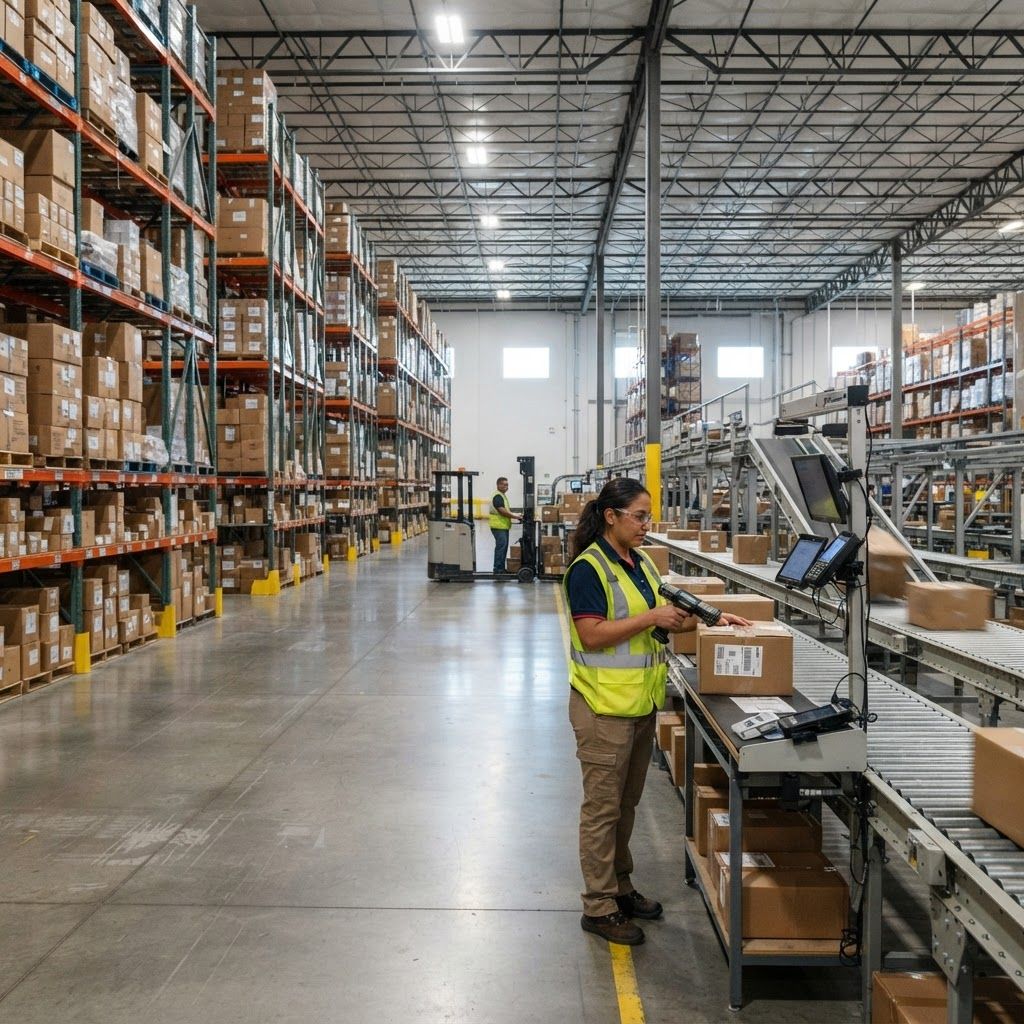
Why Chula Vista Is a Logistics Hub
Logistics is fundamentally about geography, and Chula Vista's geography is exceptional. The city sits within a short drive of an international border crossing that handles enormous daily commercial volume, a working seaport, an international airport, and interstate highways feeding the entire Southwest. Manufacturing clusters on both sides of the border generate constant component and finished-goods flow, while a metropolitan population of more than three million creates persistent consumer demand.
This combination has attracted a sophisticated provider community. Local logistics companies do not simply move boxes; they design networks, manage customs compliance, operate bonded facilities, run e-commerce fulfillment centers, and provide the data layer that lets clients see and control their supply chains. For businesses scaling into or out of the region, choosing the right partner can determine whether growth feels manageable or chaotic.
Understanding the Service Tiers
Providers generally fall into a few categories. Third-party logistics companies, or 3PLs, execute warehousing and transportation on the client's behalf. Fourth-party providers act as network architects, managing other vendors. Freight forwarders orchestrate international movement and documentation. Fulfillment specialists focus on pick, pack, and ship for direct-to-consumer brands. Knowing which tier you need prevents overpaying for capabilities you will not use.
1. South Bay Supply Chain Solutions
South Bay Supply Chain Solutions offers integrated warehousing and transportation management from facilities positioned close to the border. Clients cite its inventory accuracy and the maturity of its warehouse management system, which integrates cleanly with major commerce and ERP platforms. Dedicated implementation teams shorten onboarding, a frequent pain point in 3PL relationships.
2. Border Trade Logistics Partners
Cross-border trade compliance is the core competency of Border Trade Logistics Partners. The company coordinates customs brokerage, duty optimization strategies, and bonded movement while advising clients on classification and documentation. For importers navigating trade program requirements, that advisory depth prevents costly delays and penalties.
3. Otay Distribution Network
Otay Distribution Network operates high-throughput cross-dock and transload facilities designed for rapid container-to-trailer conversion. Consumer goods importers use the service to deconsolidate ocean containers and redistribute regionally without paying for long-term storage. Yard management discipline keeps dwell times low even during peak import season.
4. Pacific Coast Fulfillment Group
Built for e-commerce, Pacific Coast Fulfillment Group provides same-day order processing, kitting, returns handling, and branded packaging. Its zone positioning enables fast delivery across the Southwest at reasonable parcel cost. Brands appreciate transparent per-order pricing rather than opaque bundled fees that make unit economics hard to model.
5. Eastlake Cold Chain Logistics
Eastlake Cold Chain Logistics manages refrigerated and frozen inventory with validated temperature monitoring and documented handling protocols. Food producers, meal-kit companies, and life-sciences clients depend on that validation for regulatory and quality assurance purposes. Backup power and redundant refrigeration reduce catastrophic-loss risk.
6. Harborline Freight Management
Harborline Freight Management focuses on transportation procurement and execution, blending contracted carrier capacity with spot market access. Its analysts produce lane-level cost benchmarking that helps clients understand whether they are paying market rates. Consolidation programs reduce cost for shippers with fragmented small shipments.
7. Sweetwater Warehousing and Distribution
Sweetwater Warehousing and Distribution provides flexible short-term and long-term storage with value-added services such as labeling, repacking, and quality inspection. The company's month-to-month space options suit businesses with seasonal or uncertain volume, an unusual degree of flexibility in a market where landlords prefer long commitments.
8. Third Avenue Last Mile
Urban delivery has distinct challenges, and Third Avenue Last Mile addresses them with right-sized vehicles, route optimization, and delivery-window communication. Retailers and furniture sellers use the service for scheduled residential delivery including assembly and debris removal. Proof-of-delivery imaging reduces disputes.
9. Bayfront Project Logistics
Bayfront Project Logistics handles complex, non-repeating moves: facility relocations, equipment installations, trade show freight, and construction material sequencing. Success in project work depends on planning rather than repetition, and the company assigns experienced project managers who build detailed execution timelines with contingency paths.
10. Chula Vista Integrated Logistics
Chula Vista Integrated Logistics positions itself as a lead logistics provider, coordinating multiple vendors under one accountable contract and supplying unified reporting. Mid-market companies that lack internal supply chain staff benefit most, gaining strategic capability without building a department.
Trends Defining Modern Logistics
Several shifts are changing what good logistics looks like. Supply chain resilience has displaced pure cost minimization as the primary design objective, encouraging dual sourcing and regional inventory buffers. Nearshoring has increased the strategic value of border-adjacent capacity. Automation, from goods-to-person picking to autonomous yard equipment, is improving throughput in labor-constrained markets. Sustainability reporting is pushing providers to measure emissions per shipment. And data integration has become table stakes, with clients expecting real-time inventory and order visibility through APIs rather than emailed spreadsheets.
How to Evaluate a Logistics Provider
Define your priorities explicitly, because no provider optimizes for everything simultaneously. Speed, cost, flexibility, and control involve trade-offs. Tour facilities in person and observe housekeeping, safety practices, and staff engagement, which reveal operational culture better than any presentation. Review technology integration requirements early with your own IT stakeholders. Insist on service level agreements with defined metrics such as inventory accuracy, order accuracy, and on-time shipping, plus a clear escalation path. Finally, ask about scalability: can the provider absorb a doubling of volume, and what would that cost?
Final Thoughts
Chula Vista's logistics sector reflects the sophistication of the trade corridor it serves. Providers here combine warehousing, transportation, customs expertise, and fulfillment technology in configurations that would be difficult to assemble elsewhere in the region. Choose deliberately, measure honestly, and treat the relationship as a partnership rather than a transaction, and logistics can shift from a persistent operational headache to a durable competitive advantage.