
Landscaping Within Minnesota Constraints
Landscaping in St. Paul operates under real limits. The growing season runs roughly from May through September, plant material must survive winter hardiness zone four conditions, and freeze-thaw cycling punishes any hardscape built without proper base preparation. Designers who ignore these realities produce landscapes that look excellent in the first summer and decline steadily afterward.
Soil conditions vary considerably across the city, from sandy river terrace soils to heavier clay in other districts, and urban lots frequently contain compacted fill and construction debris. Soil testing and amendment are not optional extras on a serious project. Compaction alone accounts for a large share of plant failures, since roots cannot penetrate soil compressed by construction equipment or decades of foot traffic.
Core Service Categories
Landscape design produces plans covering layout, grading, plant selection, and material specification. Softscape installation covers trees, shrubs, perennials, turf, and mulch. Hardscape construction includes patios, walkways, retaining walls, steps, fire features, and outdoor kitchens. Drainage and grading work addresses water movement away from foundations and manages runoff. Irrigation covers system design, installation, and seasonal startup and blowout. Maintenance encompasses mowing, pruning, fertilization, weed management, spring and fall cleanup, and snow removal in winter.
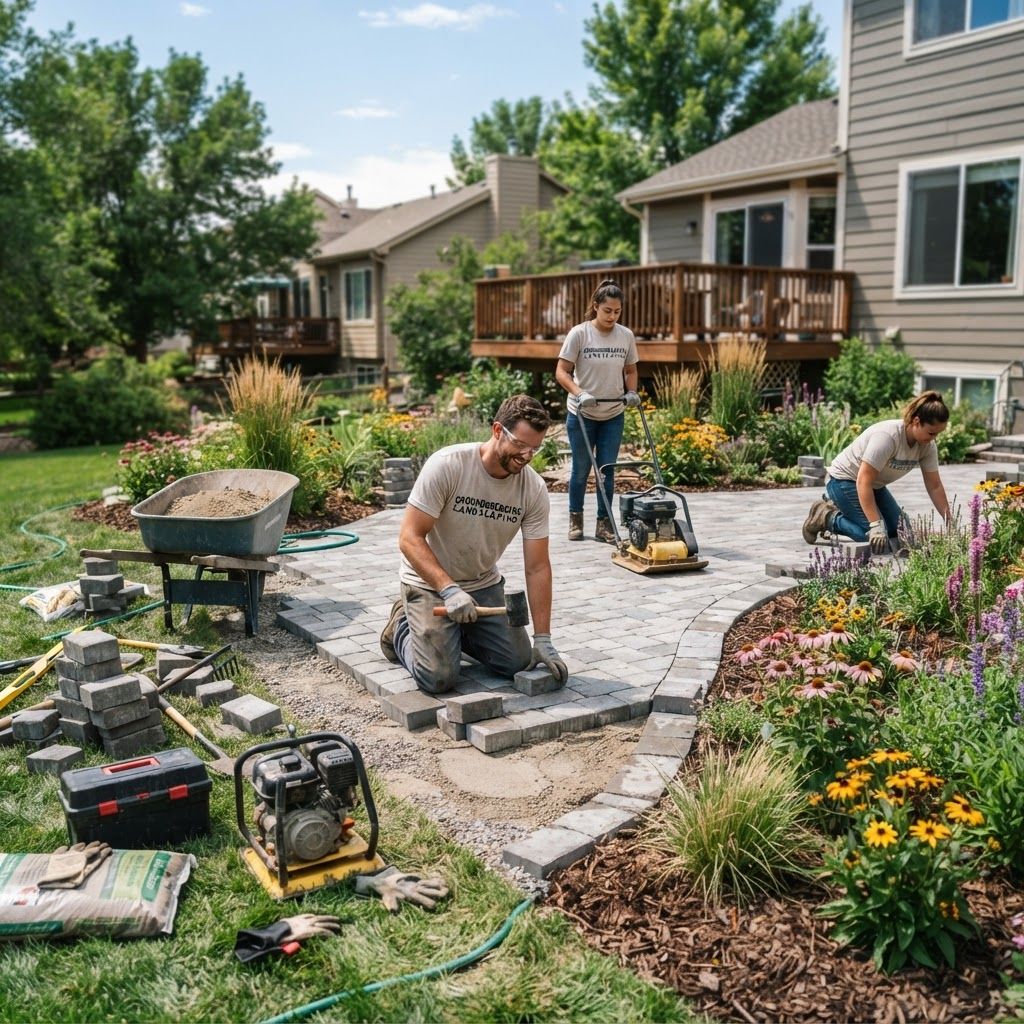
Hardscape quality depends almost entirely on invisible work. Excavating to proper depth, installing and compacting aggregate base in lifts, providing drainage behind retaining walls, and using geotextile separation determine whether a patio stays flat or heaves within a few winters. This is where price differences between bids usually originate.
Ten Landscaping Companies Serving St. Paul
Capital City Landscape Design provides full design-build service with detailed plan sets and phased installation options.
Great River Native Plantings specializes in native and pollinator landscapes, prairie plantings, and rain gardens suited to regional conditions.
Summit Hardscape Contractors focuses on paver patios, natural stone, retaining walls, and outdoor living structures with engineered base construction.
Northern Tree and Shrub Care concentrates on tree health, structural pruning, planting, and disease management including oak and ash concerns.
Frostline Grounds Maintenance handles year-round maintenance contracts including mowing, cleanups, and commercial snow management.
Heritage Garden Restoration works on historic properties, restoring period-appropriate garden layouts and mature plantings.
Riverfront Drainage and Grading specializes in water management, French drains, swales, and correcting negative grade against foundations.
Eastside Irrigation Systems designs and services sprinkler and drip systems with smart controllers and seasonal winterization.
Union Park Yard and Garden serves smaller urban lots with compact designs, raised beds, and edible garden installation.
Landmark Commercial Landscaping completes the list serving multifamily, institutional, and corporate properties with maintenance and enhancement programs.
Trends Shaping Local Landscapes
Native and pollinator planting has moved firmly into the mainstream. Species adapted to regional conditions require less irrigation, resist pests better, and support native insects and birds. Turf reduction is a related trend, with homeowners converting portions of lawn to planted beds, groundcover, or no-mow fescue blends that need far less input.
Stormwater management has become a design driver rather than an afterthought. Rain gardens, dry creek beds, permeable paving, and downspout redirection reduce runoff and often align with watershed district requirements on larger projects. Some jurisdictions offer cost-share programs for qualifying installations.
Outdoor living investment remains strong. Patios with defined seating areas, fire features that extend usability into cool evenings, pergolas for shade, and integrated low-voltage lighting significantly increase how much time households actually spend outside during a short season.
Edible landscaping continues to grow, with raised vegetable beds, fruit trees selected for hardiness, berry plantings, and herb gardens integrated into ornamental designs.
Planning and Budgeting
Design fees are worth paying. A plan prevents expensive rework and lets you phase installation across multiple years while maintaining a coherent result. Hardscape typically consumes the largest budget share, followed by mature tree installation, then perennials and turf.
Scheduling requires foresight. Spring books out quickly, and the best contractors fill their season early. Fall is actually an excellent planting window for trees and shrubs because cooler temperatures reduce transplant stress. Hardscape can proceed later into the season than planting, though ground freeze eventually ends excavation.
Selecting a Landscaper
Review portfolios for projects several years old rather than freshly installed, because landscape quality reveals itself over time. Ask about base construction specifications on hardscape, including excavation depth and compaction method. Confirm plant warranty terms and what maintenance is required to keep them valid.
Verify insurance and, for tree work, confirm certified arborist credentials. Clarify whether the crew installing is employed by the company or subcontracted. Request a written plant list with sizes and quantities so bids can be compared meaningfully.
Conclusion
Landscaping in St. Paul rewards contractors who respect the climate, build hardscape on proper foundations, and select plants suited to zone four conditions. The ten companies above cover design-build, native plantings, hardscape, tree care, drainage, irrigation, and maintenance. Invest in a plan, prioritize the unseen base and soil work, and book early to secure the season you want.