
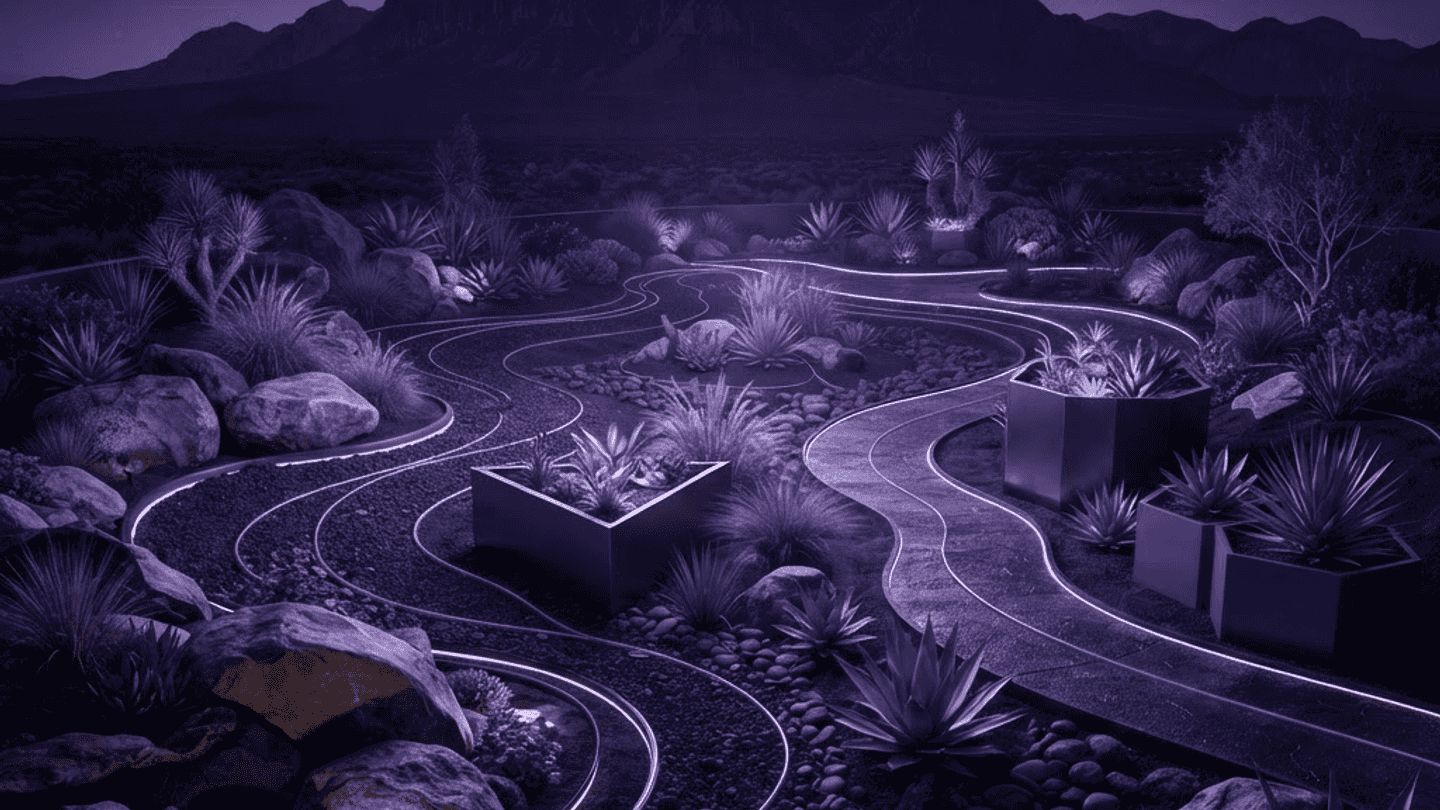
Landscaping in Reno is an exercise in working with the environment rather than against it. At roughly 4,500 feet with limited annual precipitation, intense sunlight, alkaline soils, and a short but vigorous growing season, the region punishes landscapes designed for wetter climates. The best local landscaping companies have built their practices around water efficiency, regionally appropriate plant palettes, and hardscape that handles freeze-thaw cycles without cracking or heaving.
What Makes High Desert Landscaping Different
Soil is often the first challenge, with compacted, low-organic, alkaline profiles that require amendment or careful plant selection. Water is the second, as both cost and conservation expectations push designs toward drip irrigation, mulch, and drought-adapted species. Wind and sun exposure influence plant siting and structure design. Winter presents freeze-thaw stress on pavers, retaining walls, and irrigation components, which means proper base preparation and system winterization are not optional details but core to whether a landscape survives.
How These Companies Were Reviewed
Evaluation considered design capability, plant knowledge specific to the region, irrigation expertise, hardscape construction quality, project management and scheduling, maintenance program depth, licensing, and client-reported results after multiple seasons.
The Top 10 Landscaping Companies in Reno
1. Silver Sage Landscape Design
Silver Sage Landscape Design offers full design-build service with a strong xeriscape portfolio. Its designers develop planting plans using native and adapted species that establish quickly and look intentional rather than sparse, a common failing of poorly planned water-wise yards.
2. Great Basin Outdoor Living
Great Basin Outdoor Living focuses on hardscape and outdoor rooms, building patios, seat walls, fire features, pergolas, and outdoor kitchens. Its crews pay careful attention to base compaction and drainage, which determines whether paving stays flat for decades.
3. High Desert Irrigation Specialists
High Desert Irrigation Specialists concentrates on water delivery, designing drip systems, smart controllers, and hydrozoned valves. Retrofitting inefficient spray systems is a core service that often produces immediate reductions in water use.
4. Truckee Meadows Landscape Maintenance
Truckee Meadows Landscape Maintenance provides year-round care including pruning, seasonal cleanup, fertilization, weed management, and irrigation winterization. Consistent scheduled crews keep both residential and commercial properties presentable.
5. Comstock Native Plant Company
Comstock Native Plant Company specializes in native and pollinator-friendly landscapes, using sagebrush-steppe species, ornamental grasses, and regional perennials that need minimal supplemental water once established.
6. Sierra Stone and Grading
Sierra Stone and Grading handles earthwork, retaining walls, boulder placement, and drainage correction on sloped lots. Given Reno's varied terrain, competent grading is frequently the difference between a stable landscape and chronic erosion problems.
7. Nevada Turf and Synthetic Lawns
Nevada Turf and Synthetic Lawns installs both natural and artificial turf, advising honestly on where each performs best. Synthetic options have become popular for small yards and pet areas where water savings are substantial.
8. Washoe Commercial Landscaping
Washoe Commercial Landscaping serves office parks, retail centers, and homeowner associations with contracted maintenance, seasonal color rotations, and snow response plans that keep properties functional through winter.
9. Riverwalk Tree Care and Landscaping
Riverwalk Tree Care and Landscaping combines arboriculture with landscape services, offering structural pruning, deep root watering, and species selection guidance for trees expected to survive high desert conditions long term.
10. Meadow Crest Garden Design
Meadow Crest Garden Design is a boutique studio focused on residential gardens with an emphasis on layered planting, seasonal interest, and edible landscape elements integrated into ornamental beds.
Xeriscape Principles That Actually Work
Effective water-wise landscaping is not gravel and three shrubs. It starts with hydrozoning, grouping plants by water need so irrigation can be tuned precisely. Soil improvement and generous mulch depth reduce evaporation and moderate root temperature. Plant selection favors species proven in the region, including rabbitbrush, penstemon, yarrow, lavender, ornamental grasses, and hardy shrubs. Turf is reduced to areas that get real use rather than covering ground by default. Drip irrigation on a smart controller with seasonal adjustment delivers water where roots can use it.
Planning Your Project
Begin with a written design and phasing plan, since landscapes are naturally suited to staged installation. Confirm licensing and insurance, and ask about warranty terms on both plants and hardscape workmanship. Clarify who is responsible for establishment watering during the critical first season. Verify utility locating before excavation. Compare bids on identical plant sizes and material specifications, because substituting smaller stock or thinner paver bases is the easiest way for a low quote to look competitive.
Final Thoughts
Reno's landscaping industry has matured into a genuinely water-smart discipline, and the companies above lead in design quality, irrigation expertise, and construction durability. Invest in good soil preparation, efficient irrigation, and appropriate plants, and your landscape will look better while consuming far less water than a conventional design.
Water Efficiency as the Central Design Constraint
Landscaping in the Truckee Meadows begins and ends with water. Annual precipitation is modest, summer evapotranspiration rates are high, and outdoor irrigation accounts for the largest share of residential water use during the warm months. This reality has pushed the best local designers away from conventional turf-dominated yards and toward planting schemes where every square foot earns its water budget.
Practical execution matters more than the concept. Drip irrigation delivered to root zones rather than broadcast spray, pressure-regulated emitters, hydrozoning so plants with similar needs share a valve, and smart controllers that adjust to weather data all reduce consumption without sacrificing appearance. Mulch depth is a quietly powerful variable, since bare soil in high-desert sun loses moisture rapidly. Companies that discuss irrigation engineering with the same seriousness as plant selection produce landscapes that survive their third summer, which is where poorly designed installations typically begin to fail.
Plant Selection and Defensible Space
Regionally adapted plants dramatically outperform imports. Ornamental grasses, penstemon, rabbitbrush, salvia, yarrow, lavender, and a range of drought-tolerant shrubs thrive in local soils and tolerate the wide daily temperature swings that stress less suitable species. Established native and adapted plantings also require far less intervention once their root systems mature, which lowers long-term maintenance cost.
Wildfire considerations increasingly shape design along the wildland interface. Defensible space principles call for keeping the zone immediately around a structure free of continuous fuel, using hardscape, gravel, and low-growing irrigated plants close to the building, and avoiding dense woody shrubs against walls or beneath eaves. Landscapers experienced in these areas integrate defensible space into the aesthetic rather than treating it as a clearance exercise, producing yards that look intentional while meaningfully reducing ignition risk.