
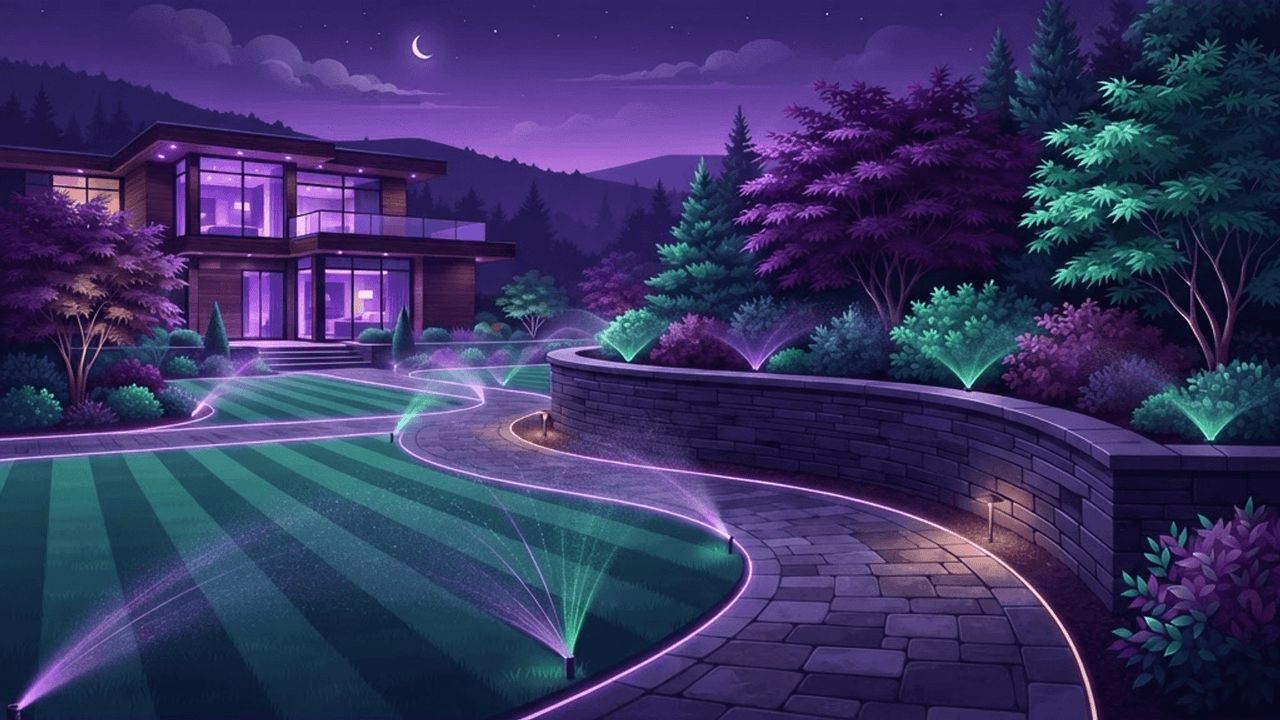
Landscaping Conditions in the Peoria Area
Successful landscaping is regional by nature, and the Peoria area presents specific conditions that determine what works. Soils across much of central Illinois are heavy in clay, which retains moisture, compacts easily and drains slowly. That single characteristic influences plant selection, bed preparation, drainage design and lawn establishment more than any other factor.
The region sits in a cold hardiness zone that experiences genuine winter, so plants must tolerate freezing temperatures, occasional deep cold snaps and freeze thaw cycles that heave shallow rooted material. Summers are warm and humid, favoring fungal pressure on turf and susceptible plants. Topography adds another layer, with bluff properties requiring slope stabilization, erosion control and retaining structures that flat lots do not.
Categories of Landscaping Service
Landscape design is the planning discipline, producing plans that address circulation, sightlines, plant massing, seasonal interest, drainage and long term maturity. Good design prevents the common outcome of a yard that looks acceptable initially and overgrown or awkward within five years.
Installation covers planting, bed preparation, soil amendment, mulching, sod or seed establishment and irrigation systems. Hardscaping addresses the built elements, including patios, walkways, retaining walls, steps, seat walls, fire features and outdoor kitchens. This work is closer to construction than gardening and requires proper base preparation, compaction and drainage to avoid settling and frost damage.
Maintenance is the ongoing category, spanning mowing, pruning, fertilization, weed and pest management, seasonal cleanup, mulch renewal and irrigation adjustment. Specialty services include tree care, lawn renovation, drainage correction and snow removal, which is a significant seasonal service in the region.
The Ten Best Landscaping Companies in Peoria
1. Prairie View Landscape Design is recognized for full service design and installation, producing detailed plans that account for mature plant size, drainage and year round interest.
2. River Bluff Landscaping specializes in slope and bluff properties, with expertise in retaining walls, terracing and erosion control on challenging terrain.
3. Heartland Lawn and Landscape serves residential clients with maintenance programs, lawn care and seasonal services, valued for consistent scheduling and reliable crews.
4. Cornerstone Hardscapes focuses on patios, walkways, outdoor living spaces and masonry features, with careful base preparation that prevents settling through freeze thaw cycles.
5. Illinois Valley Nursery and Landscaping combines a growing operation with installation, offering strong plant availability and knowledgeable selection guidance for regional conditions.
6. Summit Irrigation and Landscape concentrates on irrigation design, installation and seasonal service alongside general landscape work, including efficient zone planning.
7. Northgate Tree and Shrub Care specializes in arboriculture, including structural pruning, disease diagnosis, cabling and removal, with certified arborist involvement.
8. Grand View Landscape Maintenance handles commercial properties and homeowner associations with structured maintenance contracts and snow removal services.
9. Timber Ridge Native Landscapes focuses on native plantings, prairie restoration, pollinator gardens and rain gardens suited to Illinois ecology and stormwater management.
10. Legacy Outdoor Living designs and builds larger outdoor projects including pergolas, lighting, water features and integrated kitchen and fire installations.
Plants That Perform in Central Illinois
Native and regionally adapted plants consistently outperform imported ornamentals here because they tolerate clay soils, seasonal moisture extremes and winter cold. Native perennials such as coneflower, black eyed susan, little bluestem, switchgrass, prairie dropseed and butterfly weed establish deep root systems that improve soil structure and require minimal irrigation once mature.
Shrubs that perform reliably include viburnum, ninebark, hydrangea varieties suited to the zone, red twig dogwood for winter color and juniper for evergreen structure. Tree selection should favor species with proven regional durability such as oak, hackberry, serviceberry, Kentucky coffeetree and various maples, while avoiding species prone to storm breakage or disease pressure.
Turf in the region is predominantly cool season grass, typically Kentucky bluegrass, perennial ryegrass and fescue blends. Tall fescue has gained popularity for drought tolerance and reduced input requirements. Regardless of species, lawn success in clay soils depends heavily on core aeration, appropriate mowing height and avoiding compaction.
Trends in Regional Landscaping
Outdoor living has been the dominant trend for several years. Homeowners increasingly invest in patios, covered structures, outdoor kitchens, fire features and lighting that extend usable outdoor time into cooler evenings and shoulder seasons. These projects blur the line between landscaping and construction and require contractors capable of both.
Sustainability is another clear direction. Native plantings, reduced lawn area, pollinator gardens, rain gardens and permeable paving address both environmental goals and practical stormwater management on clay soils. Many homeowners also value the reduced maintenance and irrigation these approaches require once established.
Low maintenance design has become an explicit client request. That means right sizing plants to their space so pruning is minimal, using masses of durable perennials rather than high input annual displays, installing efficient irrigation with smart controllers, and specifying quality hardscape materials that do not require annual attention.
Working With a Landscape Contractor
Start with a plan even for phased work, since a plan prevents incremental decisions that conflict later. Confirm licensing where applicable, general liability insurance and workers compensation coverage. For hardscape work, ask specifically about base depth, compaction method, drainage provisions and whether retaining walls above a certain height include engineering.
Discuss plant warranty terms, which typically cover one growing season and require the homeowner to water appropriately. Clarify maintenance expectations after installation, because new plantings need consistent watering through the first year to establish. Finally, ask to see completed projects that are several years old rather than newly installed, since mature work reveals whether the design and construction held up.
Final Thoughts
Peoria has landscaping companies specializing in design, hardscape construction, native plantings, tree care, irrigation and maintenance. Because clay soils, winter cold and bluff topography all shape outcomes, regional experience matters more than general reputation. Choose a company that explains soil preparation and drainage in detail, and the landscape will still look intentional a decade from now.