
Landscaping Under Real Constraints
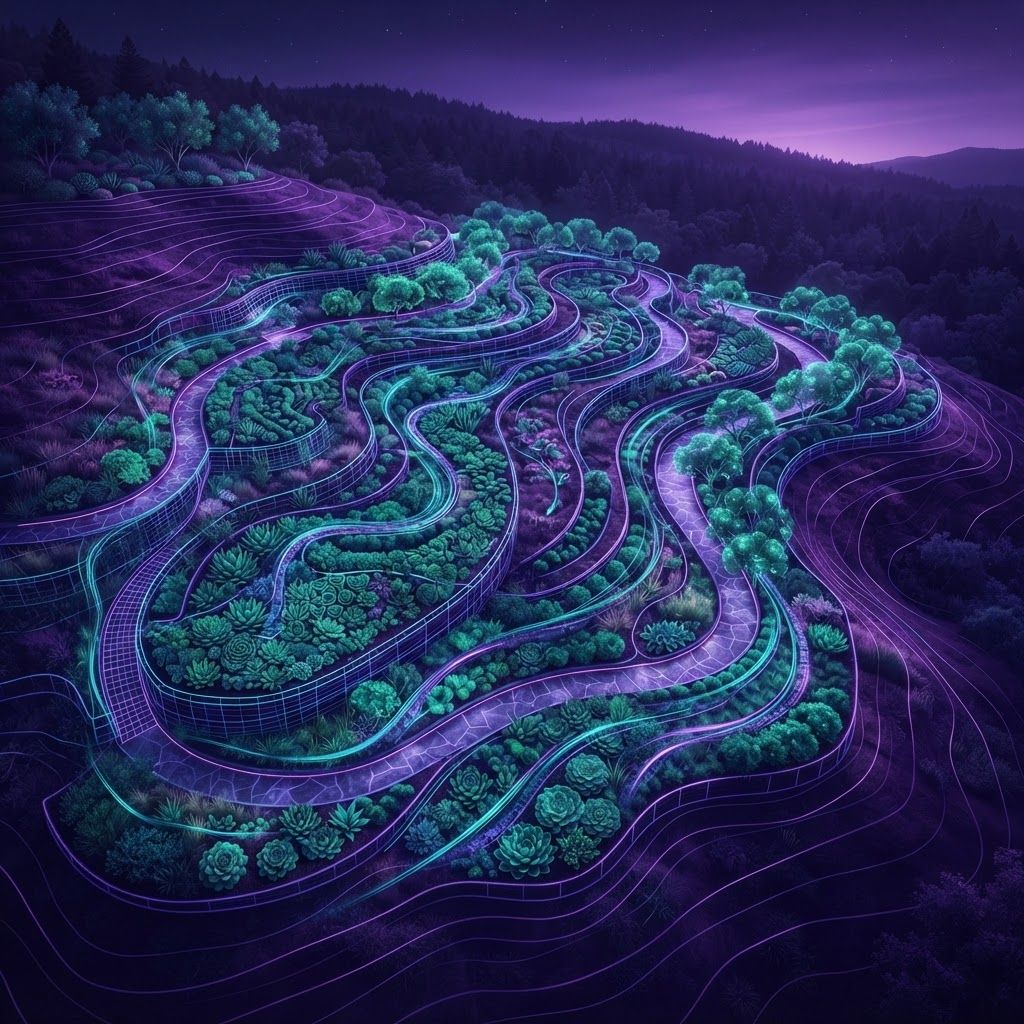
Landscaping in Glendale is shaped by three forces that did not exist in the era when most local gardens were designed. Water is the first: extended drought cycles and permanent conservation policy have made large irrigated lawns both expensive and increasingly impractical. Fire is the second: properties adjacent to the Verdugo Mountains and open canyon land must maintain defensible space, which dictates plant selection, spacing, and maintenance in the zones closest to structures. Terrain is the third: hillside lots require retaining structures, erosion control, and drainage design rather than simple planting.
The best landscape companies treat these as design parameters rather than obstacles, and the resulting gardens tend to look better than the lawns they replaced.
Climate Appropriate Planting
California native and Mediterranean climate plants thrive here with a fraction of the water a conventional lawn demands. Manzanita, ceanothus, toyon, sages, buckwheat, and native grasses provide structure and seasonal interest while supporting pollinators and birds. Olive, rosemary, lavender, and citrus perform reliably in the same conditions. The key principle is hydrozoning, which means grouping plants by water requirement so irrigation can be tuned rather than averaged. A garden watered to satisfy its thirstiest plant wastes water on everything else.
Top 10 Landscaping Companies in Glendale
1. Verdugo Native Landscapes
Specializes in California native plant design, including habitat gardens that require minimal supplemental water once established.
2. Foothill Fire Safe Landscaping
Focused on defensible space compliance, with zoned planting plans, appropriate spacing, and ongoing brush clearance service.
3. Glenoaks Hardscape and Masonry
Retaining walls, stone terraces, patios, and steps for sloped lots, built with proper drainage and engineered where height requires it.
4. Montrose Irrigation Systems
Irrigation audits, drip conversion, and smart controller installation that adjusts to weather data rather than a fixed schedule.
5. Brand Avenue Garden Design
Full design services with planting plans, lighting, and phased implementation for owners who want a long term vision rather than a single installation.
6. Crescenta Tree Care
Certified arborist services including structural pruning, disease diagnosis, and removal of hazardous limbs near structures.
7. Adams Hill Grounds Maintenance
Recurring maintenance with skilled pruning rather than shearing, which preserves plant form and reduces long term replacement.
8. Tropico Outdoor Living Builders
Outdoor kitchens, pergolas, fire features, and seating areas integrated with planting rather than added on afterward.
9. Verdant Water Wise Landscapes
Lawn replacement specialists handling turf removal, soil amendment, permeable surfacing, and rebate documentation.
10. Pacific Verdugo Landscape Contractors
Larger commercial capability serving multifamily and business properties, including slope stabilization and common area maintenance.
Trends in Local Landscape Design
Lawn replacement remains the dominant residential project, and the aesthetic has matured well beyond gravel and a few succulents into layered, textural planting with genuine seasonal rhythm. Rainwater capture and permeable surfacing are increasingly specified so storm flow infiltrates on site rather than running to the street. Edible landscaping has expanded, with fruit trees and kitchen gardens integrated into ornamental schemes. And outdoor living investment continues, since in this climate a well shaded terrace functions as usable room area most of the year.
Hillside and Drainage Considerations
On sloped Glendale properties, water management determines whether a landscape survives. Grading must direct runoff away from foundations and into controlled paths. Retaining walls above a certain height require engineering and permits, and improvised dry stacked walls frequently fail during heavy rain. Erosion control through deep rooted planting, jute netting during establishment, and terracing protects both the garden and the neighbors below. Any landscape company working hillside lots should discuss drainage before discussing plants.
Budget Planning
Landscape projects vary enormously by hardscape content. Planting and irrigation conversion for a front yard is a moderate investment, while retaining walls, paving, and outdoor structures move projects into major renovation territory. Maintenance is a recurring monthly cost that should be planned from the start, since a well designed garden neglected for two seasons costs more to recover than it did to maintain. Water agency rebates for turf replacement can offset a meaningful portion of conversion costs.
Final Thoughts
The most satisfying Glendale landscapes accept the region for what it is: dry, sunny, sloped, and fire prone. Companies that design within those realities produce gardens that look intentional, survive dry years, and reduce risk. Ask any prospective contractor what they would plant and why, and listen for whether water and fire enter the answer unprompted.
Designing for Climate and Fire Risk
Landscaping in Glendale is shaped by two constraints that override aesthetics: water and fire. On water, the shift away from thirsty turf toward climate-appropriate planting is now firmly established, and the palette that performs here is genuinely attractive rather than a compromise. California natives such as manzanita, ceanothus, toyon, and sage pair well with Mediterranean species including olive, rosemary, lavender, and ornamental grasses, all of which thrive on the region's dry summers once established. Efficient irrigation completes the picture: drip and inline emitters delivering water at the root zone, hydrozoning so plants with similar needs share a valve, weather-based smart controllers, and mulch depth sufficient to slow evaporation. Converting overhead spray to drip on a typical Glendale lot often reduces landscape water use substantially within a single season.
Defensible Space and Hardscape Considerations
For properties in and near the Verdugo foothills, defensible space is not optional. The zone immediately adjacent to the structure should be kept largely free of combustible material, with no woody shrubs against walls, no accumulated leaf litter in corners or on roofs, and no firewood or plastic storage stacked at the foundation. Beyond that, plantings should be spaced and maintained to interrupt fire spread, with tree limbs kept clear of the roof and of each other, and dead material removed on a regular schedule. Well-designed hardscape supports this, since patios, decomposed granite paths, gravel bands, and retaining walls create both usable outdoor space and natural fuel breaks. On sloped lots, retaining structures also address erosion, which becomes an acute problem during concentrated winter rain on hillsides where vegetation is thin. A landscaping company that raises these issues before discussing plant selection is one worth hiring.