
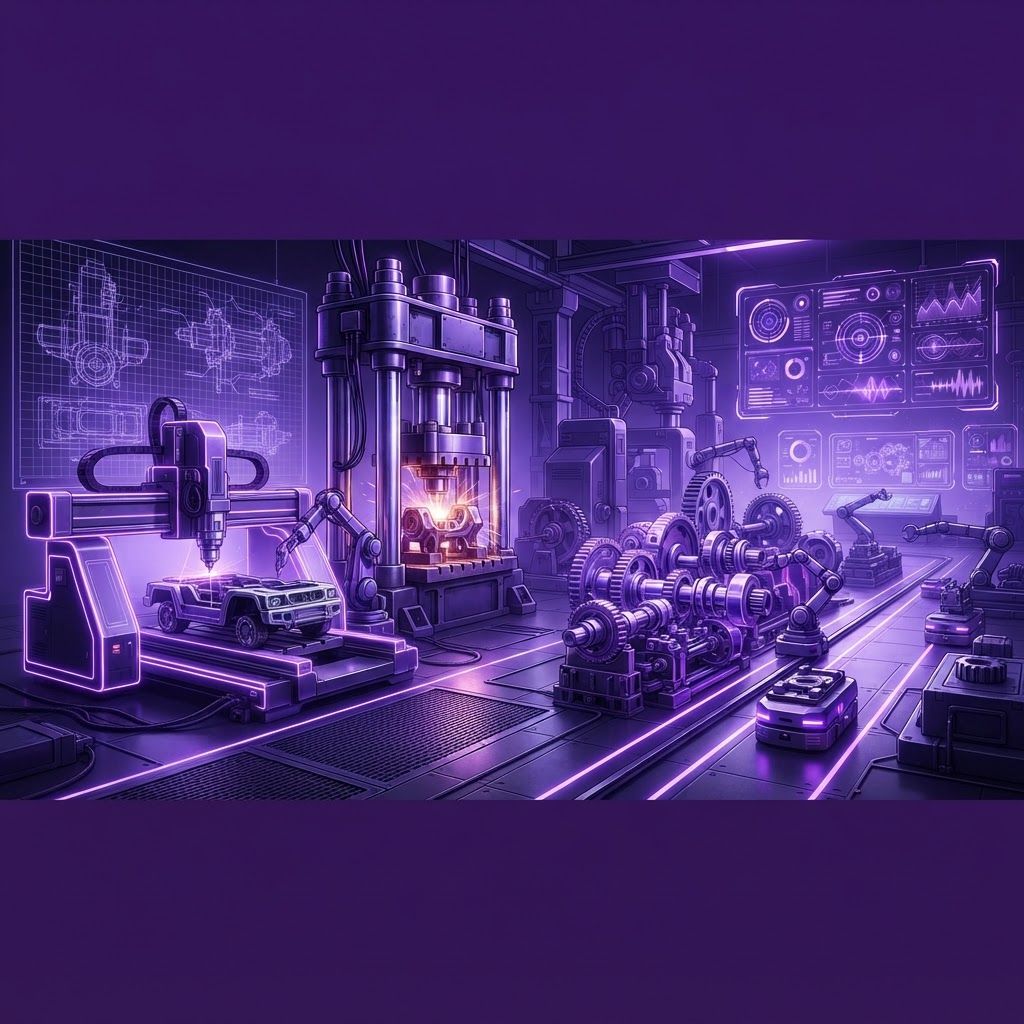
The Role of Machinery Manufacturing in Chesapeake
Machinery manufacturing is the industry that equips other industries. In Chesapeake, that means building and maintaining the material handling systems, marine deck equipment, conveyors, hydraulic systems, processing lines and custom machines that keep the port economy, agricultural operations and regional manufacturers running. It is a capital equipment business, which makes engineering quality and long-term supportability far more important than initial price.
The city's industrial base gives local machinery builders a distinct advantage: a workforce experienced in welding, machining, hydraulics and controls, plus proximity to customers whose equipment operates in salt air, under heavy cyclic loads and often around the clock. Machines built for those conditions must be designed conservatively and serviced predictably.
Engineering Capabilities That Matter
A capable machinery manufacturer combines several disciplines under one roof or through tightly managed partnerships. Mechanical design with proper stress and fatigue analysis comes first. Precision machining and fabrication follow, ideally with in-house capability so tolerances and schedules stay under control. Hydraulic and pneumatic system design, electrical panel building, and controls programming complete the package. The best firms also provide commissioning support, operator training, documentation and a spare parts program, because a machine without support is a liability waiting to surface.
Ten Machinery Manufacturers Serving Chesapeake
1. Tidewater Industrial Machine Works. A custom machinery builder handling design through commissioning for material handling and processing applications, known for conservative engineering and thorough documentation packages.
2. Chesapeake Precision Machining Company. A machining specialist producing shafts, housings, gears and close-tolerance components, supported by coordinate measuring capability and documented material traceability.
3. Elizabeth River Marine Machinery Group. Builder and rebuilder of deck machinery, winches, capstans and hydraulic power units for workboats and port equipment, with corrosion-resistant design detailing suited to constant marine exposure.
4. Great Bridge Conveyor Systems. Manufacturer of belt, roller and chain conveyor systems for distribution and manufacturing facilities, offering layout engineering alongside equipment fabrication and installation.
5. Southgate Hydraulic Engineering. Designers and builders of hydraulic power units, cylinders and custom actuation systems, with testing capability that validates performance before equipment leaves the shop.
6. Deep Creek Agricultural Equipment Manufacturing. A producer of implements, handling equipment and processing machinery for farms in southern Chesapeake, where durability and field serviceability outweigh sophistication.
7. Atlantic Automation Builders. A systems integrator building automated cells, robotic work stations and control systems, combining mechanical design with programmable controller and robot programming expertise.
8. Bay Point Machine Rebuilding Services. Specialists in rebuilding and retrofitting existing machinery, including way grinding, spindle rebuilds and control upgrades that extend the life of capital assets at a fraction of replacement cost.
9. Chesapeake Fabrication and Weldments. A heavy fabrication shop producing frames, bases, tanks and structural weldments to certified welding procedures, frequently supplying other machinery builders in the region.
10. Hampton Roads Equipment Design Group. An engineering-led firm performing concept development, machine design, analysis and manufacturing package preparation for clients who prefer to separate design from fabrication.
Writing a Specification That Gets Good Results
Machinery projects fail more often from vague requirements than from poor fabrication. A useful specification defines throughput, product characteristics and variability, cycle time, footprint constraints, utility availability, environmental conditions, safety requirements and expected maintenance access. It should also state acceptance criteria explicitly, describing how the machine will be tested and what performance must be demonstrated before final payment. Manufacturers appreciate this clarity because it lets them quote accurately instead of padding for unknowns.
Automation and Controls Trends
Automation continues to reshape the sector. Collaborative robots have lowered the barrier for small manufacturers to automate loading, packing and inspection tasks. Sensor-rich machines now generate condition data, enabling predictive maintenance rather than fixed intervals. Remote diagnostics have become standard, letting builders troubleshoot without dispatching a technician. At the same time, labor availability drives many automation decisions: companies automate not to reduce headcount but because they cannot fill the positions they already have.
Lead Times, Support and Spare Parts
Capital equipment lead times remain longer than they were several years ago, driven by component availability and shop capacity. Plan accordingly and confirm quoted schedules against the manufacturer's current backlog rather than an optimistic estimate. Before signing, clarify what documentation you receive, including drawings, bills of material, electrical schematics and programming source files. Establish a recommended spare parts list and confirm parts availability commitments, especially for proprietary components. This preparation determines whether a breakdown in year six costs hours or weeks.
Safety and Compliance
Machine safety deserves early attention. Guarding, interlocks, emergency stop circuits, lockout provisions and risk assessment documentation should be part of the design conversation, not an afterthought added during installation. Manufacturers experienced with industrial customers will raise these topics proactively and can advise on applicable standards for your application.
Final Thoughts
Chesapeake's machinery manufacturers combine engineering depth with hands-on fabrication and controls capability, serving marine, port, agricultural and industrial customers whose equipment must simply work. The ten companies profiled here span custom machine building, precision machining, marine machinery, conveyors, hydraulics, agricultural equipment, automation, rebuilding, fabrication and independent design services. Invest effort in a clear specification and choose a builder whose support commitments match the expected life of the equipment, and the resulting machine will earn its cost many times over.