
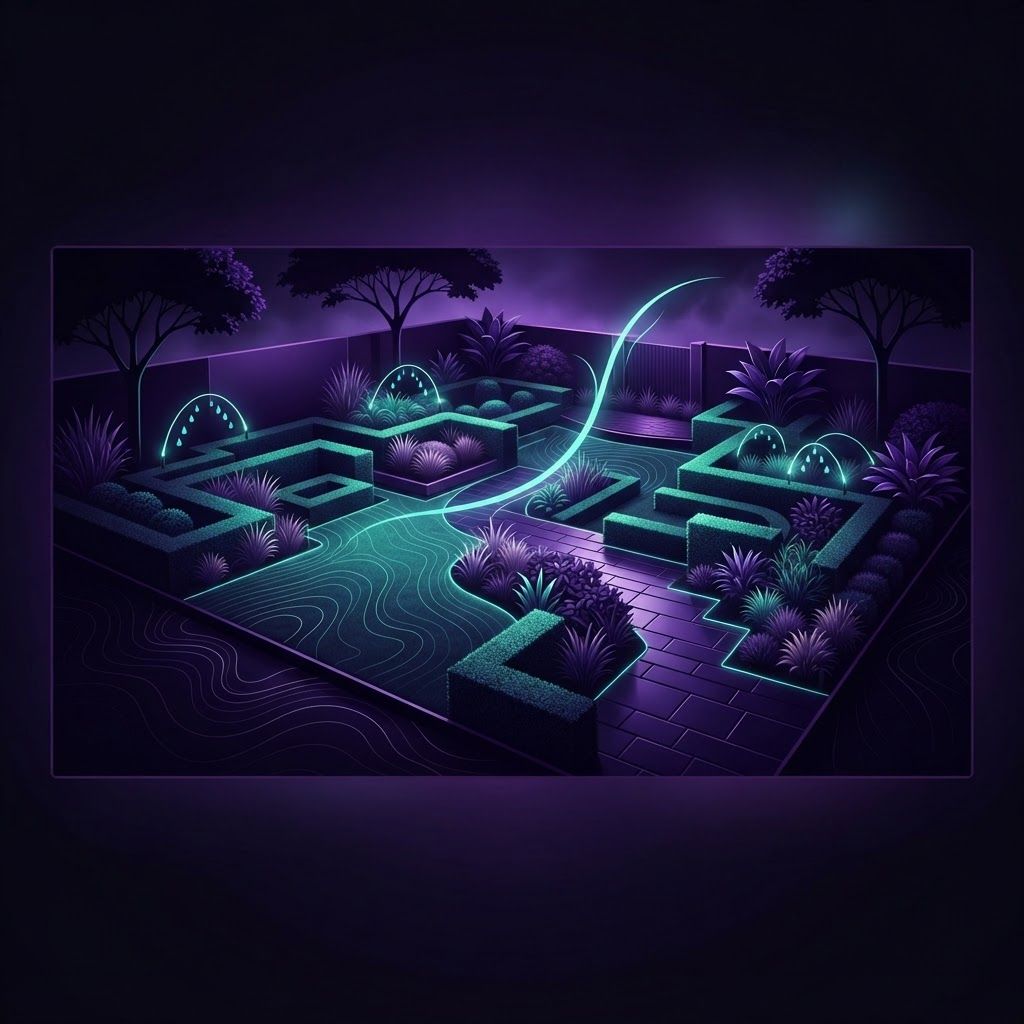
Landscaping in a Mediterranean Climate
Elk Grove's climate is Mediterranean in the technical sense: hot, dry summers and cool, wet winters with essentially all annual rainfall arriving between November and April. Plants that thrive here are those adapted to surviving five or six months without natural water, which is precisely why the traditional expanse of cool-season lawn has become both expensive and increasingly impractical.
Soil adds another layer of complexity. Much of the city sits on heavy clay that drains slowly, holds water near the surface during winter, and becomes brick-hard in summer. Planting into unamended clay without understanding its behavior is the most common cause of landscape failure, drowning roots in winter and starving them in summer. The companies below have built their practices around these regional conditions.
Ten Landscaping Companies Serving Elk Grove
1. Cosumnes Landscape Design Group
This firm leads with design, producing detailed planting plans, hardscape layouts, and irrigation designs before any installation begins. Their plans account for mature plant size, seasonal interest, and solar orientation, which prevents the overcrowding and scorching that undermine landscapes installed without planning.
2. Valley Native Plantings
Specializing in California native and Mediterranean-climate plants, Valley Native Plantings creates landscapes that require minimal supplemental irrigation once established. Their designs support pollinators and local bird populations while remaining visually structured rather than unkempt, addressing the common concern that native gardens look untidy.
3. Stoneworks Hardscape and Masonry
Patios, retaining walls, outdoor kitchens, fire features, and paver driveways define this company's work. Their attention to base preparation and drainage is what separates hardscape that stays level from installations that settle and heave within a few seasons in expansive clay soils.
4. Laguna Irrigation Systems
Focused entirely on water delivery, this firm designs and installs drip systems, converts inefficient spray zones, installs weather-based smart controllers, and audits existing systems for distribution uniformity. Irrigation efficiency is the single largest lever on landscape water consumption.
5. Elk Grove Lawn and Grounds Maintenance
Providing ongoing maintenance for residential and commercial properties, this company handles mowing, pruning, fertilization, seasonal cleanup, and irrigation monitoring. Consistent maintenance crews who know a property tend to catch developing problems, such as an irrigation break or pest issue, before they become visible damage.
6. Greenfield Turf Alternatives
This provider specializes in lawn replacement, installing drought-tolerant groundcovers, ornamental grasses, decomposed granite pathways, and high-quality synthetic turf where usable play surface is required. They also assist clients in documenting projects for water agency rebate programs.
7. Bruceville Tree Care and Arboriculture
Employing certified arborists, this firm handles structural pruning, health assessment, disease diagnosis, root management, and removal when necessary. Mature trees are the highest-value element in any landscape, providing shade that measurably reduces cooling costs, and competent care protects that asset.
8. Willow Bend Edible Landscapes
Combining ornamental design with food production, this company installs fruit trees, raised vegetable beds, berry plantings, and herb gardens integrated into an attractive overall layout. The Sacramento Valley growing season is exceptionally productive, making edible landscaping unusually rewarding here.
9. Franklin Commercial Landscape Services
Serving business parks, retail centers, and homeowner associations, Franklin manages large-scale maintenance, seasonal color rotation, irrigation management, and landscape renovation with the scheduling discipline and reporting that property managers require.
10. Maple Court Outdoor Living
This firm designs and builds complete outdoor environments including shade structures, pergolas, lighting, seating areas, and water features. Their work extends usable living space into the yard for much of the year, which in this climate represents substantial added value.
Design Trends Shaping Local Landscapes
Water efficiency has moved from a constraint to a design language. Gravel and decomposed granite pathways, structured plantings of drought-adapted species, and reduced or eliminated turf areas now define contemporary local landscapes. Well-executed examples look intentional and refined rather than sparse.
Shade has become a design priority as summers intensify. Strategically placed deciduous trees, pergolas, and shade sails create usable outdoor space during hours that would otherwise be unbearable, and they reduce cooling load on the adjacent building.
Habitat value is increasingly requested, with homeowners asking for plantings that support pollinators and birds. Outdoor lighting has shifted toward low-voltage systems with warm color temperature and downward shielding, improving both ambiance and neighborhood dark-sky character. Permeable paving continues to gain traction as a way to manage storm runoff on site.
How to Choose a Landscaping Company
Determine first whether you need design, installation, maintenance, or all three, since companies specialize differently and few excel at everything. For design-build projects, review a portfolio of completed work at least three years old, because a landscape's true quality reveals itself as plants mature and hardscape settles.
Confirm licensing and insurance, and verify that irrigation work will be permitted where required. Ask specifically about soil preparation approach, since amendment, drainage, and grading determine long-term plant health far more than plant selection.
Get clarity on plant warranty terms and what maintenance is required to keep them valid. Establish whether the company will provide an irrigation schedule appropriate to establishment and then to mature plantings, as watering requirements change substantially over the first two years.
For ongoing maintenance, confirm crew consistency, service frequency, and what is included versus billed separately, particularly pruning of large shrubs and trees.
Final Thoughts
A well-designed Elk Grove landscape reduces water consumption, lowers cooling costs through shade, supports local wildlife, and creates outdoor space that is genuinely usable for most of the year. The companies profiled here cover design, native plantings, hardscape, irrigation efficiency, tree care, and maintenance. Choose based on regional plant knowledge and soil expertise rather than price per square foot, and the landscape will improve rather than decline with age.