
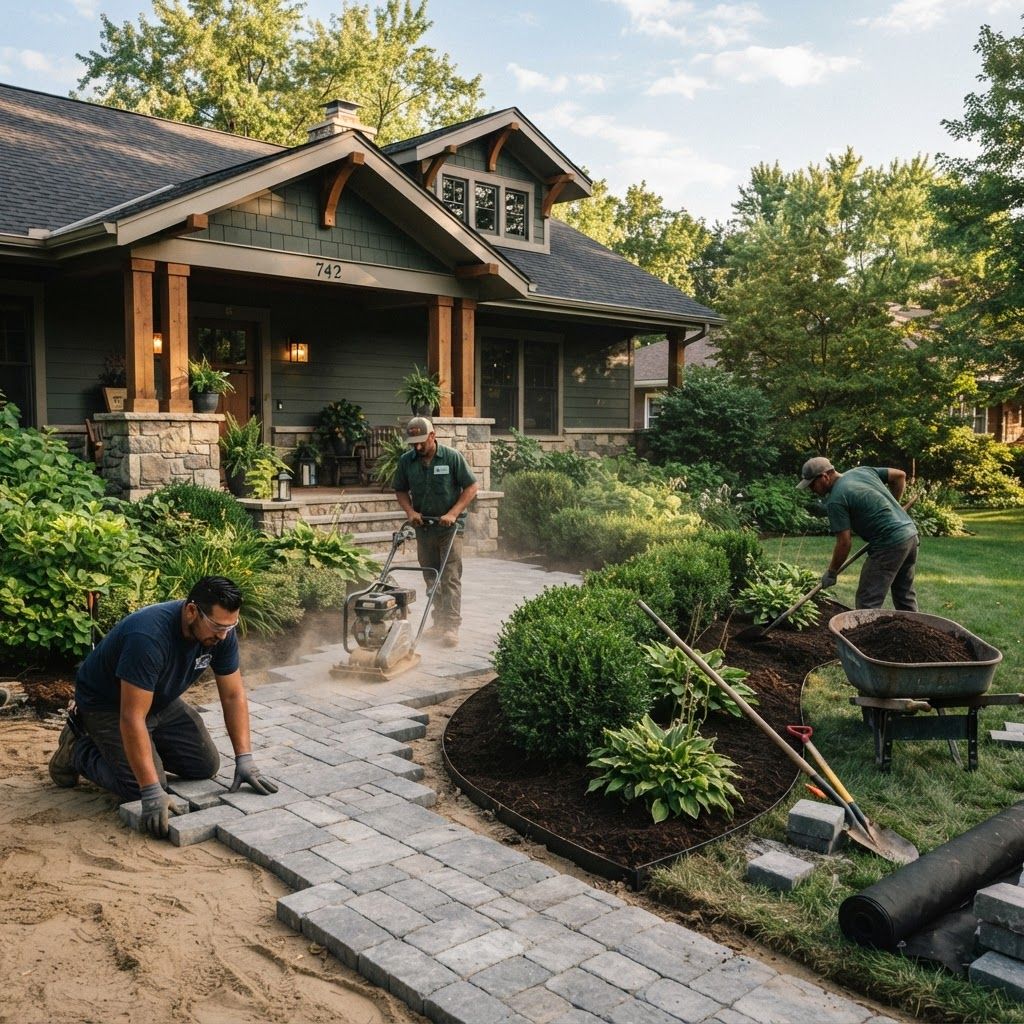
Landscaping in a Zone 6 City With a Short Window
Buffalo sits largely in USDA hardiness zone 6a, with a frost-free window that realistically runs from mid-May to early October. That compressed calendar means installation crews work at pace, and plant selection has to account for both winter kill and the salt spray that road treatment throws onto street-facing beds. Add the region's dense lake-plain clay, which drains slowly and compacts easily, and it becomes clear why imported topsoil, drainage correction, and soil amendment are standard line items on serious Buffalo proposals.
Freeze-thaw cycling is the other defining factor. Water infiltrating a paver joint or retaining wall base will expand repeatedly across a Western New York winter, heaving flatwork and bowing walls that were installed without proper base depth and compaction. Contractors who cut corners on aggregate base and geotextile fabric produce patios that look excellent in September and misaligned by April.
What Quality Looks Like on a Buffalo Property
Strong landscape firms in the region separate design from installation and are transparent about both. A real design phase produces a scaled plan, a plant schedule with mature sizes, and a grading and drainage strategy. On the build side, look for documented base depths for hardscape, proper compaction in lifts, and edge restraint on paver work. For plantings, native and regionally proven species outperform trend picks: serviceberry, redbud, ninebark, switchgrass, little bluestem, and hydrangea varieties bred for cold hardiness all earn their place in local designs.
Maintenance capability is equally important. Many Buffalo firms operate a dual business, with landscape construction in the warm months and snow and ice management from November through March. That model funds year-round crews and equipment, and it means your landscape contractor is often the same company plowing your drive, an advantage for accountability when a plow blade meets a bed edge.
Ten Landscaping Companies Buffalo Property Owners Rely On
1. Menne Nursery is a long-established Amherst institution combining a full garden center with design and installation services. Its horticultural depth makes it a strong choice for planting-driven projects and mature specimen selection.
2. Russell's Tree and Shrub Farm pairs a large growing operation with landscape design, meaning clients can see and select actual nursery stock rather than a catalog photo. It is well regarded for tree work and screening plans.
3. Zaepfel Nursery and Landscaping serves the Buffalo metro with residential design-build work and ongoing maintenance, and it is frequently cited for reliable seasonal service programs.
4. Arbordale Nurseries and Landscaping operates in the Southtowns with an emphasis on full-property planning, including hardscape, plantings, and drainage correction on challenging lots.
5. Lockwood's Greenhouses in Hamburg brings decades of Western New York horticultural expertise and offers design guidance alongside one of the region's deepest plant inventories.
6. Amerihome Landscaping focuses on outdoor living construction, including paver patios, retaining walls, fire features, and outdoor kitchens built to withstand freeze-thaw stress.
7. Sanders Landscaping is known for maintenance excellence on commercial and higher-end residential properties, where consistent edging, pruning, and turf care define the result.
8. Great Lakes Landscape Design handles design-build projects across Erie County with attention to grading and stormwater management, an underrated need on Buffalo's flat clay lots.
9. Rick's Landscaping and Snow Removal represents the region's dual-season model, delivering summer maintenance and winter ice management for the same client base.
10. Elmwood Landscape Group and comparable urban specialists concentrate on small city lots in Allentown, the Elmwood Village, and North Buffalo, where narrow access, shade from mature street trees, and limited square footage require precise, layered design.
Budgeting Realistically
Weekly maintenance for a typical Buffalo residential lot is generally a modest monthly figure across the season. Paver patios and retaining walls are priced by square foot or face foot and rise sharply with excavation, drainage, and wall engineering requirements. Full front-yard redesigns with plantings, lighting, and irrigation reach into five figures. The single biggest cost driver in this market is earthwork: if the lot needs grading, drainage tile, or soil replacement, that work happens before anything visible gets installed.
Sequencing a Project Through the Seasons
Local contractors book design work through winter, start hardscape as soon as the ground reliably thaws, and shift to planting once soil temperatures rise. Fall is an underused window in Buffalo: soil is warm, rainfall is dependable, and trees and shrubs establish roots before dormancy. Turf renovation and bulb planting also perform best in September and October. Homeowners who plan a season ahead get better crew availability and better pricing than those calling in June.
Making the Right Choice
Ask to walk a completed project that is at least three winters old. In Buffalo, that is the real test. Patios stay flat, walls stay plumb, and plantings look mature only when the base work and species selection were right from the beginning.