
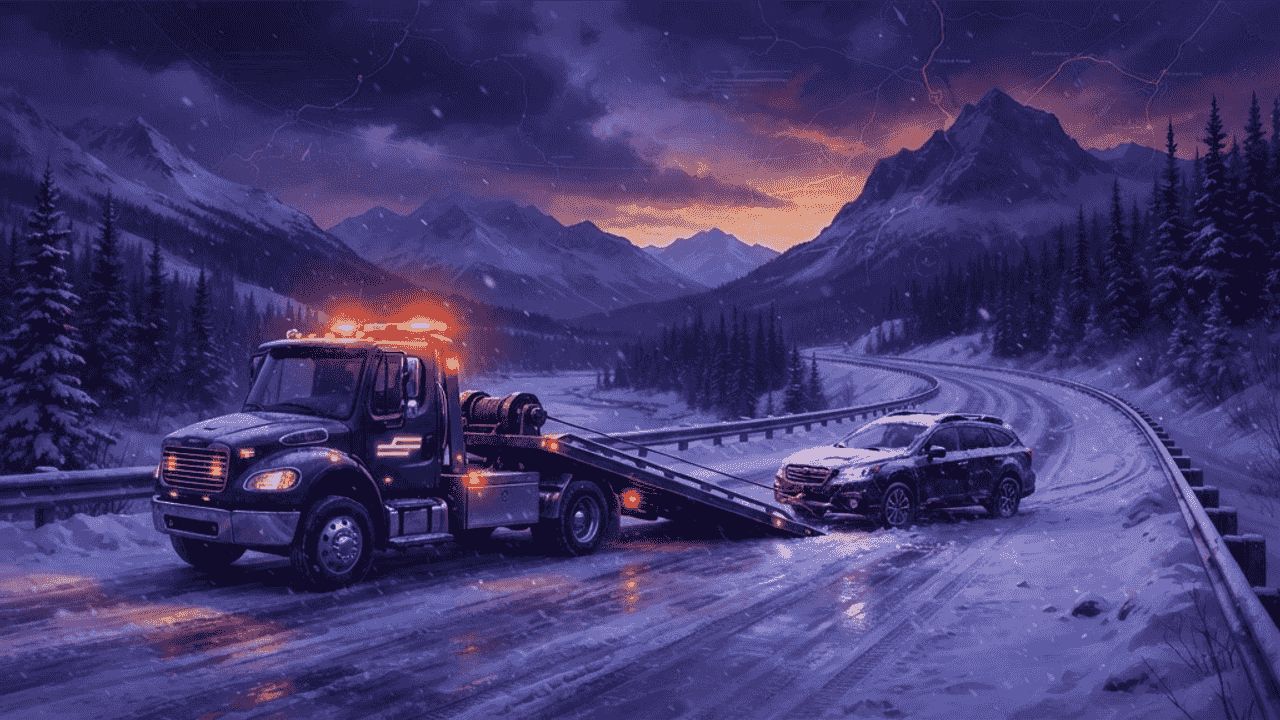
Why Towing Carries Higher Stakes in Anchorage
In most cities, a disabled vehicle means a frustrating afternoon. In Anchorage during January, it can mean sitting in subfreezing darkness on a highway shoulder with limited cell coverage and only a few hours of daylight to work with. Response time is not a customer service metric here. It is a safety consideration.
The local operating environment is also unusually demanding on equipment and operators. Ice-covered roads make recovery physics unforgiving. Snowbanks hide curbs and drainage ditches. Vehicles slide into embankments along the Seward and Glenn Highways in configurations that require winching rather than simple hookup. Add a vehicle mix heavy on full-size trucks, and the result is a market where undersized equipment fails routinely.
Understanding Towing Equipment and Why It Matters
Flatbed carriers lift the entire vehicle onto a deck. This is the correct choice for all-wheel-drive vehicles, low-clearance cars, electric vehicles, luxury models, and any vehicle with drivetrain damage. Dragging an all-wheel-drive vehicle on two wheels can destroy a transfer case, which makes flatbed availability a meaningful differentiator.
Wheel-lift trucks are faster and more maneuverable, which makes them useful in tight parking structures and congested downtown streets. They are appropriate for many front-wheel-drive vehicles over short distances.
Heavy-duty wreckers handle commercial trucks, buses, and equipment. Recovery work involving rollovers, ditch extractions, or loads that have shifted requires this class of truck plus an operator trained in rigging.
Winch capability and off-road recovery skill deserve separate emphasis. A substantial share of Anchorage calls involve vehicles that have left the roadway entirely, and pulling a truck out of a snow-filled ditch without damaging bumpers, frames, or suspension components is a genuine craft.
The Ten Best Towing Services in Anchorage
1. Alaska Towing and Recovery has built its reputation on around-the-clock availability and a fleet that spans light-duty flatbeds through heavy wreckers. Its ability to handle commercial recovery alongside consumer calls makes it a common first choice for fleet managers and individual drivers alike.
2. Anchorage Towing is known for fast response inside the Anchorage bowl and consistent communication with customers about arrival windows. Accurate time estimates matter enormously when the alternative is waiting outside in the cold without information.
3. Denali Towing focuses heavily on winch and off-road recovery, which suits calls along the highway corridors and less-maintained side roads where vehicles slide off pavement. Operators experienced in rigging reduce the chance that a recovery causes more damage than the original incident.
4. Northern Towing Alaska serves both consumer and commercial segments with an emphasis on flatbed service. For owners of all-wheel-drive vehicles, which represent a large share of the local fleet, flatbed-first policy is a practical advantage.
5. Glacier City Towing covers the Anchorage to Girdwood corridor, an area where weather changes rapidly and breakdowns can occur far from services. Providers who routinely run that stretch understand the specific hazards of the Seward Highway in winter.
6. Eagle River Towing concentrates on the northern communities and the Glenn Highway approach. Local coverage reduces response times for residents outside central Anchorage, where a downtown-based truck might take an hour longer to arrive.
7. Midnight Sun Towing has developed a following for roadside assistance beyond simple towing, including jump starts, lockout service, tire changes, and fuel delivery. A large share of winter calls resolve without a tow at all, and a provider who can jump-start a frozen battery on site saves both time and money.
8. Alaska Heavy Haul operates in the commercial and equipment segment, handling machinery transport, container moves, and heavy recovery. Contractors and logistics operators rely on this tier of service, which requires permits, specialized trailers, and route planning expertise.
9. Rapid Response Towing emphasizes dispatch technology and driver tracking so customers receive realistic updates. Digital dispatch has been one of the more meaningful improvements in the industry, replacing vague promises with actual location data.
10. Motor Club and Insurance Networks collectively belong on any honest list. Roadside assistance programs bundled with auto insurance, credit cards, or membership clubs contract with local operators and often cover towing costs entirely. Many drivers pay for a tow they were already entitled to receive free simply because they never checked their coverage.
Choosing a Provider Before You Need One
The worst time to evaluate a towing company is while standing on an icy shoulder. Do the research in advance. Confirm that the company is licensed and insured, and ask specifically whether damage during transport is covered. Ask what equipment they will dispatch for your vehicle type, particularly if you drive an all-wheel-drive or electric vehicle. Clarify pricing structure, including hookup fees, per-mile charges, after-hours premiums, and winching surcharges, since recovery work is typically billed separately from towing.
Also ask where the vehicle will be taken. A provider willing to deliver to the repair shop of your choosing is preferable to one that routes everything to an affiliated facility.
Practical Preparation for Alaska Drivers
Keep a winter kit in the vehicle: warm layers, blankets, a flashlight, a charged power bank, water, food, and a small shovel. Store your roadside assistance number and preferred towing company in your phone before winter begins. When a breakdown happens, pull as far off the roadway as conditions allow, activate hazard lights, and stay in the vehicle unless it is unsafe to do so, since a car provides meaningful shelter and visibility.
Battery maintenance prevents a large share of calls outright. Test your battery each autumn, keep terminals clean, and use a block heater when temperatures drop. Tire condition matters just as much, since most ditch recoveries begin with a loss of traction that better rubber would have prevented.
Anchorage towing operators run some of the more demanding recovery work in the country, and the good ones combine proper equipment with judgment earned over many winters. Identifying one in advance turns a potentially dangerous situation into a manageable delay.