
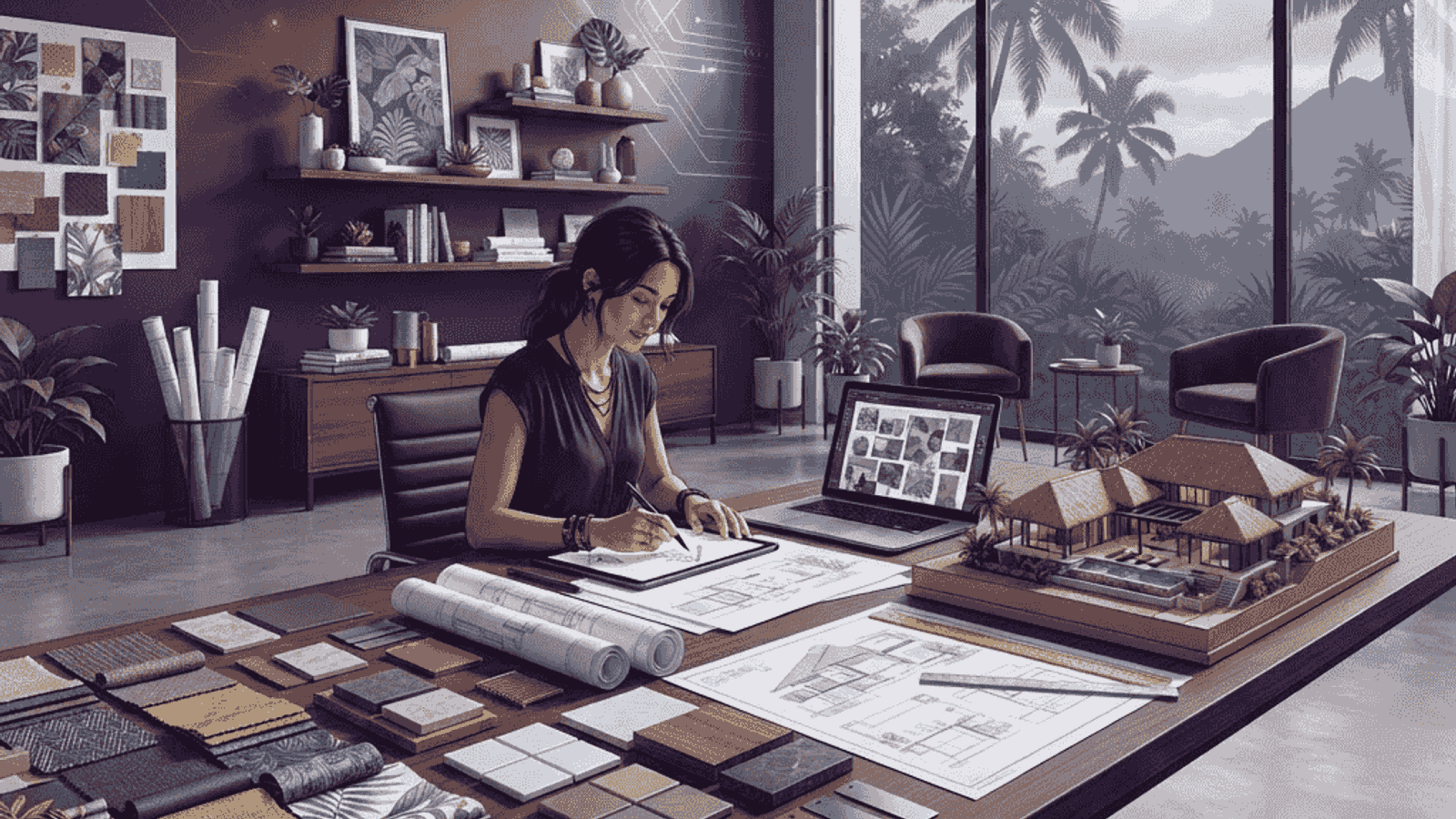
Interior design in Honolulu is shaped less by trend cycles than by climate and culture. Trade winds, intense natural light, salt-laden air and a lifestyle that treats the lanai as a primary living room all influence material selection, layout and finish decisions. A design that performs beautifully in a temperate mainland city may fail here within a few years, so the best local firms build environmental performance into their aesthetic from the outset.
The Design Challenges Unique to Oahu
Corrosion is the first constraint. Coastal properties require careful specification of hardware, fasteners and metal finishes, since standard fittings can degrade quickly. Humidity is the second, influencing choices in wood species, adhesives, upholstery fills and ventilation strategy. Light is the third: Honolulu’s sun is direct and unforgiving on textiles and artwork, which makes fade-resistant fabrics, considered window treatments and glazing choices essential rather than optional.
Then there is cultural literacy. Hawaii has a distinct visual heritage, and thoughtful designers engage it with respect rather than borrowing motifs superficially. That means understanding traditional materials, working with local artisans, and distinguishing genuine regional design from souvenir-shop iconography. Clients increasingly value that distinction and ask about it directly.
The 10 Best Interior Design Firms in Honolulu
1. Philpotts Interiors
One of the most recognized design practices in Hawaii, Philpotts Interiors is known for a refined regional modernism that draws on natural materials and local craft. Its residential and hospitality portfolio has strongly influenced how contemporary Hawaiian interiors are understood.
2. Ches Vosseler Design
This studio is regarded for tailored residential work with careful attention to proportion and detailing. Clients frequently cite its ability to produce interiors that feel personal rather than formulaic, particularly in renovation projects with existing architectural constraints.
3. Interior Elements Hawaii
Working across residential and light commercial projects, Interior Elements Hawaii emphasizes practical space planning alongside aesthetics. Its process-driven approach appeals to clients who want clear documentation, budgets and schedules from the start.
4. Ohana Interiors
Ohana Interiors focuses on family-centered residential design, emphasizing durability, storage and flexible layouts. Its work reflects the reality of multigenerational households, which remain common across Oahu.
5. Willman Interiors
Combining interior design with furnishing retail, Willman Interiors provides an integrated path from concept to installed furniture. That vertical model shortens lead times, which matters considerably given shipping timelines to the islands.
6. Fine Design Interiors
Fine Design Interiors handles both new construction and remodels, with strength in kitchen and bath planning. Its detailed millwork and cabinetry documentation is often noted by contractors as unusually thorough.
7. Archipelago Hawaii
Archipelago Hawaii works at the intersection of architecture and interiors, particularly on projects where structural changes and interior planning must be coordinated. This makes it a strong fit for substantial renovations rather than surface-level refreshes.
8. Design Trends Hawaii
Serving commercial clients including offices, clinics and retail environments, Design Trends Hawaii focuses on brand-aligned interiors and code compliance. Its commercial specialization complements the residential-heavy local market.
9. Kalihi Design Collective
A smaller studio known for collaborating with local makers, this collective brings custom furniture, ceramics and textiles into its projects. Clients seeking genuinely one-of-a-kind interiors gravitate toward this model.
10. Pacific Modern Interiors
Pacific Modern Interiors specializes in condominium and high-rise residences, where spatial efficiency, acoustic comfort and building regulations define the brief. Its expertise in compact luxury has grown alongside Honolulu’s vertical development.
Trends Shaping Honolulu Interiors
Indoor-outdoor continuity remains the defining regional trend, expressed through wide sliding systems, continuous flooring materials across thresholds and covered outdoor kitchens. Designers are pairing this with passive cooling strategies, cross-ventilation planning, deep overhangs and ceiling fans, partly for comfort and partly to reduce energy consumption.
Material honesty is ascendant. Rather than imitation finishes, clients are choosing solid woods, natural stone, lime plaster and woven fibers that age visibly. Local sourcing is emphasized where possible, both to reduce shipping impact and to support island craftspeople.
Finally, wellness considerations have moved from marketing language into specification. Low-emission finishes, improved filtration, circadian lighting design and dedicated quiet rooms now appear regularly in residential briefs, reflecting a broader shift in how homes are expected to support health.
How to Select the Right Firm
Begin by defining scope honestly. A furnishings refresh, a kitchen renovation and a whole-house remodel call for different skill sets, and firms specialize accordingly. Review portfolios for projects at comparable scope and budget rather than judging on general style alone.
Ask about process and deliverables. Clear phases, concept, design development, documentation and procurement, with defined approvals, prevent the drift that inflates costs. Confirm how procurement and shipping are handled, since freight to Hawaii introduces both cost and schedule risk that should be modeled at the outset.
Check contractor relationships as well. Designers with established local trade partners typically deliver more predictable outcomes, because coordination problems get resolved through familiarity rather than escalation.
Final Thoughts
The best Honolulu interior designers treat the island environment as a design brief rather than an obstacle. They select materials that survive humidity and salt, plan for light and airflow, and engage local culture with genuine understanding. Whether the project is a compact high-rise residence or an oceanfront estate, matching a firm’s demonstrated specialty to your actual scope is the single most reliable predictor of a satisfying result.