
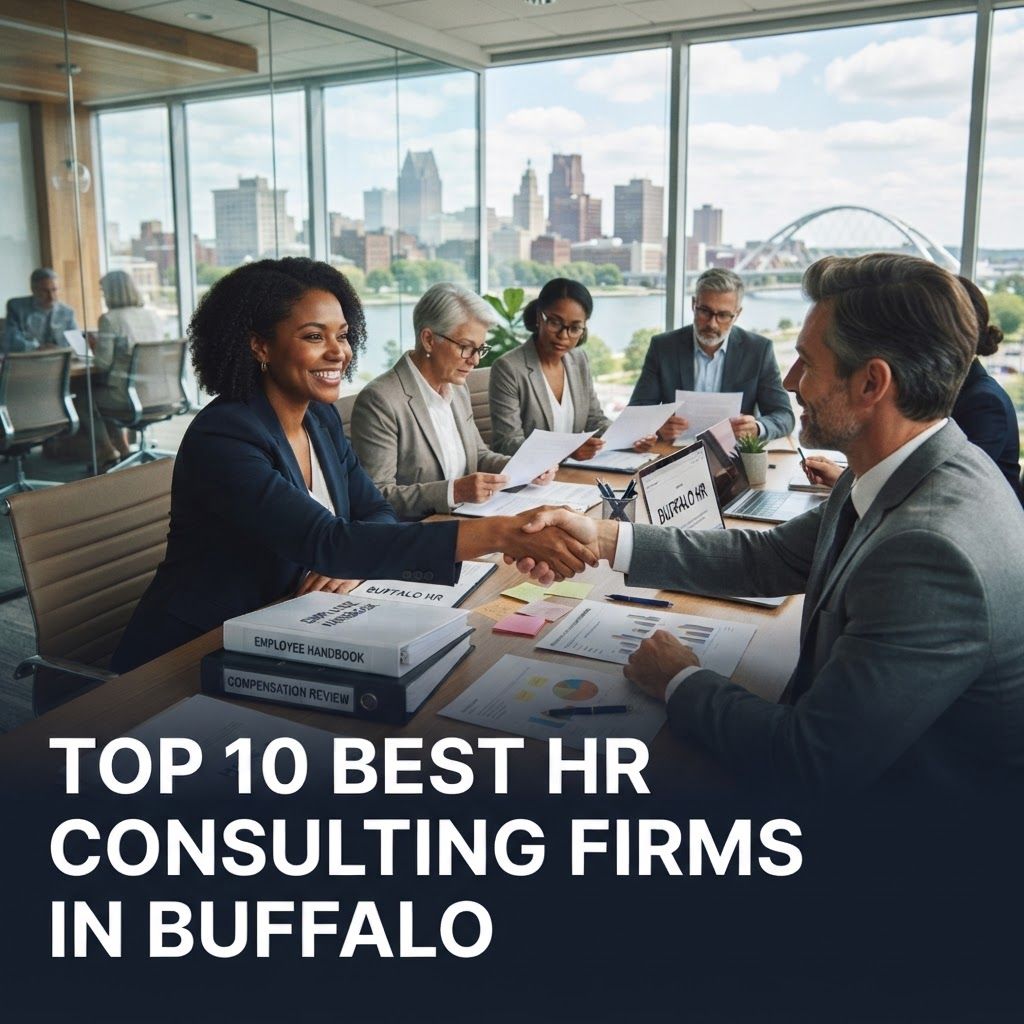
The Changing Role of HR Consulting in Western New York
Human resources used to be treated as an administrative function in Buffalo's employer community — handbooks, payroll paperwork, and the occasional difficult conversation. That has changed substantially. Labor shortages in healthcare, skilled trades, and manufacturing have made talent acquisition a board-level concern, while New York State has enacted some of the most employer-specific labor legislation in the country. The result is a robust market for HR consulting firms that can operate as both compliance guardians and strategic advisors.
Buffalo's employer base is unusually diverse for a metro of its size. Large healthcare systems, higher education institutions, insurance carriers, food processors, precision manufacturers, hospitality operators serving a growing tourism economy, and a startup community centered downtown all compete for the same regional labor pool. HR consultants who succeed here understand that a hospital's staffing challenges look nothing like a 25-person software company's, and they build service models accordingly.
Core Services Buffalo HR Consultants Provide
Compliance advisory sits at the foundation. New York employers must navigate the state's paid family leave program, paid sick leave requirements, salary transparency rules requiring pay ranges in job postings, the WARN Act's notification thresholds, sexual harassment prevention training mandates, and the state's evolving pay equity provisions. Layer federal obligations — FLSA classification, FMLA, ADA accommodation processes, and I-9 verification — and the compliance burden alone justifies outside expertise for many mid-market employers.
Talent acquisition support is the second major service line. Consultants build recruiting processes, write competency-based interview guides, train hiring managers on lawful interviewing, and often run searches directly. For executive and specialized technical roles, retained search practices operate alongside contingency recruiting arms.
Compensation and benefits design has grown sharply in importance. Firms conduct market benchmarking against regional and national survey data, build salary bands, design incentive plans, and help employers respond to pay transparency requirements without destabilizing internal equity. Benefits consulting frequently intersects with brokerage services, covering plan selection, self-funding analysis, and employee communication.
Organizational Development and Employee Relations
The higher-value work in HR consulting is developmental. Leadership coaching, succession planning, engagement surveys with credible action planning, performance management redesign, and culture assessments are where consultants earn long-term relationships. Buffalo firms often deliver this through a combination of assessment instruments, facilitated leadership sessions, and one-on-one executive coaching.
Employee relations investigations represent another critical service. When a harassment or discrimination complaint arises, employers benefit from a trained, neutral third-party investigator whose findings will hold up under scrutiny from the New York State Division of Human Rights or the EEOC. Consultants who handle these engagements typically maintain close working relationships with employment counsel without blurring the line between HR advice and legal opinion.
Notable HR Advisory Providers in the Buffalo Region
Several organizations are widely recognized in Western New York's HR community. The Buffalo Niagara Partnership serves as a central resource for employers, offering HR guidance, compliance updates, and networking to its member companies. Insero Talent Solutions and Superior Group of Companies have significant regional presence in staffing and workforce solutions. Continuum Global Solutions and Simplifi HR are among the providers offering outsourced HR functions and technology-enabled administration.
National and regional professional services firms with Buffalo offices — including The Bonadio Group and Freed Maxick — maintain human capital advisory practices that appeal to companies seeking integrated financial and HR guidance. Insurance brokerages such as Lawley, headquartered in Buffalo, have built substantial employee benefits and HR consulting arms, combining benefits strategy with compliance support and HR technology implementation. Meanwhile, professional employer organizations and administrative services organizations serve smaller employers who want to outsource the entire HR function rather than supplement it.
Choosing Between a Consultant, a PEO, and an In-House Hire
Employers frequently misjudge which model fits them. A company with fewer than 50 employees and no HR staff often gets the best value from a professional employer organization or a fractional HR consultant on a monthly retainer, because the fixed cost of a full-time HR generalist is difficult to justify. Between 50 and 250 employees, the typical answer is an in-house HR manager supported by external specialists for compensation studies, investigations, and complex leave administration. Above that threshold, employers usually build an internal team and use consultants for project work such as organizational redesign or executive search.
The most common mistake is hiring a compliance-focused consultant when the actual problem is cultural. High turnover in a manufacturing plant is rarely solved by a rewritten handbook; it usually reflects supervisor behavior, scheduling practices, or wage positioning. A capable consultant will diagnose before prescribing, and will tell you when the engagement you requested is not the engagement you need.
What to Look for in an Engagement
Credentials worth noting include SHRM-SCP and SPHR certifications, Certified Compensation Professional designations for pay work, and demonstrated experience with New York State specific requirements. Ask whether the consultant carries professional liability insurance and how they handle conflicts when their advice diverges from what leadership wants to hear.
Structure the engagement with clear deliverables. A handbook update should specify review of every policy against current New York and federal law with a documented change log. A compensation study should define peer group construction, data sources, and how the firm will handle outliers. Retainer agreements should specify included hours, response times, and escalation contacts.
Trends Employers Should Watch
Artificial intelligence in hiring is drawing regulatory attention, and employers using automated screening tools face growing bias audit expectations. Pay transparency has permanently altered negotiation dynamics, pushing employers toward defensible, documented compensation structures. Hybrid work policy continues to evolve, particularly for Buffalo employers competing with remote employers in higher-cost markets. And mental health benefits have moved from perk to expectation across nearly every industry in the region.
Final Considerations
The strongest HR consulting relationships in Buffalo look less like vendor arrangements and more like extensions of the leadership team. Look for advisors who invest time understanding your operations, who bring regional labor market intelligence you cannot get from national reports, and who measure success by retention, engagement, and reduced legal exposure rather than by documents delivered.