
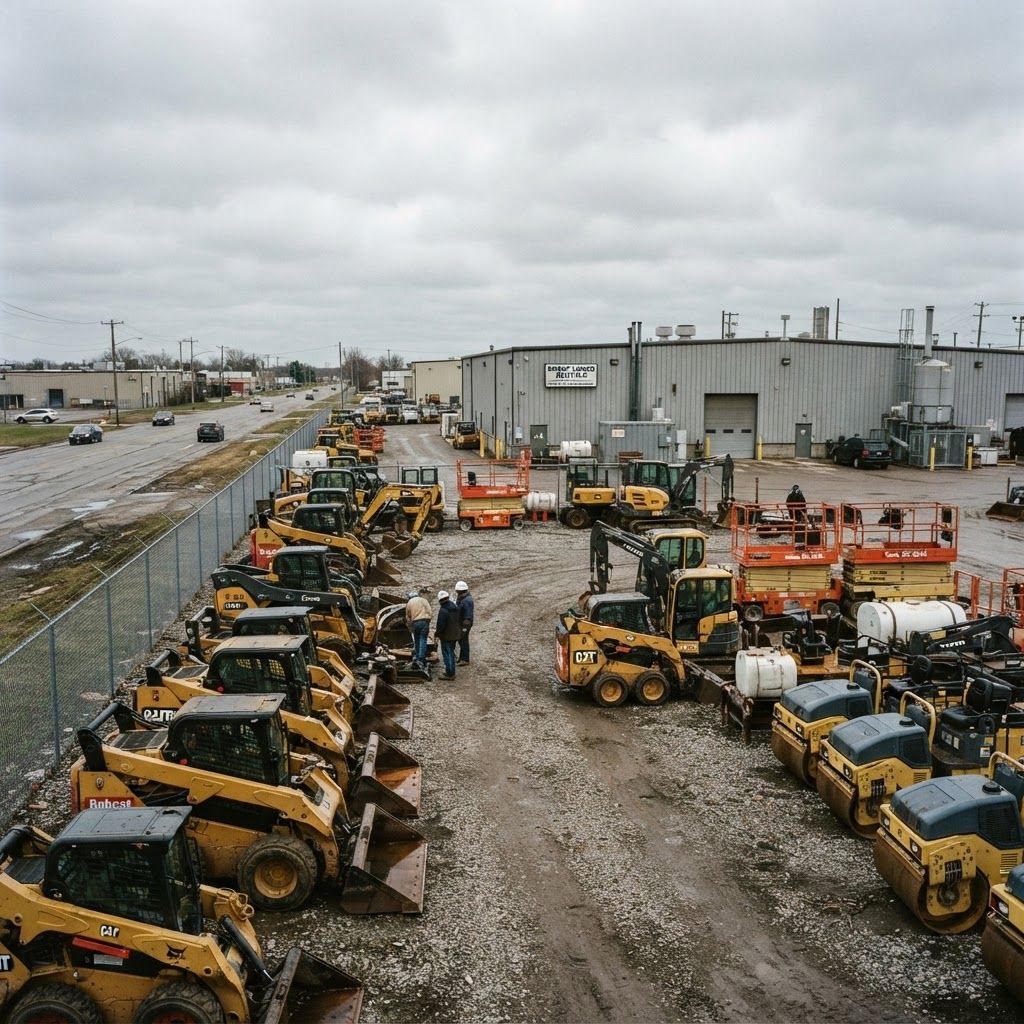
Buffalo's Building Boom and the Rental Economy
Western New York has spent the past decade in a sustained construction cycle. Waterfront redevelopment, medical campus expansion, warehouse and logistics builds along the Thruway corridor, and steady residential renovation across the city and inner-ring suburbs have all created consistent demand for machinery. Renting rather than owning has become the default strategy for a large share of that work, particularly for specialty equipment used a few weeks a year.
The economics are straightforward. A mini excavator, telehandler, or concrete saw represents significant capital, ongoing maintenance, storage, insurance, and transport costs. Renting converts that into a predictable project line item and shifts service obligations to the supplier. For seasonal markets like Buffalo, where frost limits certain earthwork for months, that flexibility is especially valuable.
Ten Equipment Rental Sources Serving Western New York
1. United Rentals operates multiple Buffalo-area branches with one of the broadest fleets available locally, spanning earthmoving, aerial work platforms, power generation, trench safety, and climate control equipment. Its scale means substitute machines are usually available when a unit goes down mid-project.
2. Sunbelt Rentals is a strong competitor with specialty divisions covering pumps, power, scaffolding, and climate solutions alongside general construction equipment, plus digital tools for tracking rentals across multiple job sites.
3. Admar Construction Equipment & Supplies is a regional powerhouse with deep Upstate New York roots, known for a well-maintained fleet, knowledgeable counter staff, and a strong parts and service operation that keeps downtime short.
4. Monroe Tractor serves both construction and agricultural clients, offering compact track loaders, excavators, and attachments along with the technical support that comes from being a full dealership rather than a rental-only outlet.
5. Herc Rentals focuses heavily on industrial and commercial projects, supplying larger earthmoving equipment, material handling, and specialty tooling for plant maintenance and heavy civil work.
6. Buffalo Hydraulics & Equipment fills a niche in hydraulic tooling, breakers, and attachments, supporting demolition and utility contractors who need reliable high-force equipment.
7. Taylor Rental Center bridges the gap between contractor-grade and homeowner-grade rentals, stocking compact machines, concrete tools, lawn equipment, and event gear for smaller-scale customers.
8. Home Depot Tool Rental locations across the metro area remain the practical choice for weekend renovation work, offering short-hour rentals on mixers, tile saws, augers, and small skid steers without account setup.
9. Genesee Equipment Rentals serves outlying communities with straightforward pricing on backhoes, dump trailers, compaction equipment, and site tooling for smaller residential contractors.
10. Niagara Frontier Equipment Sales supports contractors across the Buffalo-Niagara corridor with rentals, used equipment sales, and field service, a useful combination for growing firms transitioning from renting to owning.
How to Choose the Right Rental Partner
Fleet age is the single most revealing indicator of a rental company's quality. Newer machines mean better fuel efficiency, fewer hydraulic failures, current emissions compliance, and modern operator controls. Ask for the model year and hour meter reading before committing, and inspect the machine at pickup with photographs documenting existing damage.
Service response matters just as much. A skid steer that fails on day two of a five-day rental can cascade into crew downtime, missed inspections, and concrete pours pushed past a weather window. Confirm the supplier's field service coverage, guaranteed response time, and policy on swap-out units and prorated credit.
Delivery logistics are a Buffalo-specific consideration. Narrow streets in older neighborhoods, seasonal weight restrictions, and winter access constraints all affect whether a lowboy can reach your site. Experienced local suppliers will advise on machine size and transport method rather than simply booking the order.
Cost Structures Worth Understanding
Rental pricing typically follows daily, weekly, and monthly tiers, with weekly rates often costing barely more than three days and monthly rates delivering the strongest value on extended projects. Read the terms on included hours, since many agreements assume single-shift use and bill overtime hours beyond that threshold.
Additional line items commonly include delivery and pickup, environmental and fuel surcharges, damage waivers, and attachment charges. A quote that looks lower at the base rate can end up higher once these are added, so compare fully loaded totals. For fuel, clarify whether the machine must be returned full and at what rate the supplier refuels.
Safety, Compliance, and Operator Readiness
Aerial lifts, telehandlers, and forklifts carry operator certification requirements, and reputable suppliers will verify credentials or offer training. Requesting current inspection documentation for lifting and elevating equipment is standard practice and protects you during site audits.
Utility location remains non-negotiable for any excavation. Buffalo's mature infrastructure includes aging gas, water, and sewer lines that do not always match record drawings, and a routine trench can turn into an emergency without proper markout and hand-digging near marked services.
Planning Around Buffalo's Seasons
Demand peaks sharply from late spring through fall, when excavators, compaction equipment, and lifts book out weeks ahead. Reserving early secures both availability and better rates. Conversely, winter opens opportunities: interior demolition, temporary heat, ground thaw equipment, and generators are readily available, and off-season pricing can be meaningfully softer. Contractors who plan their equipment calendar around this rhythm consistently spend less and stay on schedule.