
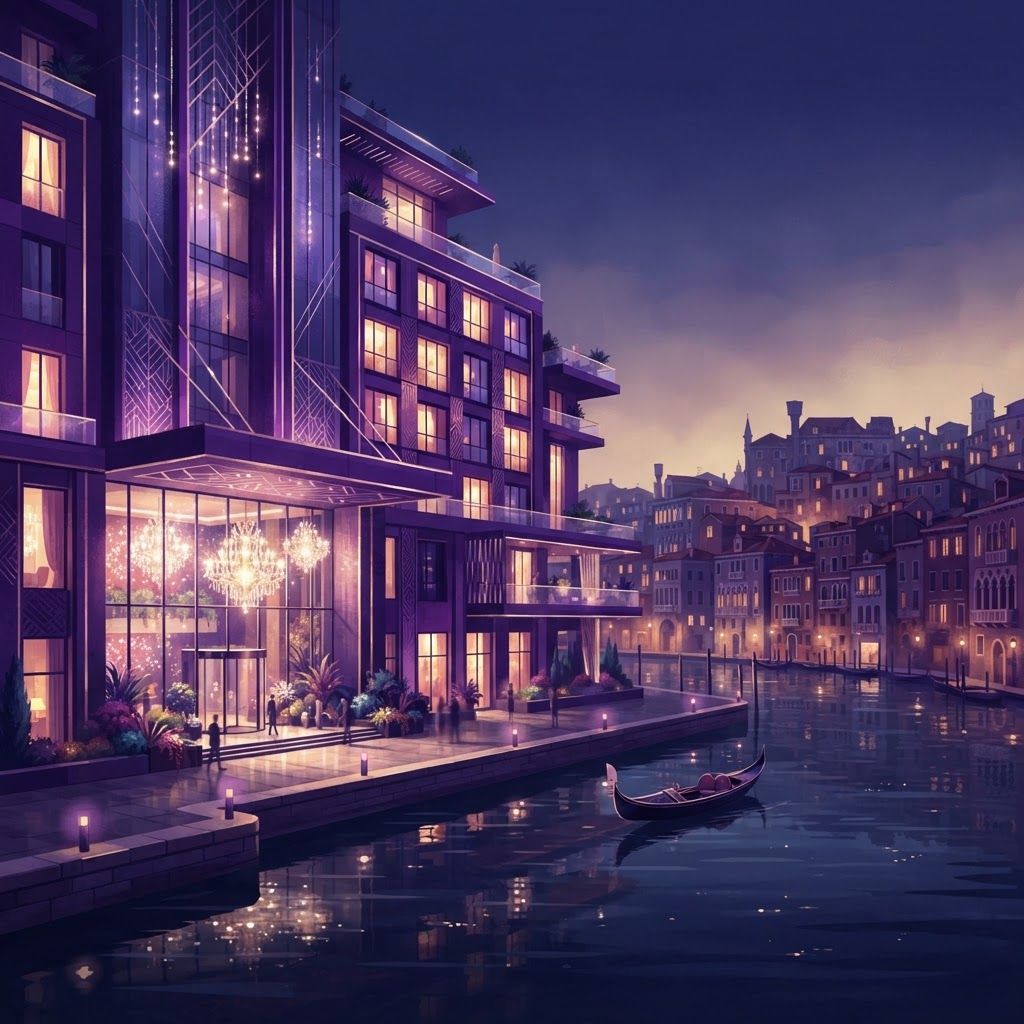
A Hotel Scene Built on Imperial Architecture
St. Petersburg's hotel market is unusual because so much of its best inventory occupies buildings that were never meant to be hotels. Nineteenth-century apartment houses, merchant mansions, ministry buildings and aristocratic palaces have been converted into accommodation, which means guests often stay behind protected facades, under original stucco ceilings and beside restored parquet and marble. The result is a market where architecture, not amenity lists, is frequently the deciding factor.
Location logic here is also distinctive. The historic core is compact and largely walkable, and the highest-value addresses cluster along Nevsky Prospekt, around Palace Square and the Hermitage, along the Moyka and Fontanka embankments, and near the Mariinsky Theatre. Choosing between them is really a choice between convenience, quiet and views over water.
Ten Hotels That Define the City
Belmond Grand Hotel Europe is the historic benchmark. Occupying a landmark building at the corner of Nevsky Prospekt and Mikhailovskaya Street since the 1870s, it combines art nouveau interiors, a famed stained-glass restaurant hall and a long tradition of hosting composers, writers and heads of state. It remains the reference point for classical luxury in the city.
Four Seasons Hotel Lion Palace St. Petersburg sits inside a restored neoclassical palace steps from St. Isaac's Cathedral. Its appeal is the combination of genuinely palatial public spaces, a glass-roofed atrium, a serious spa and a service culture built around anticipatory personal attention. Rooms overlooking the cathedral are among the most requested in the market.
Astoria, facing St. Isaac's Square, is arguably the most storied address in the city. Opened in the early twentieth century, it has retained an old-world formality while modernising its rooms, and its restaurant and afternoon tea service remain local institutions.
Kempinski Hotel Moika 22 earns its reputation on a single decisive advantage: a rooftop restaurant with an unobstructed panorama over the Winter Palace, the Church on Spilled Blood and the Neva rooftops. The location, directly on the Moyka embankment beside the Hermitage, is close to unbeatable for first-time visitors.
Corinthia Hotel St. Petersburg occupies a large Nevsky Prospekt property that blends historic facades with a substantial modern build. It is the strongest option for travellers who want central luxury with full conference facilities, a large spa and pool, and the operational consistency of a big-box international hotel.
Lotte Hotel St. Petersburg converted a horseshoe-shaped nineteenth-century building near St. Isaac's into a quietly polished five-star with an indoor pool under a glass roof, generous room sizes and a notably attentive Asian-influenced service style.
Hotel Indigo St. Petersburg Tchaikovskogo represents the design-led midscale tier. Housed in a restored building in a residential embassy district, it leans into neighbourhood storytelling, bold interiors and a rooftop bar, offering character without full luxury pricing.
Domina St. Petersburg stretches along the Moyka embankment with an Italian design sensibility, contemporary rooms and a location that puts guests within a short walk of the Mariinsky Theatre and New Holland island.
Radisson Royal Hotel on Nevsky Prospekt is a dependable upper-upscale choice, valued for its main-artery address, reliable breakfast and rooms that are quieter than the busy street outside would suggest.
Rossi Boutique Hotel exemplifies the small-property segment, sitting on the Fontanka near the Bolshoy Dramatic Theatre with individually styled rooms, canal views and the kind of personal service a thirty-room hotel can deliver.
What to Weigh Before Booking
Season is the strongest driver of both price and experience. During the White Nights from late May to mid-July, rates in the historic centre can double, availability tightens months ahead, and near-continuous daylight makes blackout curtains a genuine requirement rather than a nicety. Winter, by contrast, delivers exceptional value alongside the peak theatre and ballet season.
Noise and access deserve careful thought. Nevsky Prospekt is lively at all hours, courtyard-facing rooms are markedly quieter, and many historic buildings have small lifts, split-level corridors or steps that complicate accessibility. Guests with mobility needs should confirm arrangements directly rather than rely on generic listings.
Views are a real premium in this city. Canal, cathedral and Neva outlooks command higher rates, and in many properties the difference between a courtyard room and an embankment room defines the stay. Bridge-opening schedules on the Neva are also worth knowing, since they affect night-time taxi routes between banks.
Trends in the Local Market
Three shifts stand out. Adaptive reuse continues to dominate new supply, with heritage buildings converted into boutique and lifestyle hotels rather than new-build towers rising in the protected centre. Second, the apart-hotel and serviced-apartment format has grown quickly, meeting demand from longer-staying domestic travellers and families who want kitchens and separate living space. Third, food and beverage has become a competitive battleground, with rooftop bars, chef-led restaurants and elaborate breakfast programmes used to differentiate properties that otherwise offer similar rooms.
Wellness is following closely behind, with hammams, banya-inspired spa circuits and pool complexes appearing in properties that previously offered only a small gym. Sustainability practices, from single-use plastic reduction to linen reuse programmes, are now common at the international brands.
Matching the Hotel to the Trip
For a first visit centred on the Hermitage and Palace Square, prioritise the Moyka and Nevsky cluster. For theatre-focused trips, stay near the Mariinsky. For quieter, more residential immersion, the districts around Tchaikovskogo Street and the Tauride Garden offer leafy streets within a short ride of the centre. Business travellers will find the large international properties best equipped for meetings and reliable connectivity.
St. Petersburg rewards a well-chosen hotel more than most cities, because the building itself often becomes part of the sightseeing. Choose the address and the architecture with the same care you apply to the itinerary, and the accommodation stops being logistics and becomes a memory in its own right.