
What Home Security Means Now
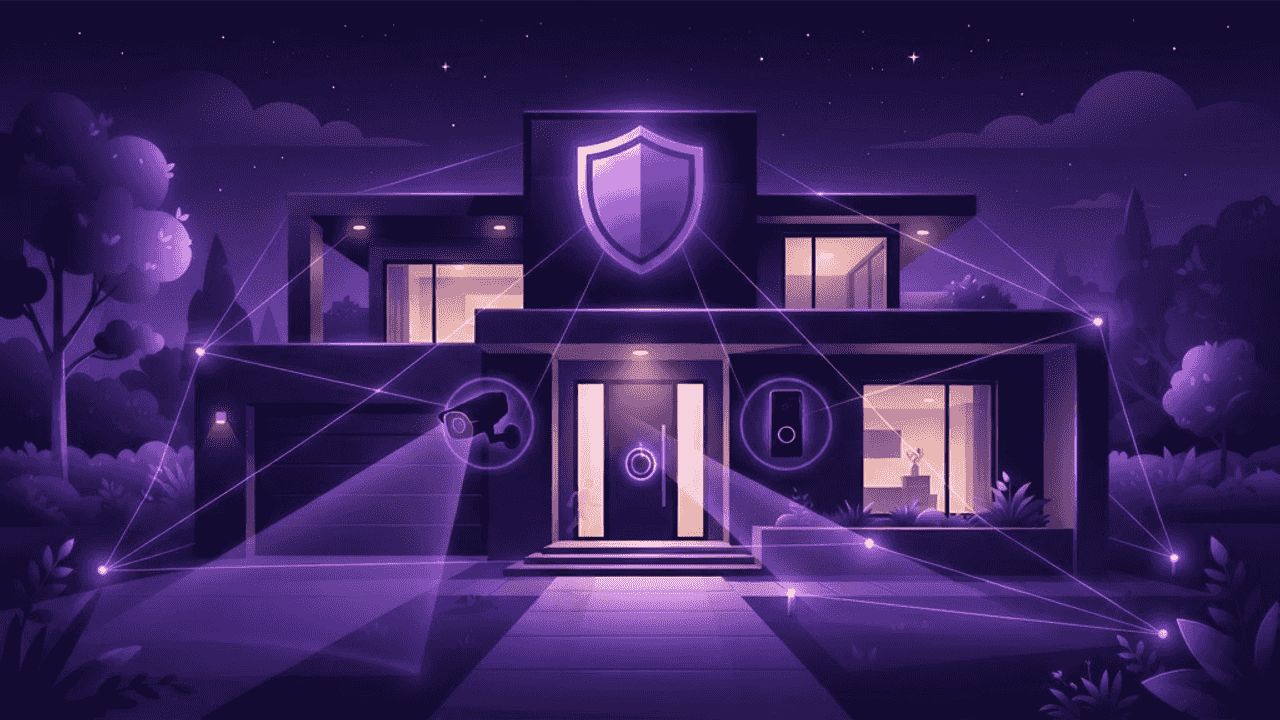
Home security has changed more in the last ten years than in the previous forty. A system used to mean door contacts, a motion sensor, a keypad and a monitoring contract. Today it typically includes video doorbells, interior and exterior cameras, smart locks, glass break detection, garage door control, environmental sensors for smoke, carbon monoxide and water leaks, and app-based control that works identically from the kitchen or another continent.
That expansion matters in Chandler for reasons beyond burglary deterrence. Many residents travel for work, and a large seasonal population leaves properties vacant for months. Water leak sensors near water heaters and laundry connections catch failures that would otherwise run undetected for weeks. Temperature sensors warn when air conditioning fails in an empty house, which in an Arizona summer can damage finishes, furniture and stored belongings. Security systems have quietly become general property monitoring systems.
Monitoring Models Compared
Professionally monitored systems route alarm signals to a central station staffed around the clock, which verifies the event and dispatches emergency services. This is the most reliable arrangement for genuine emergencies, particularly when residents are unavailable, asleep or out of coverage. It carries a recurring monthly cost and sometimes a contract term.
Self-monitored systems send alerts directly to the homeowner's phone with no monthly fee for basic function, leaving verification and any emergency call to the owner. This suits people who want visibility and deterrence more than dispatch, and who are reliably reachable. Many providers now offer hybrid arrangements, with self-monitoring as standard and professional monitoring available month to month, which is often the most flexible option.
Consider connectivity too. Systems depending solely on home internet fail when the connection does; cellular backup and battery backup are what keep a system functional during outages, which is precisely when some intrusions occur. Ask about both.
The Top 10 Home Security Companies in Chandler
1. Chandler Home Security Systems
A full-service local provider handling design, installation, professional monitoring and service. Known for in-home assessments that map entry points and sightlines rather than selling a fixed package regardless of the property.
2. Desert Guard Monitoring
Focused on professionally monitored alarm service with cellular and battery backup, offering flexible month-to-month monitoring without long lock-in terms. Popular with homeowners wary of multi-year contracts.
3. Ocotillo Smart Home Security
Specialises in integrated systems combining security with smart lighting, climate, locks and voice control. Suited to clients who want one coherent platform rather than several unconnected apps.
4. Sun Valley Camera Solutions
Concentrates on video surveillance design: camera placement, resolution and field-of-view selection, night performance, local versus cloud recording, and wiring for reliability over wireless convenience.
5. Arizona Access Control
Provides smart locks, keypads, gate entry and access management for residences, casitas and guest suites, including credential management for cleaners, sitters and short-term guests.
6. Copper Sky Wireless Security
Offers low-disruption wireless systems ideal for renters, condominiums and homeowners avoiding wall penetrations. Straightforward installation with the option to relocate equipment later.
7. Price Corridor Commercial Security
Serves offices, retail and industrial facilities with commercial-grade intrusion detection, access control, video management systems and integration with fire and life safety requirements.
8. Gilbert Road Alarm Services
A mid-sized provider handling installation, takeovers of existing panels and ongoing service at competitive pricing. Often engaged to modernise inherited systems left behind by previous homeowners.
9. Chandler Environmental Monitoring
Focuses on the non-intrusion side: water leak detection, freeze and heat sensors, smoke and carbon monoxide integration, and automatic water shut-off valves. Especially relevant for seasonal residents.
10. Heritage Property Watch
Combines monitored security with periodic physical property checks for vacant and seasonal homes, coordinating with landscapers, pool services and maintenance contractors during owner absences.
Designing Coverage That Actually Works
Effective systems are designed around how a property is actually approached. Cover every exterior door with contacts, add glass break detection in rooms with large accessible windows, and place interior motion sensors to catch movement through central circulation rather than only at perimeters. Cameras should cover approach paths, driveway, front and rear doors and side gates, positioned high enough to avoid tampering but low enough to capture recognisable faces.
Resolution and lighting matter more than camera count. A single well-placed camera with good low-light performance and a sensible field of view is worth several poorly aimed ones washed out by porch lights or pointed at the sky. Ask to see actual night footage from installed systems rather than relying on marketing claims.
Visible deterrence has genuine value. Signage, visible cameras and well-lit approaches deter opportunistic attempts before they begin, which is preferable to documenting them afterwards.
Contracts, Costs and Fine Print
Read monitoring agreements carefully. Note the initial term, automatic renewal provisions, cancellation requirements and any early termination fee. Clarify whether equipment is owned outright or leased, since leased equipment usually cannot be transferred or kept if you switch providers. Understand whether the panel is proprietary, which limits your ability to change monitoring companies later without replacing hardware.
Ask about service response for faults, whether truck rolls are billable, and how firmware and app updates are handled. Confirm cloud video storage duration and cost, since retention periods vary widely and short windows can mean footage is gone before an incident is even noticed.
Privacy and Practical Considerations
Cameras collect sensitive data, so ask where footage is stored, who can access it, whether it is encrypted and how account access is secured. Enable two-factor authentication on the account. Position cameras to cover your own property rather than neighbours' windows, and be aware that audio recording carries different legal considerations than video.
Household habits determine whether a system delivers value. Arm it consistently, including when at home if the system supports a stay mode. Keep sensor batteries current. Review and tune notification settings, because a system generating dozens of irrelevant alerts daily will be ignored, and an ignored alert is the same as no alert.
Final Thoughts
Home security in Chandler is best understood as property protection: intrusion detection combined with environmental monitoring and remote visibility, which suits a city with hot summers, seasonal residents and frequent travellers. The ten companies above cover monitored alarms, smart integration, cameras, access control, environmental sensing, commercial systems and vacant property oversight. Design coverage around your actual property, read the monitoring contract before signing, and choose the provider whose specialty aligns with the risks that concern you most.