
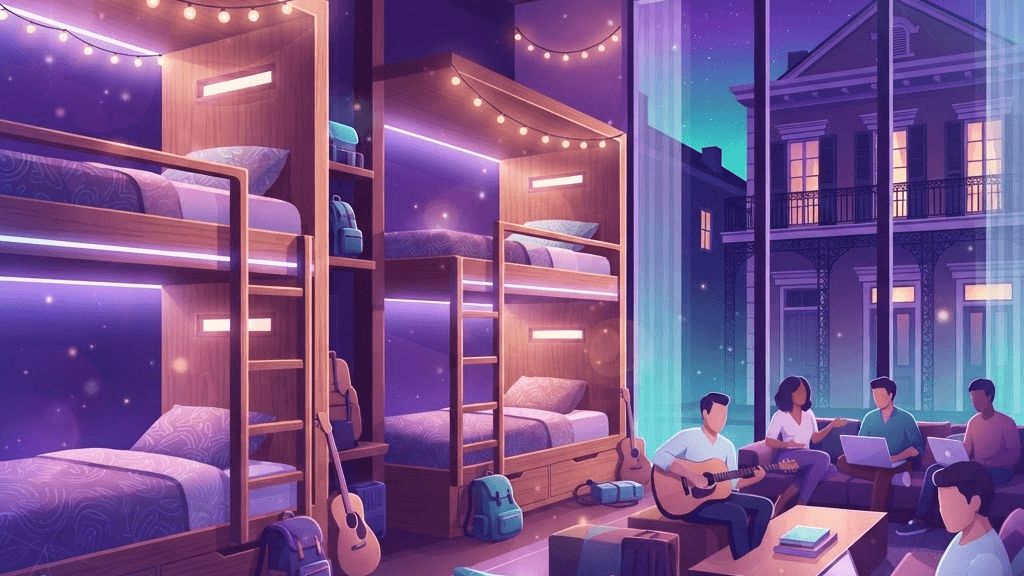
Why Hostels Make Sense in New Orleans
New Orleans is an unusually good hostel city. Hotel rates spike violently around festivals, the core neighborhoods are compact and walkable, and the local social culture rewards travelers who meet people rather than retreating to a room. For solo visitors especially, a hostel converts a potentially isolating trip into a social one, and shared kitchens meaningfully offset the cost of a city where dining out is a primary attraction.
The local hostel stock is also architecturally interesting. Many properties occupy nineteenth-century houses, former boarding houses, or repurposed commercial buildings, which means high ceilings, wide porches, and courtyards rather than the sterile bunk warehouses common elsewhere. That character comes with trade-offs, including older plumbing, variable air conditioning performance, and quirks that budget travelers generally accept.
Understanding Formats and Pricing
Most properties offer a mix of mixed-gender dorms, female-only dorms, and private rooms with shared or private bathrooms. Dorm sizes commonly range from four to sixteen beds, and price scales inversely with bed count. Private rooms in hostels frequently undercut budget hotels while retaining access to social space, which appeals to couples and older travelers who want community without a bunk.
Expect linens included, lockers or under-bed storage, and shared kitchens at most properties. Towels are sometimes charged separately. Age restrictions occasionally apply, and a few properties exclude local residents to preserve a traveler atmosphere.
1. India House Hostel
India House is a long-established Mid-City institution known for a distinctly unpolished, social atmosphere built around a pool, outdoor gathering areas, and frequent impromptu events. It appeals strongly to travelers seeking a party-adjacent, community-driven experience rather than boutique finishes. Streetcar access on Canal Street connects guests to the Quarter without a car.
2. The Quisby
Occupying a restored building on St. Charles Avenue, The Quisby positions itself as a design-conscious hostel with a well-regarded bar and happy hour that draws locals. Dorms feature sturdy custom bunks with privacy curtains, individual outlets, and reading lights, and private rooms are also available. Streetcar service outside the door makes both Uptown and downtown easily reachable.
3. Auberge NOLA Hostel
Auberge NOLA sits in Mid-City and emphasizes a relaxed, community-oriented environment with shared kitchen facilities, common rooms, and outdoor space. It is often recommended for travelers who want social interaction at a lower intensity than the city's party-focused properties, and it draws a mix of international backpackers and domestic road-trippers.
4. Madame Isabelle's House
Located in Mid-City, Madame Isabelle's House operates as a boutique-leaning hostel and guesthouse with themed rooms, a courtyard, and a hospitality style that many guests describe as personal and welcoming. It suits travelers who prefer a smaller property where staff learn names and can give genuinely local recommendations.
5. HI New Orleans Marquette House
Hostelling International properties in the city have historically operated in the Lower Garden District, offering the structure and standards associated with the global network, including quiet hours, secure access, and a mix of dorms and private rooms. Travelers who prioritize predictability, cleanliness protocols, and a calmer atmosphere often choose HI-affiliated accommodation over independent party hostels.
6. Old No. 77 Hostel Style Shared Rooms
Some Warehouse District properties offer bunk-style or shared configurations alongside conventional hotel rooms, giving budget travelers access to a full-service building. This hybrid model has grown in popularity nationally, and in New Orleans it provides a way to stay in the Arts District, near museums and top restaurants, at a fraction of standard rates.
7. Hi Ho Lounge Area Guesthouses
Along the St. Claude corridor in the Marigny and Bywater, several small guesthouses and hostel-style operations cater to travelers drawn by music venues, art spaces, and a strongly local scene. These properties tend to be small, informally run, and heavily dependent on the personality of the operator, which makes recent reviews especially important when booking.
8. Bywater Backpacker Guesthouses
The Bywater's shotgun houses and creative community have produced a cluster of small-scale shared accommodations. Guests get bicycles, riverfront park access at Crescent Park, and neighborhood coffee shops, at the cost of a longer walk or ride into the Quarter. This is the right choice for travelers who want to feel like temporary residents rather than tourists.
9. Uptown Shared Houses Near Tulane
Near the universities, seasonal shared housing and guesthouse arrangements appear especially during summer, when student housing frees up. These options are quiet, leafy, and inexpensive, and the St. Charles streetcar provides a scenic if slow commute downtown. They suit longer stays, remote workers, and travelers on extended budgets.
10. Nola Jazz House Style Music Hostels
A handful of small properties build their identity around music, hosting jam sessions, instrument storage, and connections to local players. For traveling musicians and dedicated jazz enthusiasts, these environments deliver something no hotel can, including introductions to sit-in opportunities and knowledge of which clubs welcome visiting players on which nights.
Safety and Practical Considerations
Standard hostel practices apply: use lockers, bring a padlock, keep documents secured, and never leave electronics unattended in common areas. Beyond that, New Orleans requires ordinary urban awareness, particularly late at night and when walking alone between neighborhoods. Rideshare is inexpensive and widely available, and spending a few dollars to avoid a long night walk is a reasonable trade.
Climate deserves specific attention. Summer heat and humidity are intense, so verify air conditioning in dorm rooms rather than assuming ceiling fans will suffice. Mosquitoes are active in warm months, so repellent is worth packing. Earplugs and an eye mask are near-essential in a city where nightlife runs late and dorm-mates return at unpredictable hours.
When to Book
Hostels fill and reprice around Mardi Gras, Jazz Fest, French Quarter Fest, and major football weekends, sometimes months in advance with minimum-stay requirements. Outside those windows, availability is generally good even a week out. Summer offers the lowest rates, and many properties add pool access and social programming to compensate for the heat.
Making the Most of a Hostel Stay
Talk to staff, who are typically well-connected locals or long-term travelers with current knowledge of which venues have good bands on a given night. Join organized walks, second-line outings, or communal dinners when offered, since these create the connections that define a good hostel trip. Cook a few meals to save money for the restaurants that genuinely justify the expense.
Budget accommodation in New Orleans does not require sacrificing atmosphere. Between converted mansions, artist-run guesthouses, and design-forward social hostels, travelers can stay affordably while remaining close to the culture that brought them to the city.