
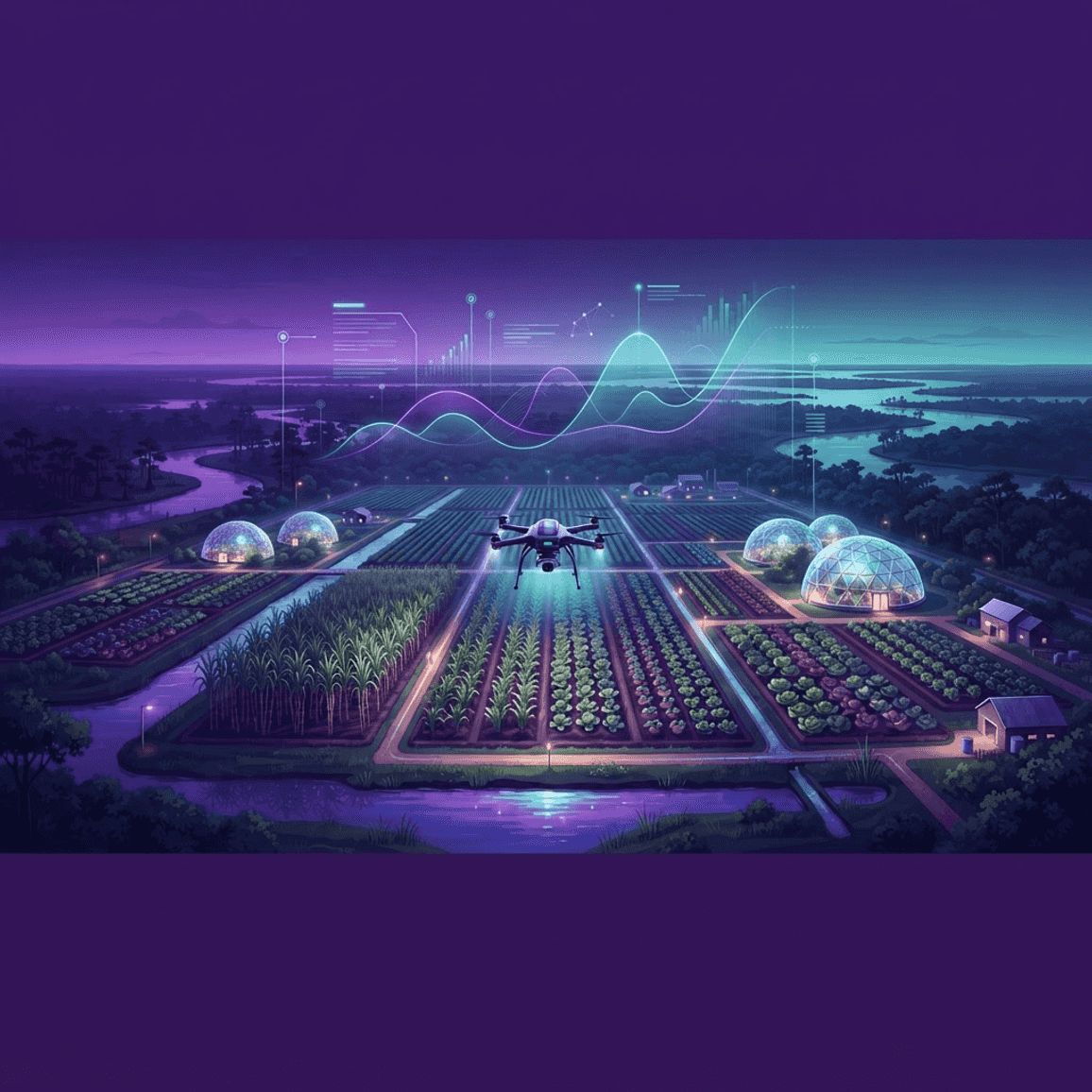
Farming in the Shadow of a Great City
New Orleans is not usually described as farm country, yet agriculture is woven tightly into its economy and its cuisine. Just beyond the metro boundary, the alluvial soils of the Mississippi Delta support sugarcane, rice, soybeans and specialty vegetables. Closer in, urban farms occupy formerly vacant lots, greenhouse operations supply chefs year round, and family truck farms across the river parishes and Northshore bring produce to weekly markets. The city extraordinary restaurant culture creates a demand profile that rewards growers who can deliver quality, consistency and distinctive varieties rather than commodity volume alone.
The Agricultural Landscape of Southeast Louisiana
Several production systems coexist here. Sugarcane remains the signature commodity crop of South Louisiana, with mills and cooperatives structuring an entire regional economy. Rice and crawfish operations rotate flooded fields to produce both grain and aquaculture income, an elegant use of land that suits the hydrology. Citrus, particularly satsumas and navel oranges, thrives in Plaquemines Parish and holds real cultural significance. Vegetable and specialty crop farms serve direct markets, restaurants and community programs. Finally, controlled environment agriculture, including hydroponic and greenhouse growing, has expanded because it buffers against the heat, humidity, pests and storm risk that make open-field production challenging.
The Top 10 Farming Companies and Operations
1. Ben and Ben Becnel Farms in Plaquemines Parish is closely associated with Louisiana citrus, growing satsumas, oranges and specialty varieties. Operations like this have rebuilt repeatedly after storms and saltwater intrusion, and their persistence sustains a crop that residents treat as part of the local identity.
2. Star Nursery and Farm represents the diversified grower model, combining nursery stock with vegetable production and direct sales. This approach spreads risk across markets and keeps cash flow steadier through the year.
3. Grow Dat Youth Farm in City Park is one of the most recognized urban agriculture operations in the city, combining vegetable production with youth leadership development. Its produce reaches markets and food access programs, and its educational model has influenced urban farming statewide.
4. Recirculating Farms and similar aquaponic ventures demonstrate integrated fish and vegetable production suited to constrained urban space. These systems use dramatically less water than conventional growing and can operate close to the customers they serve.
5. VEGGI Farmers Cooperative, rooted in the Vietnamese American community of New Orleans East, grows Asian vegetables and herbs that are otherwise difficult to source locally. The cooperative structure gives smallholder farmers collective marketing strength with restaurants and markets.
6. Covey Rise Farms on the Northshore has built a strong reputation supplying chefs with high-quality vegetables and specialty crops. Farms in this tier compete on flavor, variety selection and harvest timing calibrated to kitchen needs rather than shipping durability.
7. Perino Farm and comparable family truck farms along the river road tradition supply strawberries, tomatoes, greens and seasonal produce through farm stands and markets. Multi-generational knowledge of local soils and microclimates is their core asset.
8. Sugarcane growers and cooperative mills of the river parishes anchor the region agricultural economy in scale terms. Cane cultivation involves heavy mechanization, coordinated harvest logistics and mill scheduling, making it one of the most industrially organized farming systems in the state.
9. Crawfish and rice rotation operations in the Atchafalaya and surrounding basins produce a distinctly Louisiana output. The same acreage yields grain and a seasonal seafood crop central to local cuisine, and producers manage water levels with considerable sophistication.
10. Sprout NOLA affiliated growers represent the network of small farms supported by local agriculture organizations. Collectively these operations supply farmers markets, community supported agriculture subscriptions and restaurant accounts, and their aggregate impact on local food access is substantial.
Trends and Challenges Facing Local Agriculture
Climate pressure is the dominant reality. Rising temperatures, intensified rainfall, hurricanes and saltwater intrusion in coastal parishes all threaten production, pushing farmers toward heat-tolerant varieties, improved drainage, protected growing structures and diversified income. Coastal land loss compounds this in southern parishes where farmland is physically shrinking.
At the same time, demand-side trends favor local growers. Restaurant sourcing programs, farmers markets and institutional purchasing all reward proximity and provenance. Technology adoption is increasing, with soil moisture sensing, drip irrigation, drone scouting and simple farm management software improving margins on modest acreage. Regenerative practices including cover cropping and reduced tillage are spreading as growers seek soil resilience against heavy rain. Labor availability remains a persistent constraint, driving interest in mechanization and in cooperative labor sharing among small farms.
Working With Local Farms
Chefs and buyers should engage growers early in the season to align plantings with menu plans, since specialty crops require commitment months in advance. Ask about harvest and delivery cadence, cold chain handling and food safety documentation, which institutional buyers increasingly require. Consumers can support the sector through market purchases, subscription programs and choosing seasonal Louisiana produce, notably citrus in winter and strawberries in spring. Prospective farmers should investigate cooperative extension resources, urban land programs and local agriculture nonprofits, which provide technical training and market access that materially improve early-stage odds.
Final Thoughts
Farming around New Orleans is a story of adaptation. Growers here contend with heat, water and storms while supplying one of the most demanding food cultures in the country. The operations profiled above succeed by matching production to what this region actually rewards, whether that means heritage citrus, cooperative vegetable growing, protected environment systems or large-scale cane. Their collective work keeps the city plates full and its agricultural traditions alive.