
A Manufacturing Region With Deep Roots
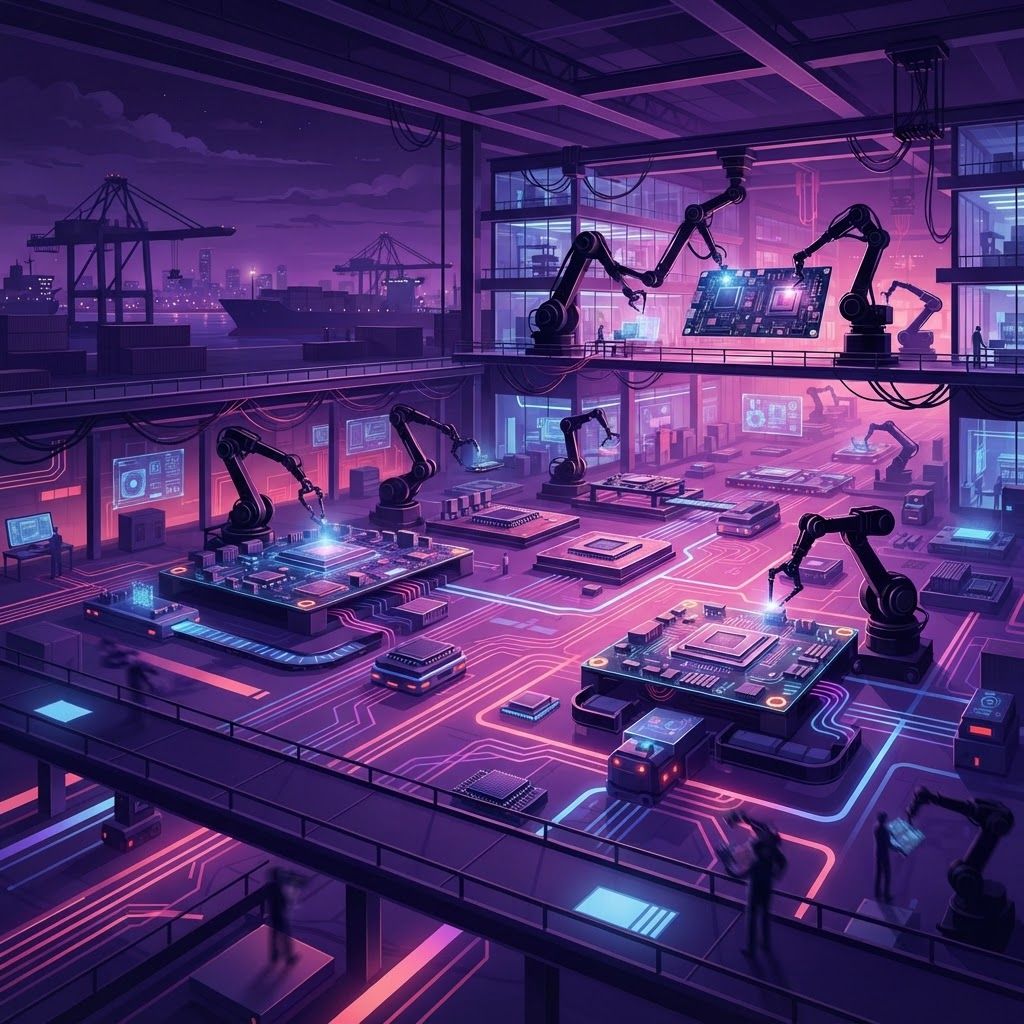
Mobile has built things for a very long time. Shipyards, steel fabrication, chemical processing, and more recently aerospace assembly have given the region an industrial workforce, a supplier network, and a logistics infrastructure that many comparably sized cities lack. Deep water access, rail connectivity, and interstate corridors mean raw materials arrive efficiently and finished goods leave the same way.
That foundation has supported a hardware manufacturing ecosystem spanning precision machining, electronics assembly, metal fabrication, industrial equipment, and specialized marine and aerospace components. As companies reconsider distant supply chains, this regional capacity has attracted renewed attention.
What the Local Manufacturing Base Covers
Capabilities in the metro area generally fall into several groups. Contract electronics manufacturing handles circuit board assembly, enclosure integration, and testing. Precision machining produces tight-tolerance components for aerospace, marine, and energy customers. Metal fabrication covers cutting, forming, welding, and finishing at scale. Industrial equipment builders assemble pumps, conveyors, and process machinery. Marine outfitting supports vessel construction and repair, while cable and harness manufacturers supply the interconnection systems all of these require.
The Top 10 Hardware Manufacturers Serving Mobile
1. Bayworks Precision Manufacturing. A precision machining and fabrication operation known for tight tolerances and aerospace-grade quality documentation. Their multi-axis machining capability and disciplined inspection processes make them a preferred supplier for customers with demanding certification requirements.
2. Delta Circuit Industries. A contract electronics manufacturer offering surface mount assembly, through-hole work, conformal coating, and functional testing. They handle low to medium volume production with strong prototyping support, which suits regional industrial clients who need reliability over sheer scale.
3. Port City Fabrication. Heavy steel and aluminum fabrication specialists serving marine, energy, and infrastructure customers. Their capacity for large weldments and structural assemblies is among the strongest in the area, backed by certified welding procedures.
4. Azalea Industrial Systems. Builders of custom process equipment, material handling systems, and automation cells. Their engineering-led approach means they design as well as build, which appeals to clients solving unusual production problems.
5. Ironbay Components Group. Focused on machined components and subassemblies for aerospace and defense supply chains, Ironbay maintains rigorous traceability and quality management systems aligned with prime contractor requirements.
6. Crescent Enclosure Works. Specialists in sheet metal enclosures, control panels, and ruggedized housings. Their finishing capabilities, including powder coating and corrosion-resistant treatment, matter considerably in a humid coastal environment.
7. Southern Cable and Harness. Manufacturers of wire harnesses, cable assemblies, and interconnect solutions for marine, industrial, and vehicle applications. Custom harness work is labor-intensive and detail-driven, and their consistency has earned long-term contracts.
8. Magnolia Marine Equipment. Producing deck equipment, hydraulic systems, and vessel components for shipbuilders and repair yards. Their proximity to the waterfront allows rapid turnaround on repair and replacement parts.
9. Gulf Coast Plastics and Composites. Injection molding, thermoforming, and composite fabrication for customers needing lightweight or corrosion-resistant parts. They support both tooling development and production runs.
10. Harborline Instrumentation. Manufacturers of sensors, gauges, and monitoring hardware for industrial and marine environments. Their products are designed for harsh conditions, which is precisely what Gulf Coast operations demand.
Trends Shaping Regional Manufacturing
Supply chain reshoring is the dominant force. After years of disruption, buyers now weigh lead time reliability and communication quality alongside unit price, and regional suppliers benefit from both.
Automation adoption is accelerating, though selectively. Rather than lights-out factories, most local manufacturers are adding collaborative robots, automated inspection, and digital work instructions that raise consistency while retaining skilled operators.
Quality documentation has become a competitive differentiator. Aerospace and defense customers require traceability that many smaller shops historically lacked, and manufacturers who invested in quality systems have unlocked higher-value contracts.
Workforce development is a persistent theme. Partnerships with technical colleges and structured apprenticeship programs have become essential as experienced machinists and welders retire.
How to Evaluate a Manufacturing Partner
Visit the floor. Photographs and capability statements reveal little compared with seeing organization, equipment condition, and work in progress firsthand. Look at how material is staged and how inspection is performed.
Match volume to capability. A shop optimized for prototypes will struggle with sustained production, and a high-volume operation may deprioritize small runs. Honest alignment on quantity prevents painful surprises.
Examine quality systems concretely. Ask to see an inspection report, a corrective action record, and calibration documentation. The presence of a certificate matters less than evidence that processes are actually followed.
Discuss engineering support. Manufacturers who can suggest design changes that reduce cost or improve manufacturability deliver value well beyond the quoted price.
Finally, clarify capacity and communication. Understand current backlog, who your point of contact will be, and how schedule changes are handled. Responsiveness during quoting is usually a reliable predictor of responsiveness during production.
Final Thoughts
Mobile's hardware manufacturing base combines industrial depth with logistical advantages that are increasingly valuable. The ten manufacturers profiled here cover machining, electronics, fabrication, molding, and instrumentation, giving buyers realistic regional options across most hardware needs. Choosing well means matching capability to volume, verifying quality practice rather than paperwork, and building a relationship that survives the inevitable engineering change.