
The Tightest Industrial Market in North America
Metro Vancouver has persistently recorded some of the lowest industrial vacancy rates on the continent. The reasons are structural: the region is boxed in by mountains, ocean, the United States border, and protected agricultural land, leaving very little developable industrial acreage. Meanwhile demand keeps growing, driven by port volumes, e-commerce fulfilment, and population growth.
For businesses, this scarcity has practical consequences. Warehouse rents are high, available space is limited, and lease terms favour landlords. It also means that outsourcing to a third-party logistics provider with existing capacity is often more economical and far faster than securing your own facility, particularly for businesses whose storage needs fluctuate seasonally.
Understanding Warehousing Service Models
Public warehousing offers shared space on a pay-per-pallet or per-unit basis, with costs scaling to actual usage. This suits businesses with variable volumes or those testing a new market.
Contract warehousing dedicates defined space and labour to a single client under a multi-year agreement, providing more control and customisation at the cost of committed spend.
Fulfilment services extend warehousing into order processing, picking, packing, shipping, and returns handling, and have become essential infrastructure for e-commerce businesses.
Bonded and customs warehousing allows imported goods to be stored without immediate duty payment, deferring cash outflow until goods enter domestic commerce, which can materially improve working capital for importers.
Specialised warehousing covers temperature-controlled storage for food and pharmaceuticals, hazardous materials storage with appropriate certifications, and high-security facilities for valuable goods.
Leading Warehousing Providers in the Region
Metro Supply Chain operates substantial distribution capacity in the Lower Mainland with strengths in retail distribution, e-commerce fulfilment, and value-added services such as kitting and light assembly. Its technology platform provides clients with detailed inventory visibility and order status.
DB Schenker combines contract logistics with its forwarding network, allowing importers to move goods from origin through customs into distribution under a single provider relationship, which reduces handoff risk considerably.
Kuehne+Nagel offers similar integrated capability with particular depth in pharmaceutical and healthcare logistics, operating facilities that meet the validation standards those sectors require.
DHL Supply Chain brings global operational standards and process engineering to warehouse operations, appealing to multinational clients who need consistent performance metrics across countries.
VersaCold Logistics Services specialises in temperature-controlled warehousing and transportation, serving the substantial food processing, seafood, and agricultural sectors in British Columbia where cold chain integrity is non-negotiable.
Coldstar Solutions provides refrigerated storage and distribution across Western Canada, with an emphasis on food-grade compliance and traceability that supports retail and foodservice supply chains.
Apex Logistics and comparable third-party providers serve small and mid-sized importers with flexible pallet storage, order fulfilment, and transload services from ocean containers into domestic distribution.
Pacific Coast Terminals and port-adjacent facilities handle transload operations, moving cargo directly between ocean containers and domestic trailers or rail cars, which avoids the cost of extended container detention and returns equipment to the port faster.
Prologis and similar industrial landlords shape the market from the property side, developing modern high-clear-height facilities with the loading dock ratios and floor loading capacities that contemporary automated operations require.
Canada Cartage and dedicated logistics operators combine warehousing with dedicated fleet services, giving clients an integrated storage and delivery solution under one contract with unified accountability.
Trends Transforming Warehousing
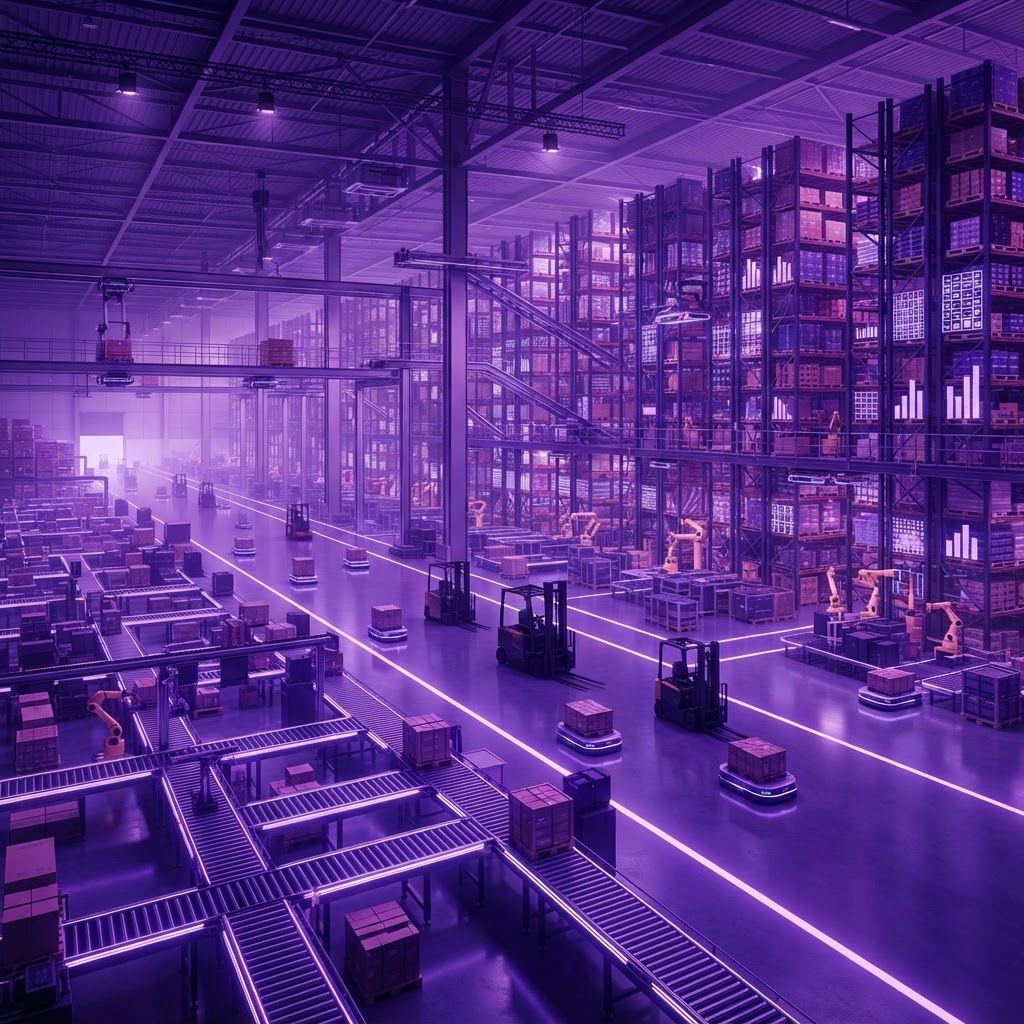
Automation adoption has accelerated markedly. Autonomous mobile robots, goods-to-person picking stations, automated storage and retrieval systems, and robotic palletising have moved into mid-sized operations. In a market with chronic labour shortages and high wage pressure, the business case for automation is strong.
Vertical development is a direct response to land scarcity. Multi-storey warehouses with truck ramps to upper floors, long common in dense Asian cities, are now being built in constrained North American markets including this region.
Data integration has become central. Warehouse management systems connecting directly to e-commerce platforms, enterprise resource planning software, and carrier systems allow near real-time inventory accuracy and automated order routing, eliminating the manual reconciliation that used to consume enormous administrative effort.
Sustainability features increasingly appear in new facilities: rooftop solar generation, high-efficiency lighting with occupancy sensing, electric vehicle charging for fleets, and building certifications that matter to corporate tenants with emissions commitments.
How to Evaluate a Warehousing Partner
Location relative to your customers and inbound freight matters more than headline rate. A facility ten kilometres closer to the port or to your delivery density can save more in transportation cost than it adds in rent.
Scrutinise the technology stack. Ask what warehouse management system is used, what integrations exist with common e-commerce and enterprise platforms, and how inventory accuracy is measured and reported. Providers unable to answer precisely usually have weak systems.
Understand the full pricing structure. Storage rates are only one component alongside receiving charges, pick fees, packing materials, shipping, returns processing, and account management. Model your actual monthly activity against the rate card rather than comparing a single number.
Visit the facility. Cleanliness, organisation, safety practices, and staff demeanour reveal a great deal about operational discipline that no proposal document will disclose.
Final Thoughts
Warehousing in Metro Vancouver is expensive and constrained, which makes choosing the right partner unusually consequential. Whether you need simple pallet storage, temperature-controlled capacity, or full e-commerce fulfilment with same-day dispatch, the region has capable providers. The businesses that get the most value are those that define their requirements precisely, evaluate total cost rather than unit rates, and treat the warehouse relationship as a strategic partnership rather than a commodity purchase.