
A City With a Furniture Making Tradition
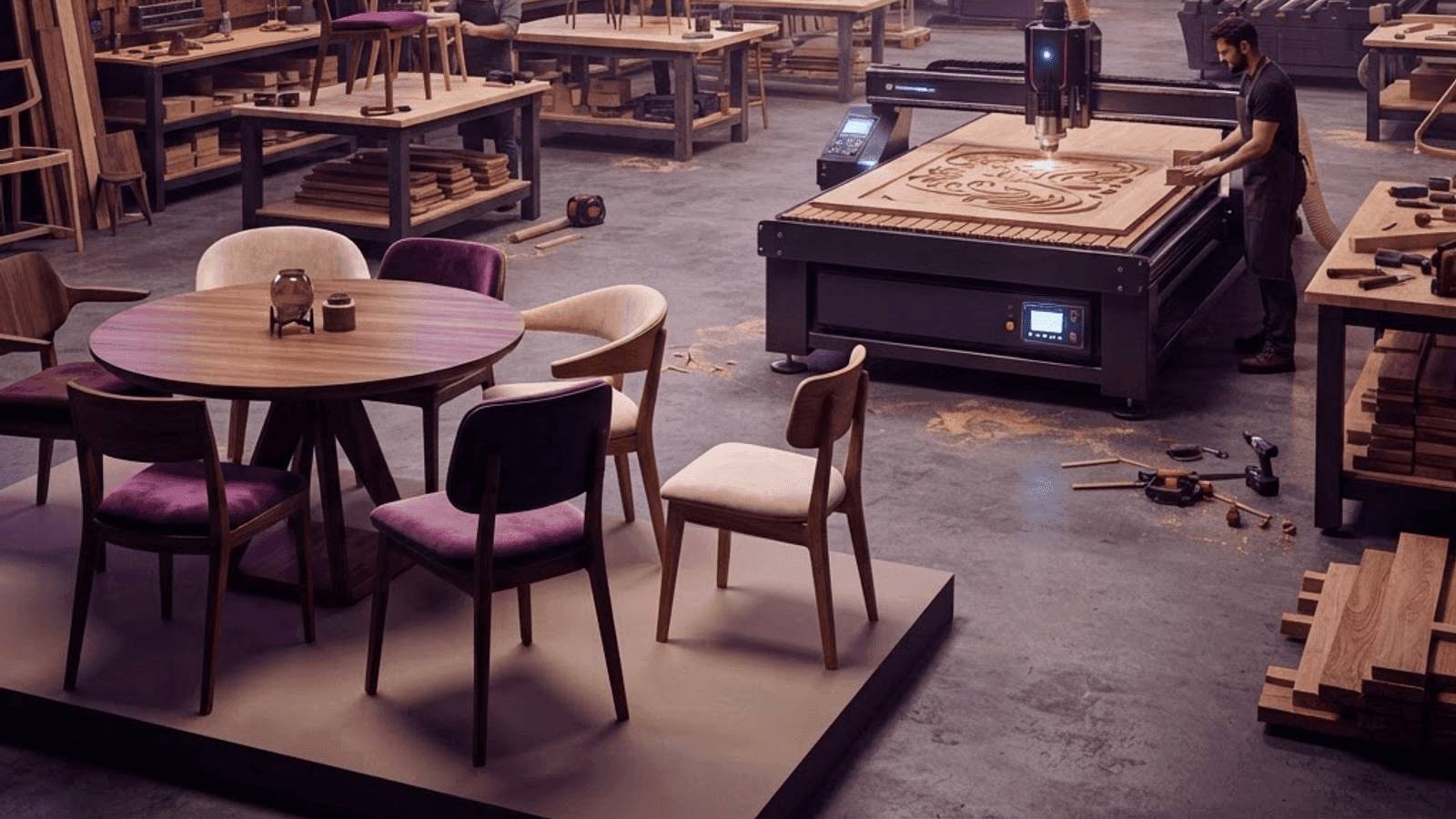
Furniture making in Alexandria carries a long inheritance. The city's cosmopolitan history produced a demand for European-influenced cabinetry and upholstery, and generations of craftsmen developed the skills to supply it. That tradition survives in the workshops that still produce hand-finished hardwood pieces, but it now sits alongside a modern industry using computer-controlled panel saws, edge banders and automated finishing lines.
The local market serves several distinct customer groups. Residential buyers furnishing apartments across the city's expanding districts, hospitality operators fitting out hotels along the coast, corporate clients equipping offices, and export buyers seeking Mediterranean-accessible production all approach the industry with very different requirements.
Understanding Furniture Manufacturing Options
The most important distinction is between solid wood and engineered panel construction. Solid hardwood offers longevity, repairability and a premium appearance, at higher cost and with greater sensitivity to humidity. Engineered panels, including medium-density fibreboard and particleboard with laminate or veneer surfaces, deliver dimensional stability, consistent finish and lower cost, which is why they dominate contract and volume production.
Upholstery is effectively a separate discipline, involving frame construction, suspension systems, foam specification and fabric work. Manufacturers who excel at case goods do not always excel at upholstery, and vice versa.
Contract furniture, meaning pieces made for hotels, offices and institutions, demands durability testing, fire-retardant materials and the ability to deliver consistent quality across hundreds of identical units. That is a different business from bespoke residential work.
Ten Leading Furniture Manufacturers in Alexandria
1. Delta Furniture Industries is one of the larger volume producers in the city, running panel-processing lines for bedroom, living and office furniture. Its consistency and capacity make it a reliable choice for retailers and developers ordering in quantity.
2. Mediterranean Contract Furnishings specialises in hospitality projects, producing complete hotel room packages including casegoods, headboards and soft seating. It manages installation as well as manufacture, which simplifies project coordination for operators.
3. Alexandria Woodcraft continues the hardwood tradition, producing solid beech, oak and mahogany furniture with hand-applied finishes. Its joinery quality, including proper mortise and tenon construction, is evident on close inspection and explains its following among discerning buyers.
4. Pharos Office Systems manufactures desking, storage and workstation systems for the corporate market. Cable management, ergonomic adjustment and modular reconfiguration are built into its designs rather than added afterward.
5. Nile Upholstery Works concentrates on sofas, armchairs and soft seating. It manufactures its own frames, uses graded foam densities appropriate to the application, and offers a wide fabric selection with proper durability ratings.
6. Horus Kitchen and Joinery produces fitted kitchens, wardrobes and built-in joinery. Its measurement, design and installation service handles the whole process, which matters because fitted furniture succeeds or fails on installation accuracy.
7. Amun Outdoor Furniture makes furniture for the coastal hospitality market using treated hardwoods, powder-coated aluminium and marine-grade fabrics selected to survive salt air and strong sun.
8. Coastal Metal Furniture specialises in steel and aluminium furniture for institutional, educational and industrial settings, including lockers, shelving and laboratory furniture.
9. Ramses Classic Interiors produces reproduction and classical styles, including carved and gilded pieces, for clients seeking traditional formal interiors. Its carving workshop maintains skills that are increasingly rare.
10. Sidi Gaber Modern Furniture completes the list with contemporary minimalist designs aimed at younger urban buyers, produced efficiently enough to remain accessibly priced.
Trends in the Alexandria Furniture Market
Space efficiency has become a dominant design concern as apartment sizes shrink in new developments. Manufacturers offering modular systems, storage-integrated beds and convertible pieces are meeting genuine demand rather than following fashion.
Material sourcing has grown more sophisticated, with responsible timber sourcing documentation and low-emission board increasingly requested, particularly by hospitality and export buyers.
Digital design and visualisation have changed the sales process. Manufacturers who can render a proposed room accurately before production close more work and generate fewer post-delivery disputes about appearance.
How to Choose a Furniture Manufacturer
Match the manufacturer to the product type and volume. A bespoke hardwood workshop cannot efficiently produce two hundred identical hotel desks, and a panel-line factory cannot produce a hand-carved dining suite.
Inspect construction details rather than surfaces. Look at drawer box construction, hinge and runner quality, edge banding adhesion and how panels are joined. These determine whether furniture survives five years of use or two.
For upholstery, ask about foam density, frame material and fabric abrasion resistance ratings. For contract projects, confirm fire performance compliance for your market.
Finally, agree lead times and inspection points in writing, and plan a pre-delivery inspection for large orders. Alexandria's furniture industry offers genuine quality at competitive prices, but as in any craft-influenced sector, outcomes depend heavily on choosing the right workshop for the specific job.
Balancing Cost, Quality and Lead Time
Every furniture purchase involves a trade-off between these three factors, and being explicit about which one matters most makes negotiation far more productive. A developer furnishing apartments ahead of a handover date will prioritise lead time. A hotel refurbishing its rooms will prioritise durability, because replacing furniture early is far more expensive than buying well initially. A retailer will weigh cost most heavily, because margin determines whether the range sells profitably.
Communicating that priority clearly allows a manufacturer to propose the right construction, materials and finish rather than guessing. It also prevents the common outcome where a buyer pays for craftsmanship they did not need or receives economy construction in an application that demanded better.
Alexandria's furniture industry can serve all three priorities well, but rarely from the same workshop. Choosing a manufacturer whose business model genuinely matches your requirement is the single most reliable predictor of a satisfactory result.