
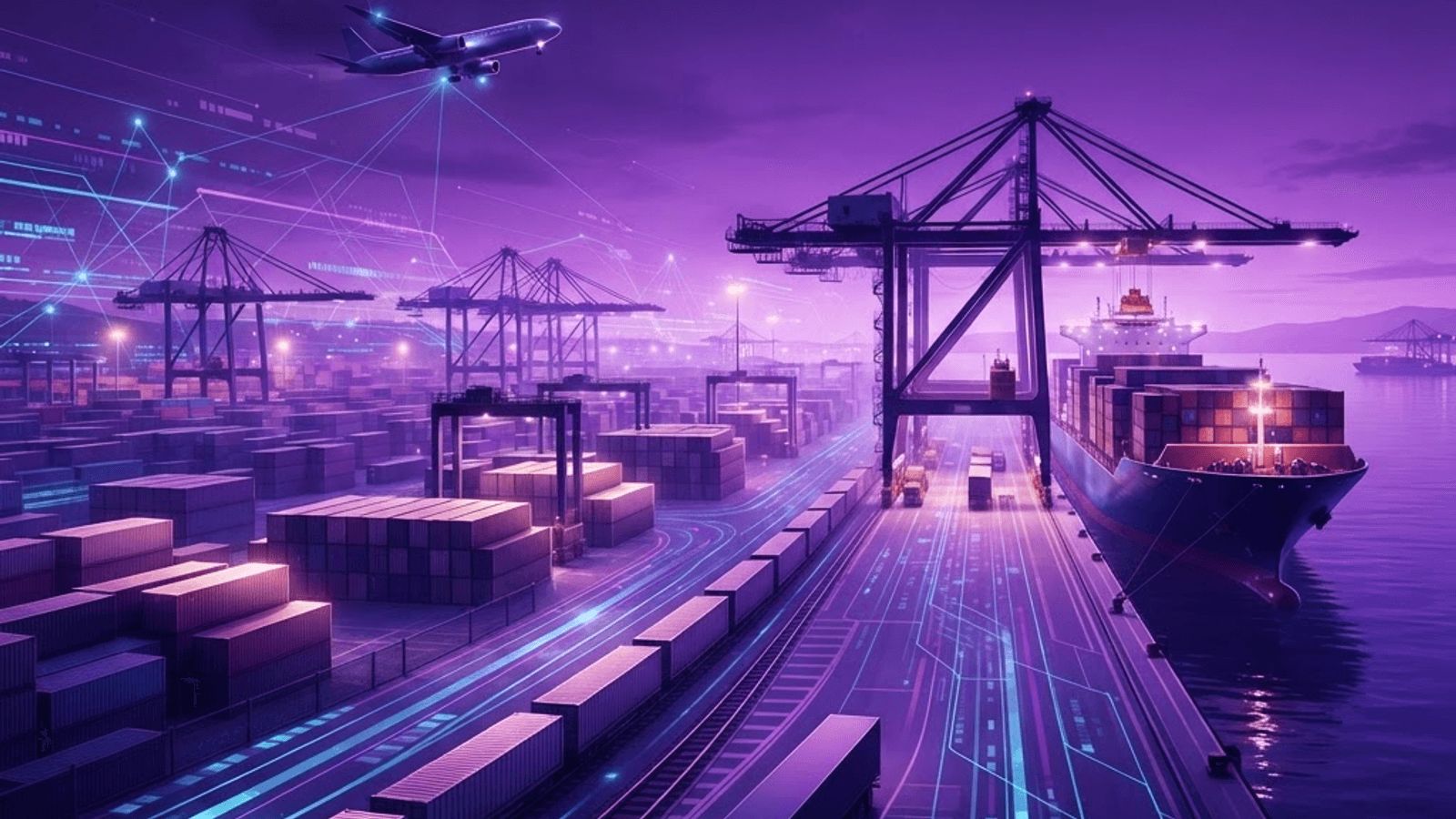
Vancouver as Canada's Trade Gateway
The Port of Vancouver is the largest port in Canada and one of the most diversified in North America, handling containers, bulk commodities, grain, forest products, vehicles and energy exports. Its rail connections link directly to the national network, and Vancouver International Airport provides substantial air cargo capacity. Together these assets make the region the central node in Canada's trade with Asia and a major inbound gateway for goods heading east across the country.
For businesses, this infrastructure is an advantage, but it also means the local freight market is complex. Capacity constraints, terminal congestion, chassis availability, customs processing and the extreme scarcity of industrial warehouse space all affect supply chain performance. Choosing the right logistics partner is therefore a strategic decision rather than a purely transactional one.
1. DHL Global Forwarding
DHL Global Forwarding provides international air and ocean freight, customs brokerage and supply chain services from Vancouver, with the advantage of a genuinely global network. Its strengths are visibility technology, consolidated shipping options and expertise in complex international routing. Businesses importing from Asia or exporting worldwide benefit from having a single provider manage origin pickup, ocean or air transit, customs and final delivery.
2. Kuehne and Nagel
Kuehne and Nagel is among the largest freight forwarders globally and maintains substantial Canadian operations. It is particularly strong in ocean freight and in contract logistics, and it offers specialized services for industries including forestry, aerospace and pharmaceuticals. Shippers value its documentation accuracy and its capacity management during periods when space on transpacific routes is constrained.
3. DB Schenker
DB Schenker combines international forwarding with land transport and warehousing capability, giving shippers integrated coverage from port to final destination. Its Vancouver presence supports both import and export flows, and it has developed strong project logistics expertise for oversized and heavy cargo, which matters for British Columbia's mining, energy and infrastructure sectors.
4. Expeditors International
Expeditors is a Pacific Northwest founded forwarder with deep transpacific experience, which aligns naturally with Vancouver trade patterns. It is known for customs brokerage strength, technology-driven shipment visibility and consistent service quality. Importers dealing with complex tariff classification or trade compliance requirements frequently choose it for that expertise.
5. Day and Ross
Day and Ross is one of Canada's largest trucking and logistics companies, providing less-than-truckload and full truckload service across the country with strong British Columbia coverage. For domestic freight moving between Vancouver and Alberta, Ontario or Atlantic Canada, it offers reliable scheduled service and a national terminal network. It also handles dedicated fleet and logistics management arrangements.
6. Bandstra Transportation Systems
Bandstra is a British Columbia based carrier with particular strength serving northern and interior communities that larger national carriers reach less frequently. For shippers moving goods to resource sector locations, remote communities or northern British Columbia, this regional specialization is genuinely valuable. The company also handles warehousing and project freight.
7. Canadian National Railway and Canadian Pacific Kansas City
Both major Canadian railways serve the Port of Vancouver, moving containers and bulk commodities between the coast and inland markets. Rail is the most economical mode for long-distance movement of large volumes and is central to the intermodal supply chains that connect Vancouver terminals with Toronto, Montreal, Chicago and beyond. Shippers typically access rail service through forwarders or intermodal marketing companies rather than directly.
8. Purolator and Parcel Networks
For smaller shipments, parcel and courier networks handle the volume that full freight carriers do not serve efficiently. Purolator, along with international integrators, provides domestic and cross-border parcel service with time-definite options, tracking and residential delivery capability. E-commerce businesses in particular depend on these networks for final-mile fulfilment.
9. Customs Brokers and Trade Compliance Specialists
Customs brokerage is a distinct discipline and often the difference between smooth and problematic importing. Licensed brokers in Vancouver handle tariff classification, valuation, duty and tax calculation, free trade agreement certification, and clearance with the border agency. Errors in classification can produce significant duty overpayment or, conversely, penalties, making broker quality a direct financial issue.
10. Third-Party Logistics and Warehousing Providers
Third-party logistics providers offer warehousing, inventory management, pick and pack fulfilment, and distribution. In Metro Vancouver this segment operates under unusual pressure because industrial vacancy is among the lowest in North America, making warehouse space scarce and expensive. Established providers with existing capacity in Richmond, Delta, Surrey and Burnaby offer businesses access to distribution infrastructure that would be difficult to secure independently.
Choosing the Right Mode
Ocean freight is the lowest cost per unit for international shipments but the slowest, with transpacific transit typically taking several weeks plus terminal and inland time. Full container loads are more economical per unit than consolidated shipments, which involve additional handling.
Air freight is far faster and suits high-value, time-sensitive or perishable goods, but costs several times more. It is often used tactically to cover stockouts rather than as a standing arrangement.
Trucking dominates domestic and cross-border movement, offering door-to-door service and flexibility. Rail intermodal is more economical over long distances and increasingly attractive for its lower emissions profile, at the cost of less schedule flexibility.
What Actually Drives Cost
Freight pricing is more complex than a simple rate per shipment. Ocean and air costs include base rates plus fuel surcharges, terminal handling charges, documentation fees and, when containers are held too long, detention and demurrage charges that accumulate quickly. Trucking rates reflect distance, weight, dimensional volume, fuel and accessorial services such as tailgate delivery or inside placement.
Customs duties and taxes depend on tariff classification, country of origin and applicable trade agreements. Correct classification and proper origin documentation frequently reduce landed cost more than negotiating freight rates does.
Evaluating a Freight Partner
Ask about specific experience with your commodity type and trade lane, since expertise is rarely uniform across all routes and goods. Confirm what visibility and reporting are provided, and whether systems integrate with your own. Clarify how exceptions are handled, who your point of contact is, and what happens outside business hours.
Review liability terms carefully. Standard carrier liability is usually limited by weight rather than value, which means cargo insurance is essential for valuable goods. Confirm licensing and bonding for customs work, and ask for references from shippers of similar scale.
Sustainability and Compliance
Environmental performance has moved from a marketing consideration to a reporting requirement for many businesses. Providers increasingly offer emissions reporting by shipment, modal shift recommendations toward rail, and access to lower-carbon fuel options. The Port of Vancouver also operates programmes encouraging cleaner vessel and truck operations, which shippers can factor into partner selection.
Final Thoughts
Vancouver's freight sector is deep, sophisticated and well connected to global trade, but capacity pressures and regulatory complexity reward careful partner selection. Match the provider to your trade lane and commodity, treat customs brokerage as a strategic function rather than an administrative one, understand the full landed cost rather than headline freight rates, and build relationships with providers who communicate clearly when something goes wrong.