
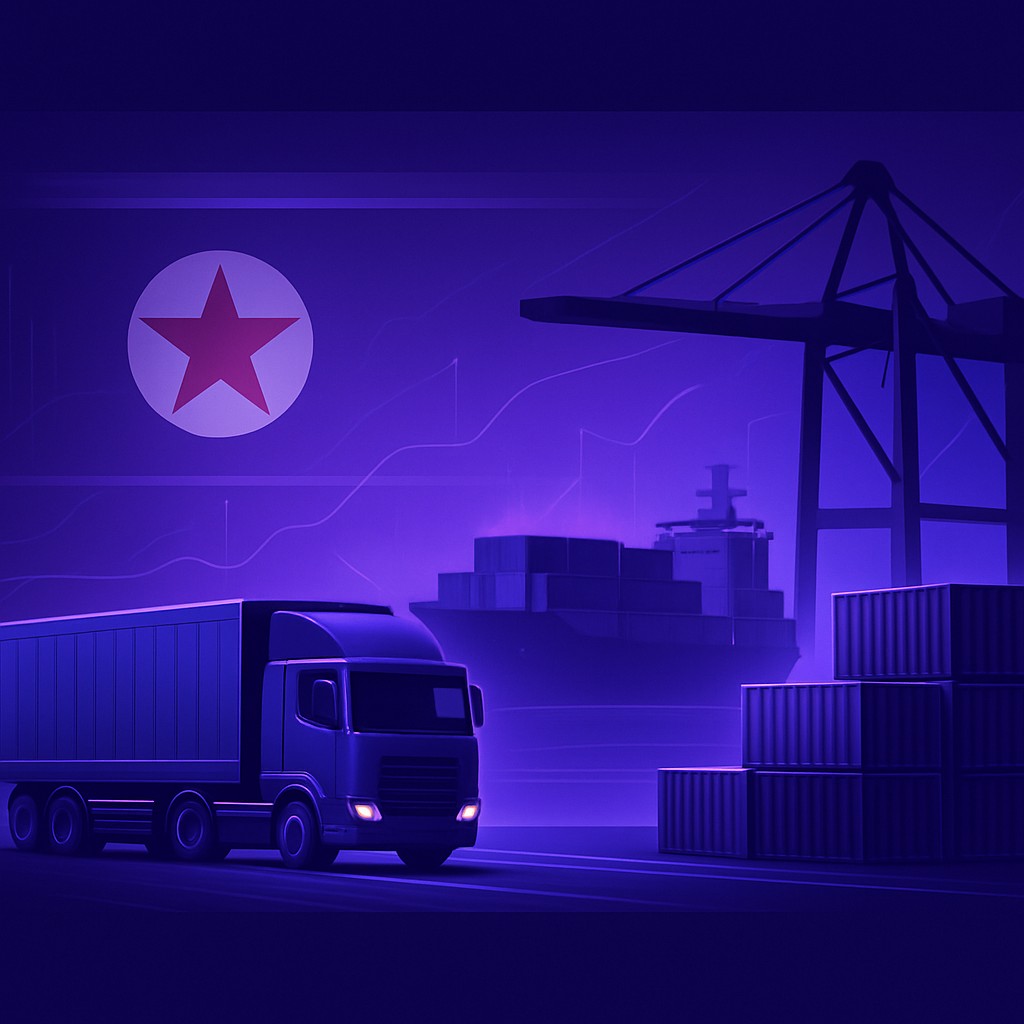
Understanding Freight Transport in North Korea
The movement of goods in North Korea is managed largely through state organizations that oversee freight transport across rail, road, and maritime channels. Unlike the diverse private freight markets found in many countries, the country's cargo sector is centralized and closely coordinated by government entities. Understanding this structure provides insight into how raw materials, agricultural products, and manufactured goods are transported throughout the nation and to its ports.
Freight transport is essential to the functioning of the economy, connecting industrial centers, agricultural regions, and population hubs. Rail forms the backbone of the system, supplemented by road transport for shorter distances and maritime shipping for coastal and international movement. The integration of these modes ensures that goods reach their destinations across the country's varied geography.
Rail Freight as the Backbone
Railways carry the majority of freight in North Korea, making the rail network the central pillar of cargo transport. The Korean State Railway manages the extensive rail system, which handles the bulk movement of coal, minerals, agricultural products, and industrial goods. The network connects major cities, ports, and resource regions, enabling efficient transport of heavy and bulk commodities.
Rail freight is particularly well suited to the country's needs, given the prominence of mining and heavy industry. The Korean State Railway operates dedicated freight services that move large volumes over long distances, supporting the supply chains that underpin the economy. This reliance on rail reflects both the geography of the country and the nature of its industrial output.
Road Freight Services
While rail dominates long-distance freight, road transport plays an important complementary role, particularly for shorter distances and last-mile delivery. State transport organizations manage trucking services that distribute goods within and between regions. These road services connect rail hubs and ports to factories, warehouses, and local distribution points.
Trucking operations are coordinated by transport authorities and enterprises responsible for moving goods across the road network. Although road infrastructure varies in quality, trucking remains essential for reaching destinations not directly served by rail and for flexible distribution within urban and rural areas.
Maritime and Port Freight
Maritime transport is vital for both coastal movement of goods and international trade. The country's principal ports, including Nampo on the west coast and Rason and Chongjin on the east coast, serve as key gateways for cargo. Port authorities and shipping organizations manage the loading, unloading, and movement of goods through these facilities.
The Nampo Port, serving the capital region, is among the most important, handling a significant share of maritime freight. The Rason area, designated as a special economic zone, plays a notable role in regional trade and logistics. These ports connect the country's freight network to maritime shipping routes, facilitating the import and export of goods.
How Freight Logistics Function
Freight logistics in the country operate through coordination among the various state organizations responsible for rail, road, and maritime transport. Goods are typically moved by rail over long distances, transferred to trucks for local distribution, and channeled through ports for coastal and international shipment. This integrated approach ensures that cargo flows through the appropriate modes based on distance, volume, and destination.
The centralized management of freight allows for coordinated planning and allocation of transport resources. While the system differs markedly from market-driven freight industries elsewhere, it is structured to meet the country's specific economic and logistical requirements.
The Importance of an Integrated Freight Network
An efficient freight network is crucial for supporting industry, agriculture, and trade. The combination of rail, road, and maritime transport enables the movement of essential commodities and finished goods across the country. The prominence of rail reflects the geography and industrial profile of the nation, while ports provide vital links to maritime trade. Together, these elements form a comprehensive system for moving goods.
Trends in Freight Transport
There has been continued attention to maintaining and developing freight infrastructure, particularly the rail network that carries the majority of cargo. The designation of special economic zones such as Rason has highlighted the role of certain ports in regional trade and logistics. These developments underscore the ongoing importance of freight transport to the country's economy.
The Interplay Between Transport Modes
A defining feature of freight transport in the country is the close interplay between rail, road, and maritime channels, each fulfilling a complementary role within the broader system. Rail carries the heaviest burden, moving bulk commodities such as coal and minerals over long distances with efficiency well suited to the nation's industrial profile. Road transport bridges the gaps that rail cannot reach, handling local distribution and connecting factories and warehouses to rail hubs and ports. Maritime shipping, anchored by ports such as Nampo and Rason, extends the network to coastal routes and international trade. The coordination among these modes ensures that goods can be transferred seamlessly from one to another based on distance, volume, and destination. This integrated structure, managed centrally, allows the freight system to function cohesively across the country's varied geography and to support the supply chains that sustain industry and agriculture.
Final Thoughts
Freight transport in North Korea is managed through centralized state organizations spanning rail, road, and maritime channels. The Korean State Railway, road transport authorities, and port organizations such as those at Nampo and Rason form the core of the cargo network. This integrated system ensures the movement of goods across the country's diverse geography, supporting industry, agriculture, and trade in a structure tailored to the nation's particular circumstances.