
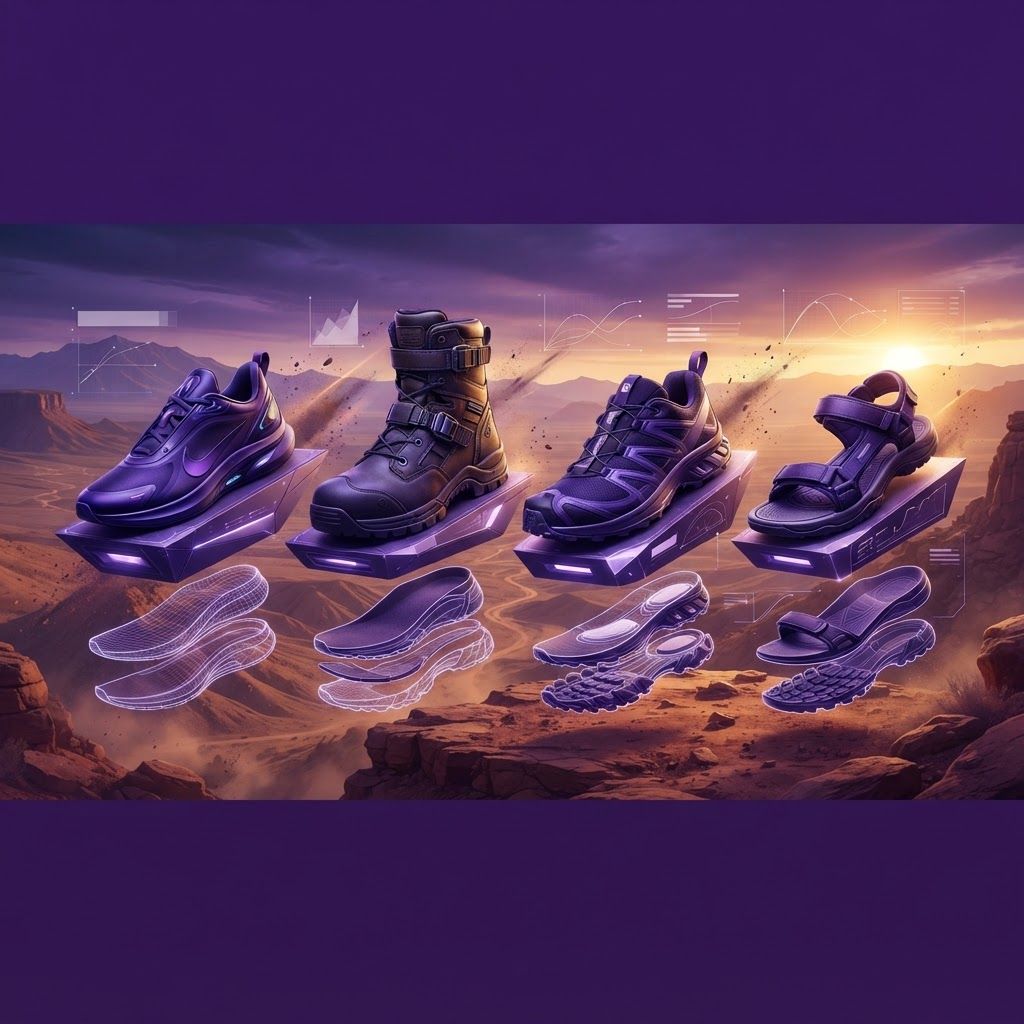
Why Footwear Choice Matters Here
Footwear is the most function-dependent category in any wardrobe, and Spring Valley's conditions make that especially clear. Summer pavement becomes genuinely hot, surface temperatures far exceeding air temperatures. Trails and open ground are dry, dusty and often rocky. Many residents work long shifts on hard floors in warehouses, kitchens, healthcare settings and retail. Each of these situations punishes the wrong shoe quickly.
The local footwear market has adapted accordingly. Rather than following seasonal fashion cycles designed for four-season climates, the strongest brands here emphasize breathability, outsole durability against abrasive surfaces, heat management and support for people who spend most of the day standing or walking.
What Defines a Quality Footwear Brand
Fit accuracy comes first, and it is more complex than length. Width options, instep volume and heel cup shape determine whether a shoe supports the foot or fights it. Brands that offer multiple widths and publish honest sizing guidance solve problems that no amount of cushioning can fix.
Construction method matters next. Stitched or cemented construction, quality midsole foams that resist compression, and outsole rubber compounds rated for abrasion determine how long a shoe performs rather than merely survives. Replaceable or resoleable designs offer real long-term value for boots and dress shoes.
Breathability and heat management are regional necessities. Mesh uppers, moisture-wicking linings and ventilated designs prevent the excessive sweating that leads to blisters and odor. Finally, brands that provide clear guidance about intended use, and are honest about what a shoe is not designed for, earn lasting customer trust.
The Ten Best Footwear Brands in Spring Valley
1. Valley Trail and Desert Running
Built for dry, rocky terrain, this brand's trail shoes combine aggressive outsole lugs, rock plates for underfoot protection and highly breathable uppers. Debris-resistant construction addresses the fine dust that ruins less thoughtfully designed shoes, and drainage features help during creek crossings and wet cleaning.
2. Highland Work Boot Company
Serving construction, landscaping and industrial trades, this brand builds safety-toe and soft-toe boots with heat-resistant outsoles, supportive shanks and breathable linings. Resoleable construction on premium models keeps a well-broken-in boot in service for years rather than seasons.
3. Spring Valley Comfort Footwear
Designed for people on their feet all day in healthcare, hospitality, retail and food service, this brand emphasizes cushioning that resists compression, slip-resistant outsoles and easy cleaning. Removable insoles accommodate custom orthotics, which matters more than most buyers initially realize.
4. Mesa Athletic Performance
Court shoes, cross-training footwear and gym shoes engineered for lateral stability and hot-weather ventilation. Outsole compounds are selected to handle both indoor courts and warm outdoor surfaces without excessive wear.
5. Canyon Sandal and Open Footwear
Sport sandals and open designs with genuine arch support, adjustable strapping and grippy outsoles. Unlike casual flat sandals, these are built for real walking distance in heat, which makes them a practical warm-season staple rather than a poolside accessory.
6. Terrace Contemporary Casual Shoes
Everyday sneakers and casual shoes in breathable canvas, perforated leather and light knit uppers. Neutral styling works across informal social settings, and construction quality exceeds what the category price point usually delivers.
7. Oasis Dress and Occasion Footwear
Dress shoes designed for warm climates, using lighter leathers, breathable linings and flexible soles. Formal appearance without the heat retention of traditional heavy dress construction addresses a real gap for professionals and event attendees.
8. Ridgeline Youth and School Shoes
Children's footwear built for growth, hard play and dust. Reinforced toe bumpers, secure closures that kids can manage independently, and washable materials extend usable life considerably through the seasons of rapid growth.
9. Desert Hiking and Backcountry Boots
Mid and high-cut hiking boots with ankle support, stable platforms and outsoles designed for loose rock and steep dry ground. Break-in guidance and honest weight information help buyers avoid the common mistake of choosing a boot heavier than the terrain requires.
10. Valley Orthopedic and Custom Fit Footwear
Serving customers with diabetes, plantar issues, width extremes and gait irregularities, this specialist provides professional fitting, pressure assessment and accommodation for custom inserts. The clinical approach delivers outcomes that general retail simply cannot match.
Fitting Shoes Properly
Shop for shoes late in the day, when feet have expanded to their largest natural size. Measure both feet, since asymmetry is common, and fit to the larger one. Leave roughly a thumb's width of space ahead of the longest toe, which is not always the big toe.
Width deserves equal attention to length. A shoe that is too narrow causes numbness, bunion aggravation and blistering regardless of correct length, while an overly wide shoe permits sliding that leads to friction injuries. Walk on a hard surface rather than carpet during fitting, and pay attention to heel slip, forefoot pressure and any immediate hot spots. A shoe that requires significant break-in to become tolerable is usually the wrong shoe.
Heat, Dust and Maintenance
Hot surfaces transmit heat through thin outsoles, so anyone walking on summer pavement should favor shoes with adequate sole thickness. Dark uppers absorb noticeably more heat than light ones, a small difference that becomes meaningful over a long day outdoors.
Dust management extends shoe life. Brushing away accumulated fine dust prevents abrasive particles from grinding into seams and mesh. Rotating between two pairs allows midsole foam to decompress and linings to dry fully, which reduces odor and roughly doubles usable life for both pairs. Store shoes away from direct sun, since ultraviolet exposure degrades adhesives and rubber compounds over time.
Knowing When to Replace
Midsole compression, not visible upper wear, usually determines when a shoe should be retired. Once cushioning bottoms out, impact transmits directly to joints. Running and walking shoes typically need replacement after several hundred miles, while work boots should be evaluated when the tread pattern flattens or the shank no longer provides support. Unexplained foot, knee or lower back discomfort is frequently a footwear problem before it is anything else.
Conclusion
Footwear in Spring Valley must contend with heat, dust, abrasive ground and long hours of standing, and the ten brands profiled here each address a specific part of that reality. Prioritize accurate fit and appropriate construction over appearance, match the shoe to the actual activity, rotate pairs and maintain them, and replace based on cushioning rather than looks. Feet that are properly supported make everything else in a hot, active climate considerably more comfortable.