
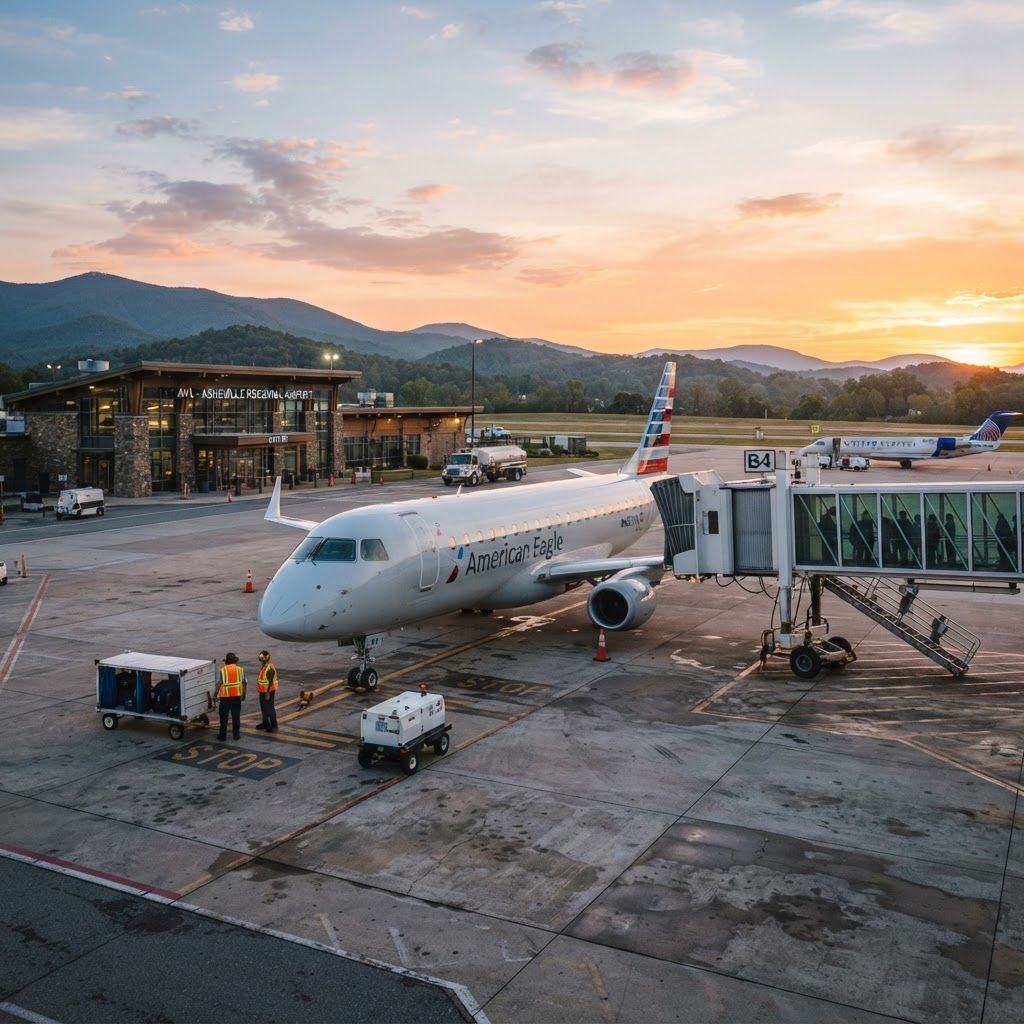
Understanding Air Service in Baton Rouge
Baton Rouge Metropolitan Airport, located north of downtown, operates as a hub-feeder airport. Nearly every departure connects travelers to a major hub — Atlanta, Dallas-Fort Worth, Houston, or Charlotte — where they join the broader network. There are essentially no long-haul or transcontinental nonstops. Understanding this structure is the key to using the airport well, because the value proposition is convenience and short security lines, not route variety.
Louis Armstrong New Orleans International Airport sits roughly eighty miles southeast, about ninety minutes by car, and offers substantially more nonstop destinations, more carriers, and often lower fares. Baton Rouge travelers therefore make a recurring calculation: pay more for the convenience of a local departure, or drive to New Orleans for better options. The right answer depends on the trip.
1. Delta Air Lines
Delta provides service from Baton Rouge to Atlanta, one of the world's most connected hubs. For travelers heading to the East Coast, Europe, or destinations across the Southeast, routing through Atlanta typically produces the shortest total travel time from Baton Rouge. Delta's operational reliability and its SkyMiles program make it a default choice for many frequent travelers in the capital region.
2. American Airlines
American connects Baton Rouge to Dallas-Fort Worth and Charlotte, giving travelers access to two large hubs with complementary networks. Dallas serves the West and Southwest efficiently, while Charlotte covers the Eastern Seaboard. The dual-hub option provides useful rebooking flexibility when weather disrupts one connection point.
3. United Airlines
United serves Baton Rouge through Houston, the closest major hub geographically. Short first legs are genuinely valuable — less exposure to delay, tighter connections that actually work, and a quicker path to Latin America and the Pacific through Houston's international network. For business travel to Texas, this is frequently the most efficient routing available.
4. Southwest Airlines (via New Orleans)
Southwest does not serve Baton Rouge directly but operates extensively from New Orleans. Its two-free-checked-bags policy, flexible change rules without fees, and point-to-point network make the drive worthwhile for many leisure travelers, especially families whose baggage costs on other carriers would exceed the value of a local departure.
5. Spirit Airlines (via New Orleans)
Ultra-low-cost service from New Orleans appeals to price-sensitive travelers willing to accept unbundled pricing. Base fares can be dramatically lower, but seat selection, carry-on and checked bags, and changes all carry charges. Travelers packing light and traveling on fixed dates can achieve real savings; anyone needing flexibility generally cannot.
6. Frontier Airlines (via New Orleans)
Frontier offers similar low-cost service from New Orleans on a rotating seasonal route map. Its destinations change more frequently than legacy carriers, so travelers should check current service rather than assuming continuity. When a route aligns with travel plans, pricing is often the lowest available in the region.
7. Allegiant Air (via regional airports)
Allegiant specializes in leisure routes from smaller airports to vacation destinations, typically operating a few days per week. Its model suits travelers with flexible schedules heading to Florida beaches or similar destinations, and the limited frequency is the primary tradeoff — a cancellation can mean waiting days rather than hours.
8. JetBlue Airways (via New Orleans)
JetBlue operates from New Orleans with a product emphasizing seat pitch, free in-flight entertainment, and complimentary snacks. Travelers heading to the Northeast, particularly Boston and New York, often find both the fare and the onboard experience preferable to legacy alternatives.
9. Alaska Airlines (via New Orleans)
Alaska serves New Orleans with connections toward the West Coast and Pacific Northwest. For Baton Rouge travelers with business in Seattle, Portland, or the Bay Area, Alaska's network and its well-regarded loyalty program can outperform routing through southern hubs.
10. Regional Carriers and Charter Operators
Regional affiliates operate a substantial share of Baton Rouge flights under mainline brands, using smaller aircraft appropriate to the market's demand. Separately, charter and private aviation operators serve the corporate and industrial sectors, and business aviation is a meaningful part of activity at the airport given the region's petrochemical and engineering economy.
Baton Rouge or New Orleans: Making the Call
Fly from Baton Rouge when the itinerary is a short domestic trip, when the fare difference is modest, when you are traveling for business and time matters more than cost, or when parking convenience and short security lines meaningfully reduce stress. The airport's small scale is a genuine benefit — arrival to gate can take twenty minutes.
Drive to New Orleans when the fare difference is substantial, particularly for families where savings multiply across passengers, when you need a nonstop that Baton Rouge cannot provide, when flying internationally, or when a low-cost carrier serves your destination. Factor in fuel, parking costs over the trip duration, and the risk that Interstate 10 traffic or weather delays the drive.
Trends in Regional Air Service
Regional aviation nationwide has contracted as pilot supply constraints and aircraft economics pushed carriers toward larger planes and fewer thin routes. Baton Rouge has felt this, and route additions tend to be cautious and demand-driven. Local economic development efforts periodically pursue new nonstops, and community demand demonstrated through actual bookings is what ultimately supports them.
Fare unbundling has spread across all carriers, not just low-cost ones. Comparing total cost — seat selection, baggage, and change flexibility included — is now essential, since headline fares are increasingly uninformative.
Practical Travel Tips
Book connecting itineraries with realistic layovers. A forty-five-minute connection in Atlanta or Dallas is technically legal and frequently unwise, particularly during summer thunderstorm season when afternoon delays are routine across the South. Morning departures statistically experience fewer weather disruptions.
During hurricane season, monitor forecasts and understand your carrier's waiver policies. Airlines typically issue change waivers ahead of major storms, and travelers who act early secure seats before rebooking demand overwhelms available capacity.
Final Thoughts
Baton Rouge Metropolitan Airport delivers efficient hub access with minimal friction, while New Orleans offers breadth and lower fares an hour and a half away. Choose based on the specific trip rather than habit, build realistic connection buffers, and compare total costs rather than base fares.