
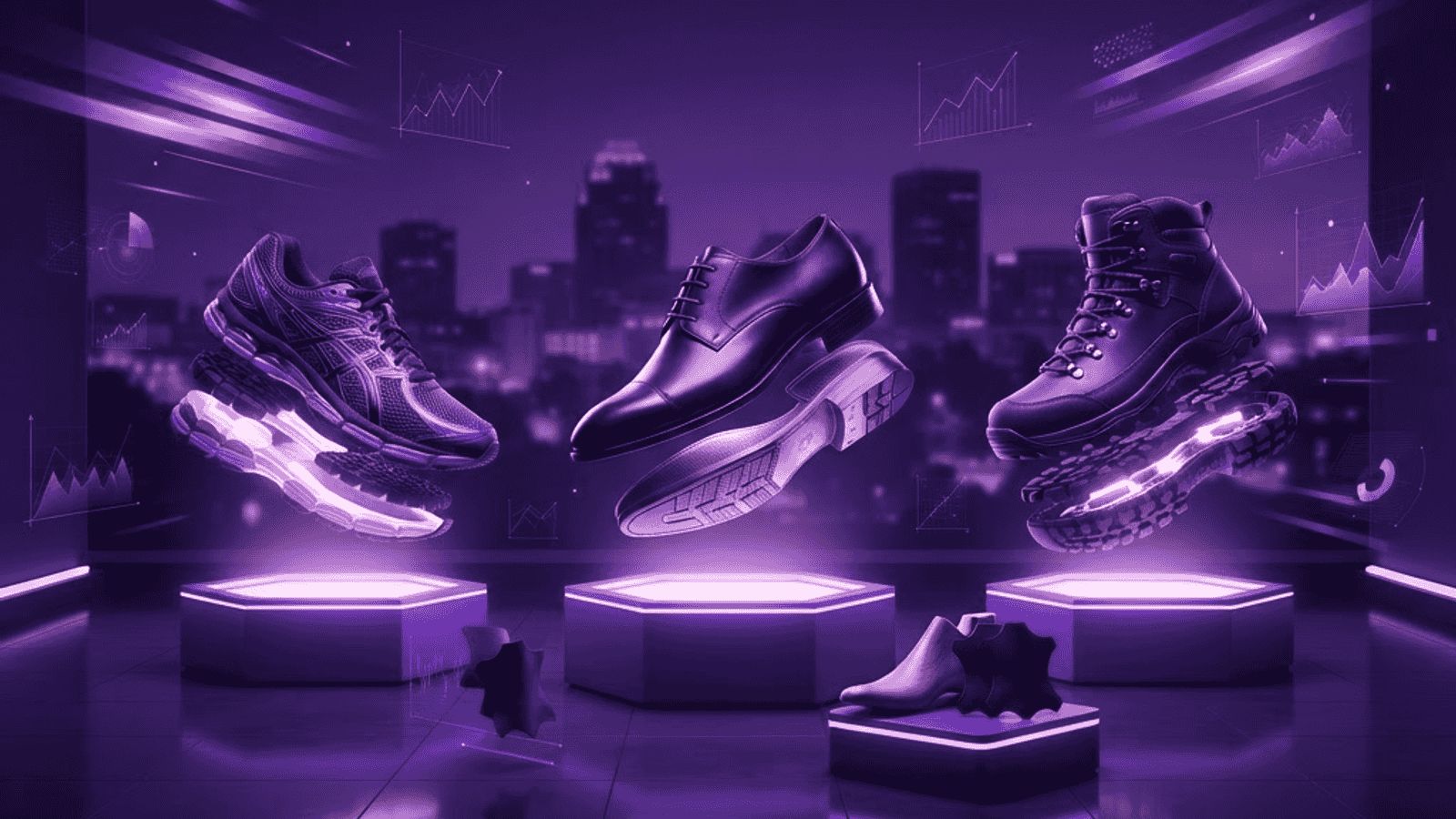
Why Footwear Has Roots in the Piedmont
Greensboro is not historically a shoemaking city in the way Massachusetts or Maine once were, but its connection to footwear runs deeper than most people assume. The Piedmont Triad's textile industry supplied the knitted uppers, synthetic mesh, webbing, elastics, and technical fabrics that modern footwear depends on. As athletic shoes shifted from stitched leather toward engineered knit and woven uppers, the expertise concentrated in North Carolina became directly relevant to shoe construction rather than just apparel.
The region also hosts materials testing capability, polymer and chemical knowledge tied to the broader Research Triangle corridor, and a design education pipeline that feeds footwear teams nationally. Add a substantial athletic culture across regional universities and a strong independent retail tradition, and Greensboro supports a footwear ecosystem that spans materials, design, testing, fitting, and sales.
What Actually Matters in a Shoe
Footwear is one of the few consumer categories where marketing and outcomes diverge sharply, because comfort depends on the interaction between a specific foot and a specific shoe rather than on any absolute quality. The single most important variable is the last, the three-dimensional form around which a shoe is built. Two shoes with identical cushioning technology will feel completely different if one is built on a narrow last and the other on a wide one. Understanding whether a brand's lasts suit your foot volume and shape predicts satisfaction better than any feature list.
Midsole material determines how a shoe feels underfoot and how long that feeling lasts. Modern foams offer impressive initial cushioning but compress at different rates, which is why a shoe can feel excellent for two hundred miles and flat by four hundred. Outsole rubber compound and tread geometry govern traction and wear, and the trade-off between soft grippy rubber and hard durable rubber is real and unavoidable.
Upper construction affects both fit and longevity. Engineered knit uppers conform comfortably and breathe well but offer less structure, while leather and reinforced synthetics hold shape longer and support heavier loads. Finally, the presence of a stitched or cemented construction determines whether a shoe can be resoled, which fundamentally changes its cost over time.
Ten Categories of Footwear Brands Serving Greensboro
Performance running brands form the largest segment locally, driven by a strong regional running community and extensive greenway and trail networks. These brands compete on midsole foam technology, weight, and geometry, and the better ones offer genuinely distinct models for daily training, tempo work, and race day rather than cosmetic variations.
Trail and outdoor footwear brands serve customers heading to the nearby mountains and regional trail systems. Their priorities are aggressive lug patterns, rock protection plates, drainage for humid Southeastern conditions, and upper materials that survive abrasion, which is a meaningfully different engineering problem from road running.
Work and safety footwear brands supply the region's substantial manufacturing, logistics, and construction workforce. Composite and steel toe protection, electrical hazard rating, slip resistance, and metatarsal guards are the operative features, and comfort over a ten-hour shift matters more than appearance.
Basketball and court footwear brands maintain strong presence given the intensity of regional basketball culture across universities and community programmes. Lateral support, ankle stability, and traction on indoor surfaces define this category, and fit precision matters more than in most footwear because of the cutting movements involved.
Heritage leather and boot makers appeal to customers who value resoleable construction and leather that develops character. These brands typically use stitched constructions that allow rebuilding, positioning their products as long-term purchases rather than seasonal ones.
Comfort and orthopaedic footwear specialists address plantar fasciitis, diabetic foot care, and structural conditions with removable orthotic accommodation, wider toe boxes, and pressure-distributing midsoles. This segment is often served through fitting-focused retailers with trained staff rather than general retail.
Athletic lifestyle and sneaker brands occupy the space between performance and fashion, producing court-inspired and retro-styled shoes bought primarily for appearance and casual comfort. Limited releases and collaboration culture drive much of the demand here.
Sustainable and recycled-material footwear brands have grown as material science improved, using recycled polyester uppers, bio-based foams, and natural rubber outsoles. Their credibility depends on whether performance holds up against conventional construction, and the better examples now compete on merit rather than principle alone.
Custom and made-to-order footwear specialists serve customers with difficult fit requirements, significant left-right size differences, or specific aesthetic preferences. Digital foot scanning has made this considerably more accessible than traditional bespoke shoemaking.
Children's footwear brands focus on flexible soles that allow natural foot development, easy fastening for independent dressing, and durability through rapid growth. Proper sizing matters enormously here, and quality brands publish clear measurement guidance rather than relying on age ranges.
Trends Reshaping Footwear
Several developments are changing the category. Foam technology continues to advance quickly, with supercritical processing producing midsoles that are simultaneously lighter and more resilient than previous generations. Carbon fibre plates have moved from elite racing shoes into broader training lines. Wider toe boxes have gained mainstream acceptance as understanding of natural foot shape improved. Digital foot scanning in retail has made fitting more precise, and repairability is returning as a selling point, with more brands offering resoling and refurbishment programmes.
Buying Well
Measure both feet late in the day when they are at their largest, and fit to the larger foot. Prioritise fit over brand loyalty, since lasts change between models and even between versions of the same model. Allow roughly a thumb's width of space ahead of the longest toe for athletic use. Bring the socks and any orthotics you actually wear to a fitting. Test on a hard surface rather than thick carpet, which masks how a midsole behaves. Track mileage on athletic shoes and replace them based on midsole compression rather than upper appearance, because the cushioning fails long before the shoe looks worn out. For dress and work footwear, favour resoleable construction, since the cost per year of a rebuildable shoe is frequently lower than that of a cheaper disposable one.