
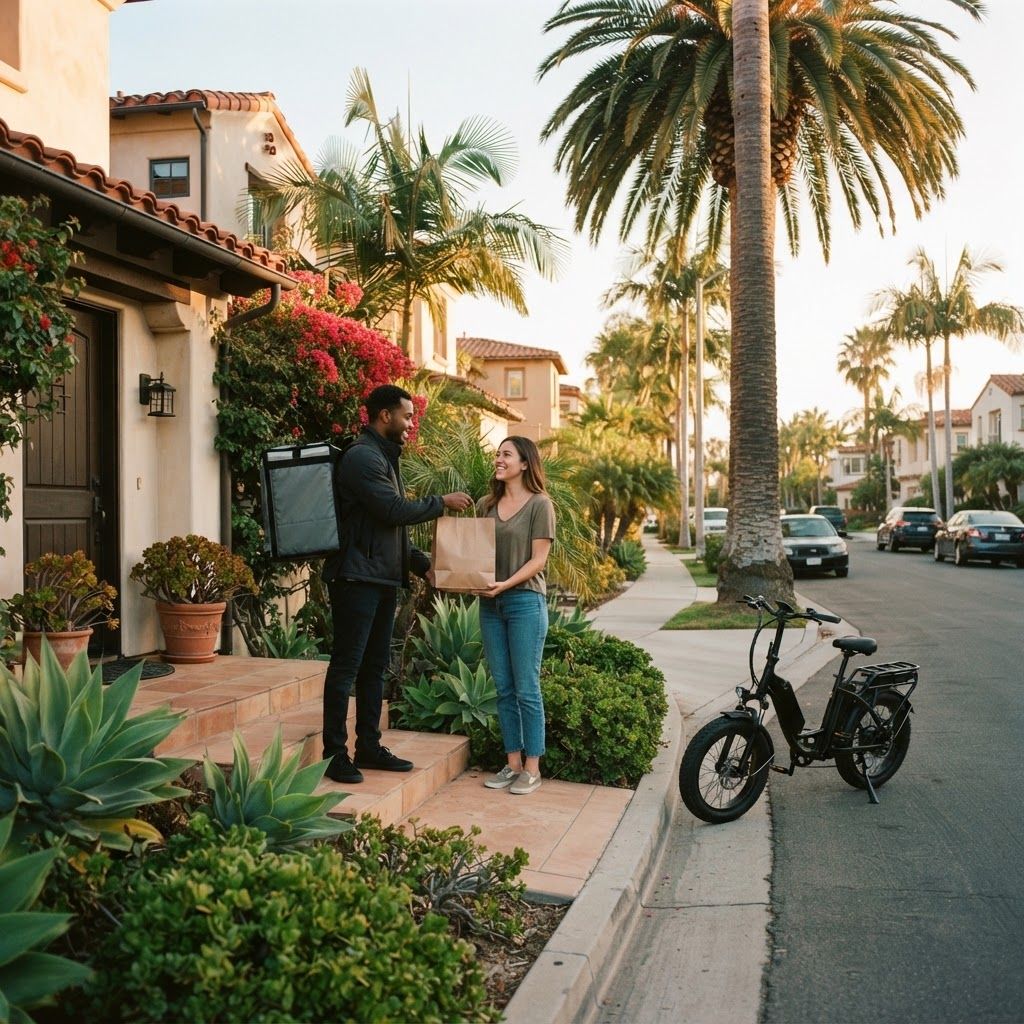
How Delivery Changed Dining in Chula Vista
A decade ago, delivery in Chula Vista meant pizza and a short list of Chinese restaurants. Today nearly every category of food, from taqueria orders to groceries to late-night dessert, arrives at the door through a smartphone. The city's geography has shaped this shift in specific ways: a mix of dense older neighborhoods near the downtown corridor and sprawling newer developments toward the east creates uneven delivery economics, with wait times and fees varying considerably by address.
Understanding those dynamics is what separates a frustrating delivery experience from a smooth one. The platform that works well for a customer near Third Avenue may offer a thin restaurant selection for someone in eastern Chula Vista, and the reverse is equally true for grocery services optimized around suburban warehouse locations.
How These Services Were Compared
Evaluation considered local restaurant selection, delivery reliability, total cost including fees and markups, app usability, customer service responsiveness, and how fairly the platform treats couriers and restaurants. Total cost deserves scrutiny, because the advertised delivery fee is rarely the full picture. Menu price markups, service charges, small order fees, surge pricing, and expected tips routinely combine to add a substantial premium over ordering directly. The platforms that are honest about this upfront earn more trust than those that reveal costs only at checkout.
The 10 Best Food Delivery Options in Chula Vista
1. Broad Selection National Platforms
The largest national delivery platforms remain the default for most residents simply because their restaurant coverage is unmatched. Nearly every chain and a large share of independent restaurants participate, order tracking is accurate, and support processes for missing items are established. The tradeoff is cost, since layered fees make these among the most expensive options for a routine meal.
2. Subscription Membership Delivery Services
Several platforms offer monthly memberships that waive delivery fees above a minimum order. For households ordering more than a few times a month, these plans usually pay for themselves. The important caveat is that fee waivers do not eliminate service charges or menu markups, so the savings are real but smaller than the marketing suggests.
3. Restaurant Direct Ordering Apps
Many Chula Vista restaurants now operate their own ordering channels, either independently or through white-label providers. Ordering directly is almost always the cheapest route, keeps more revenue with the restaurant, and often produces better accuracy because the kitchen receives the order without an intermediary. Loyalty rewards on these channels are frequently more generous as well.
4. Grocery and Convenience Delivery Platforms
Grocery delivery services cover full supermarket shopping, and their prepared food sections make them a practical alternative for household meals rather than single dishes. Substitution handling is the key differentiator here, and the better services let customers approve replacements in real time rather than discovering surprises after delivery.
5. Local Taqueria Delivery Networks
Smaller regional delivery operations focused on local Mexican restaurants have carved out a durable niche. Their courier networks understand neighborhood geography well, and because they carry lower overhead than national platforms, their fees tend to be more reasonable. Selection is narrower but the quality of the restaurants included is often higher.
6. Meal Kit and Prepared Meal Subscriptions
Weekly meal subscriptions occupy a different position, delivering either ingredient kits or fully prepared meals on a schedule. For anyone trying to control cost and nutrition simultaneously, these services typically outperform ad hoc restaurant delivery, though they require planning and offer far less spontaneity.
7. Ghost Kitchen Delivery Brands
Delivery-only kitchen brands operate without dining rooms, sometimes running multiple concepts from a single facility. Because they are designed around packaging and transport, food often arrives in better condition than dishes from restaurants optimized for table service. Quality varies widely by operator, so reviews matter more than branding.
8. Alcohol and Specialty Beverage Delivery
Licensed beverage delivery services handle beer, wine, and spirits with age verification at the door. They frequently pair well with food orders for gatherings, and their selection often exceeds what nearby retailers stock. Delivery windows are typically less flexible than food platforms.
9. Pharmacy and Essentials Rapid Delivery
Rapid delivery services covering household essentials, snacks, and over-the-counter items fill the late-night and urgent gap that food platforms handle poorly. Order sizes are small and fees proportionally higher, but for genuine necessities the convenience is difficult to argue with.
10. Community and Home Kitchen Marketplaces
Emerging marketplaces connect customers with permitted home-based cooks, offering regional dishes and homestyle cooking rarely found in restaurants. Availability is limited and often requires advance ordering, but the food is frequently distinctive and the model channels earnings directly to local cooks.
Trends Shaping Delivery
Fee transparency is improving under regulatory pressure, with more platforms disclosing full costs earlier in the flow. Restaurants are actively steering customers toward direct ordering to escape commission structures, often using QR codes and receipt inserts. Consolidated batch delivery is expanding to reduce courier miles, occasionally at the cost of speed. Sustainable packaging is becoming a differentiator, and several platforms now offer reusable container programs. Artificial intelligence is being applied to arrival estimates, which has noticeably improved accuracy compared with earlier systems.
How to Order Smarter
Compare the direct restaurant channel before defaulting to a platform, as the price difference on a family order is often significant. Order during off-peak windows when possible, since courier availability drives both speed and surge pricing. Consolidate into fewer, larger orders rather than several small ones to avoid repeated fees. Check whether your address falls near the edge of a delivery zone, because marginal distances cause most late arrivals. Photograph problems immediately and report them through the app rather than by phone, as documented claims resolve faster. Finally, tip couriers fairly and remember that the delivery fee generally does not reach them.
Final Thoughts
Chula Vista residents have more delivery choices than ever, and the smartest approach is not loyalty to a single app but matching the service to the occasion. National platforms for selection, direct ordering for value, grocery services for planning, and specialty options for specific needs together cover almost every situation. A little attention to fees and timing turns delivery from an expensive habit into a genuinely useful convenience.